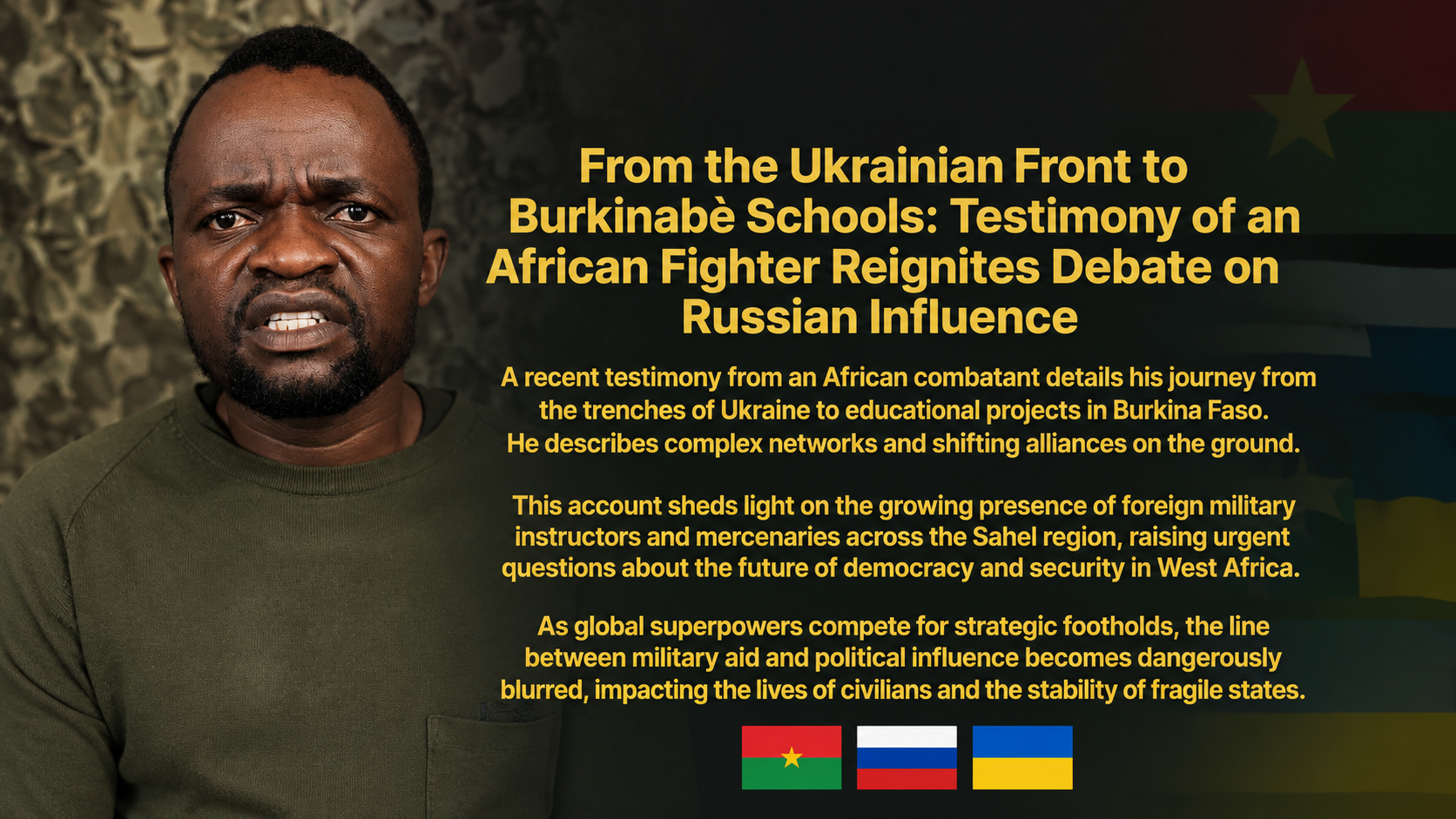
An unexpected revelation from the Ukrainian front has reignited discussions in Burkina Faso regarding the nation’s deepening ties with Russia. The arrest of a foreign combatant, Tatenda Tarwire, a Zimbabwean national who fought alongside Russian forces, has sent shockwaves through West Africa. In a series of widely circulated statements, Tarwire described harrowing experiences on the battlefield, recounting brutal combat conditions, staggering human losses, and the agonizing silence faced by families of the deceased or missing.
The soldier’s account, though personal, is emblematic of a broader geopolitical shift. Over recent years, Russia has intensified its diplomatic, military, and economic engagements across Africa, capitalizing on a global landscape reshaped by the conflict in Ukraine. This strategy has not gone unnoticed in Ouagadougou, where the government has announced a sweeping educational reform: the phased introduction of the Russian language into the national curriculum beginning this academic year.
a strategic pivot or an academic opportunity?
According to official statements, the initiative aims to broaden Burkina Faso’s international partnerships, expand academic horizons for students, and foster deeper cultural and scientific exchanges with the Russian Federation. The move is framed as a pragmatic step toward diversifying educational opportunities, akin to the inclusion of languages like English, Chinese, or Arabic in previous reforms.
Yet, the decision has sparked a polarizing debate. Critics argue that the reform transcends mere language acquisition, suggesting it signals a deeper strategic alignment with Moscow. They call for greater transparency, questioning the motivations behind the partnership and its long-term implications for Burkina Faso’s foreign policy. Supporters, however, emphasize the sovereign right of a nation to cultivate international relationships without being subjected to geopolitical scrutiny.
The controversy underscores a broader tension: the role of language in education as a tool for opportunity versus a potential instrument of influence. Russian, like any other language, offers access to scientific literature, academic exchanges, and professional networks. The heart of the debate lies not in the language itself, but in the timing and context of its adoption amid Russia’s active global engagement in a prolonged war.
lessons from the front lines
Tarwire’s testimony serves as a stark reminder of the human cost associated with foreign recruitment in conflict zones. Reports from international observers have highlighted cases where African recruits, lured by promises of financial compensation or training, found themselves unprepared for the realities of war. The consequences—physical, psychological, and familial—are often devastating, leaving scars that endure long after the fighting stops.
For Burkina Faso, the timing of this educational reform could not be more critical. As the nation grapples with the complexities of global alliances, citizens are demanding clarity: What are the precise objectives of this linguistic cooperation? What agreements underpin it? What tangible benefits will it bring to Burkinabè youth? And, crucially, how will the country safeguard the integrity of its educational system from external pressures?
the future hinges on education
The path forward for Burkina Faso’s youth will be determined by the quality of their education, the breadth of knowledge they acquire, and their ability to navigate an increasingly interconnected world with discernment. The decision to integrate Russian into the curriculum must be examined with rigor, ensuring that it serves the nation’s long-term interests rather than becoming a pawn in broader geopolitical games.
One thing is clear: the choices made today will shape the opportunities and challenges of generations to come. In an era of shifting alliances and evolving global dynamics, Burkina Faso must prioritize transparency, critical thinking, and the pursuit of knowledge that empowers its people—not binds them to unforeseen obligations.