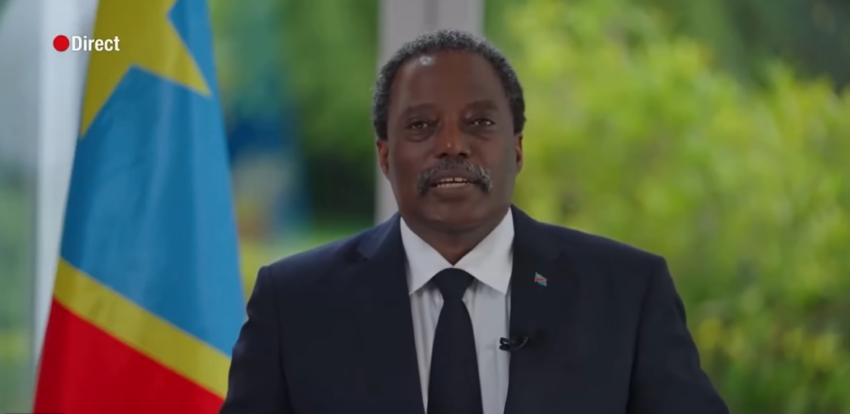
By publicly assuming leadership of the Front for the Refoundation of the Nation (FRN) on October 12, 2026, Joseph Kabila—former president of the Democratic Republic of the Congo (DRC)—has made a dramatic military comeback. His alliance with armed groups including M23 and the former Rivers Congo Alliance now serves as a political shield for a rebellion actively backed by Rwanda. This strategic move aims to deflect international pressure on Rwanda’s proxy forces, but it risks igniting widespread conflict in a nation rich in minerals yet fragile in governance.
From rebel heirs to regional rulers: the Kabila legacy
Joseph Kabila inherits a legacy of volatility. In 1996, his father, Laurent-Désiré Kabila, led the AFDL rebellion—backed by Rwanda’s Paul Kagame—to overthrow dictator Mobutu Sese Seko. After seizing power in 1997, Laurent-Désiré Kabila attempted to assert independence from Kagame, triggering a second Congo War. He was assassinated in 2001, leaving his 29-year-old son, Joseph, to inherit both the presidency and a precarious balance between warlords, regional powers, and shifting alliances.
Now, decades later, Kabila is reversing course: once the face of Congo’s fight against Rwandan interference, he now openly allies with rebels linked to Kigali—turning a localized ethnic insurgency into an all-out push for national power.
Elevating a militia to statehood: how Kabila rebrands the rebellion
The M23, historically viewed as a Tutsi militia and Rwanda’s proxy force in eastern Congo, lacked the political legitimacy to challenge Kinshasa’s central government. With Kabila’s leadership, however, the group gains a former head of state—offering the veneer of national credibility. This move transforms a border conflict into a national struggle, positioning the FRN as a unifying opposition front aimed at toppling President Félix Tshisekedi.
Geopolitical analysts warn this alliance masks deeper systemic rot. Behind the rhetoric of liberation lies a network of institutionalized crime, international collusion, and extractive profiteering—where rebel-controlled mining zones remain “secure” while surrounding villages face unchecked violence.
DRC’s paradox: a mineral superpower trapped in poverty and war
The Democratic Republic of the Congo spans over 2.3 million square kilometers—nearly 90 times larger than Rwanda—yet remains one of Africa’s most fragile states. Its eastern provinces, including North Kivu and Ituri, sit atop some of the world’s most valuable mineral deposits: gold, coltan, cobalt, zinc, and manganese. These resources fuel global tech industries yet also attract predatory exploitation by neighboring states and transnational networks.
Despite its vast wealth, the DRC struggles with governance, corruption, and chronic insecurity. Rebel factions and state proxies compete to control mining revenues, turning extraction zones into militarized enclaves. While international condemnation of the violence is widespread, multinational corporations continue to source minerals through opaque intermediaries—perpetuating the cycle of conflict and resource theft.
As one analyst noted, “The tragedy is not just the war—it’s the economy of pillage that thrives inside it.”
Civilians bear the cost: the human toll of endless conflict
Eastern Congo now hosts nearly 150 armed groups, ranging from self-defense militias to criminal syndicates and jihadist factions like the ADF-Nalu. Civilians pay the heaviest price. Decades of violence have turned the region into one of the most dangerous places on earth for vulnerable communities—especially women and children—who face systemic rape, displacement, and extrajudicial killings.
By lending his name and political weight to the FRN, Joseph Kabila does more than legitimize a rebellion—he risks escalating a humanitarian disaster. The stakes are no longer just geopolitical; they are human. With civilians caught in the crossfire, the alliance between Kabila and armed factions threatens to push the DRC into a new cycle of bloodshed and despair.
The road ahead: can Congo escape the curse of its riches?
For a country blessed with vast natural wealth, the DRC’s struggle is not one of scarcity but of governance. Without credible state authority or international accountability, rebel-backed economies of extraction will continue to flourish. The alliance between Joseph Kabila and the FRN may shift the balance of power—but at what cost?
The answer will be written not in mineral contracts or diplomatic statements, but in the villages and fields of eastern Congo, where the next chapter of war—or peace—is already being decided.