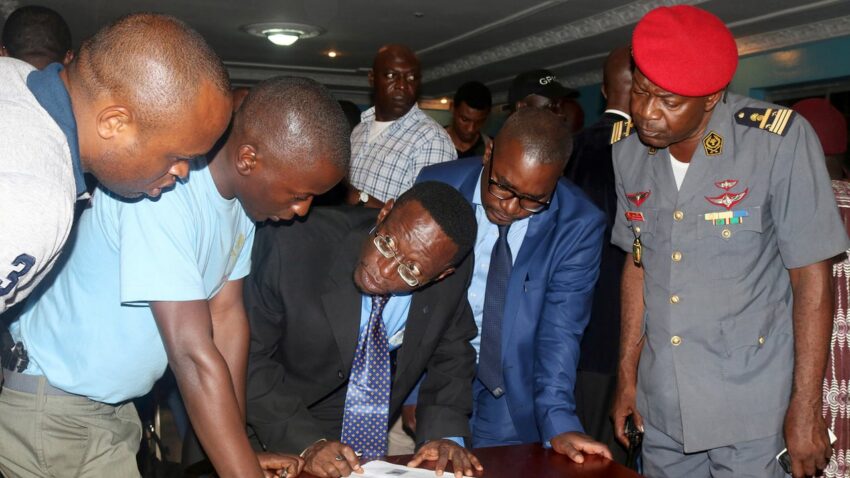
Years of stalled negotiations have pushed Cameroon’s anglophone regions to the brink, with communities bearing the heaviest burden. Lawyer Felix Agbor Balla has delivered a stark warning to the government: continued refusal to engage in dialogue risks irreversible damage to the nation’s social and economic fabric.
Since tensions escalated into armed conflict, millions have fled their homes, schools have shuttered, and businesses have collapsed. The humanitarian toll is mounting, while economic opportunities vanish for entire districts. Without immediate action, analysts warn, the crisis could trigger a permanent fracture in Cameroon’s national cohesion.
Felix Agbor Balla, a prominent advocate for the anglophone cause, has framed dialogue not as a concession but as a necessity. In a blunt public statement, he emphasized that dialogue doesn’t equate to weakness—it represents the only viable path to prevent further devastation.
From classrooms to battlefields: the human cost of delayed talks
The anglophone crisis has forced over 800,000 people from their homes, according to recent estimates. Villages once known for cocoa and coffee farms now lie abandoned. Children, once eager students, now roam displacement camps. Schools across the Northwest and Southwest regions have been shut down for years, with thousands of students left without access to education.
Healthcare systems are crumbling under pressure. Hospitals in conflict zones lack basic supplies, while doctors and nurses operate under constant threat. Regional economies dependent on agriculture and trade have ground to a halt, leaving farmers and small business owners in dire straits.
Local leaders report that the absence of dialogue has fueled mistrust and radicalization, with younger citizens increasingly turning to armed groups. “We are not just losing property or infrastructure,” said a community leader from Buea. “We are losing hope. And hope, once gone, is nearly impossible to restore.”
Government inaction: a high-stakes gamble with national stability
The government’s reluctance to engage in structured dialogue has drawn criticism from international observers and civil society groups alike. Critics argue that prolonged silence does not preserve sovereignty—it invites chaos. Authorities counter that negotiations risk legitimizing separatist claims, but analysts suggest that failure to act could have far graver consequences.
Economic indicators paint a grim picture. The World Bank reports that Cameroon’s growth projections for the anglophone regions have fallen from 5.2% to 1.8% in the last five years. Inflation has surged, while foreign investment has dwindled. The once-thriving tourism sector in areas like Limbe and Buea now struggles to attract visitors.
Business associations warn that continued instability could push the region into a recession from which recovery may take decades. “Investors need stability,” said a chamber of commerce president. “Without it, they will go elsewhere. And once they leave, they rarely return.”
Felix Agbor Balla’s alternative: dialogue as a pathway to peace
Felix Agbor Balla, a lawyer and rights activist, has emerged as a vocal advocate for immediate, inclusive dialogue. He rejects the notion that negotiation equates to surrender, arguing instead that dialogue serves as a tool to restore order and build trust.
“The government confuses strength with silence,” Balla stated in a recent press conference. “True leadership means recognizing when to listen. Inaction is not strength—it is a gamble with the future of millions.”
His organization, the Centre for Human Rights and Democracy in Africa, has proposed a framework for talks that includes regional leaders, civil society, and international mediators. The goal: a negotiated settlement that addresses grievances without further bloodshed.
But time is running out. Reports indicate that armed groups are recruiting at unprecedented rates, while government forces face mounting pressure to respond. Diplomats warn that delay could transform this crisis from a regional conflict into a national emergency.
The choice ahead: leadership or collapse
Cameroon stands at a crossroads. One path leads to continued confrontation, escalating violence, and irreversible fragmentation. The other leads to dialogue, reconciliation, and the restoration of stability.
Observers stress that the government’s next move will determine whether Cameroon emerges fractured or united. “This is not about yielding to pressure,” said a political analyst. “It is about protecting the nation. Every day without dialogue is a day closer to a point of no return.”
For the people of the anglophone regions, the message is clear: silence is not a solution. Dialogue is not weakness. It is the only way forward.