The Confederation of African Football (CAF) has officially acknowledged the joint declaration of interest submitted by Burkina Faso, Mali, and Niger to host the 2032 Africa Cup of Nations (AFCON). This landmark development marks the first step in a journey that will demand meticulous planning around infrastructure upgrades and security enhancement.
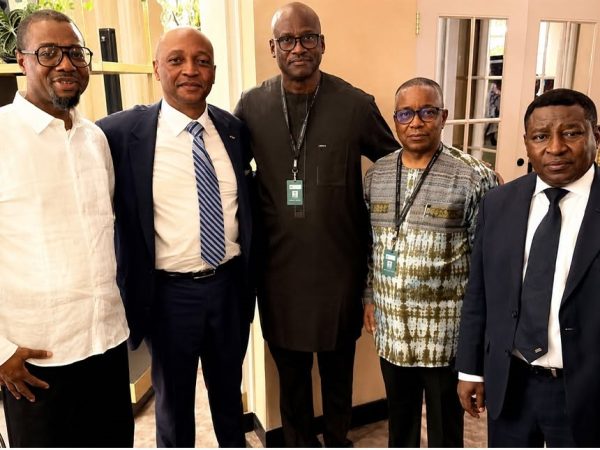
The historic meeting, held in New York on July 18, brought together the heads of the three national football federations—Colonel Oumarou Sawadogo of Burkina Faso, Mahamadou Cissé of Mali, and Issaka Adamou of Niger—alongside CAF President Patrice Motsepe. The trio left the discussions with formal confirmation that their bid had cleared the initial administrative hurdle, a milestone announced publicly two days later.
Caution ahead: this is not a guaranteed win
Under CAF’s candidacy regulations, Article 7.3, the validation of a joint declaration of interest merely confirms compliance with basic administrative requirements. It does not prejudge the eventual host selection but allows the bid to advance to the next phase. The Nigerien Football Federation (FENIFOOT) confirmed that this step simply enables the dossier to proceed through the official evaluation process.
Why the simultaneous calls for 2028, 2032, and 2036?
In early July 2026, CAF initiated a synchronized bidding process for the AFCON editions of 2028, 2032, and 2036. This strategy is designed to provide member associations with extended lead time to develop robust, long-term proposals. While the 2032 host remains undecided, CAF will soon scrutinize the Sahel trio’s technical feasibility, focusing on stadium infrastructure, accommodation capacity, and transportation networks.
Lessons from East Africa’s shared endeavor
This isn’t the first time CAF has embraced a tripartite hosting model. Kenya, Uganda, and Tanzania are already preparing to co-host the 2027 AFCON, setting a precedent that Burkina Faso, Mali, and Niger can emulate. A shared approach allows the Sahel nations to pool existing resources—stadiums, hotels, and transport systems—rather than bearing the full burden of meeting international standards independently. CAF’s president has praised this spirit of regional cooperation while emphasizing the need to adhere to established procedures.
Football as a cornerstone of Sahel unity
The bid reflects a broader trend: since severing ties with ECOWAS, the military-led governments in Ouagadougou, Bamako, and Niamey have pursued collaborative initiatives to strengthen a self-reliant Sahel bloc. From monetary systems to diplomatic alliances, these efforts seek to carve out a distinct regional identity. A successful AFCON bid would offer the Alliance of Sahel States an unprecedented global platform, particularly amid ongoing security challenges. Just days before the CAF meeting, the African Union condemned fresh attacks in Niger and Mali that claimed lives on July 17 and 18.
What comes next for the Sahel bid?
With the July 18 endorsement secured, the Burkina Faso–Mali–Niger trio has cleared only the first administrative barrier. The real test lies ahead: demonstrating technical viability in infrastructure, accommodation, and security. CAF’s final decision will hinge on the dossier’s ability to meet stringent continental standards over the coming months. The three federations, in coordination with their governments, have vowed to refine their technical proposals to align with CAF’s requirements. The race for 2032 will be won not in New York, but on Sahel soil, where the trio must prove their collective capacity to deliver a world-class tournament.