The Confederation of African Football (CAF) has formally endorsed the joint declaration of interest submitted by Burkina Faso, Mali, and Niger to host the 2032 Africa Cup of Nations (AFCON). This marks a symbolic milestone for the three Sahel nations, who now face the critical task of proving their readiness in infrastructure and security to advance in the bidding process.
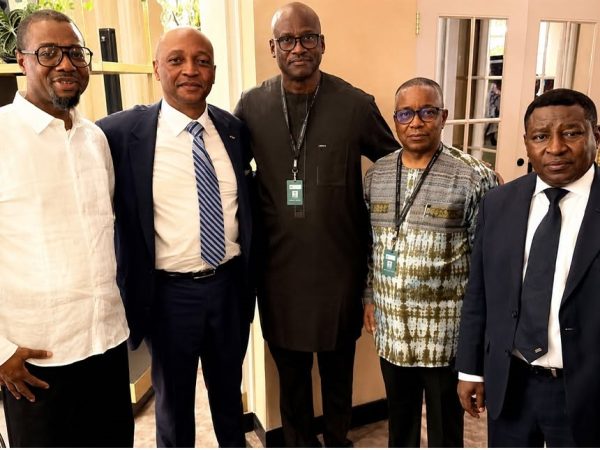
On July 18, high-level talks took place in New York, where CAF President Patrice Motsepe met with the presidents of the football federations of Burkina Faso, Mali, and Niger—Colonel Oumarou Sawadogo, Mahamadou Cissé, and Issaka Adamou, respectively. The meeting concluded with official confirmation that their joint bid for CAN 2032 had been officially registered. The announcement was made public two days later by the Nigerien Football Federation (FENIFOOT) and quickly resonated across the region.
Administrative milestone met—long road still ahead
While the CAF’s validation satisfies a key procedural requirement under Article 7.3 of its bidding regulations, it represents only the first administrative hurdle. The three countries—part of the Alliance of Sahel States (AES)—have now cleared the initial stage to remain in contention, but their bid remains far from guaranteed. According to FENIFOOT, this validation simply allows their joint application to proceed through the official evaluation process without prejudging the final outcome.
Why the CAF is planning three editions at once
In early July 2026, the CAF simultaneously opened bidding processes for CAN 2028, 2032, and 2036, inviting all 54 member associations to submit proposals. By extending the timeline, the continental body aims to encourage thorough preparation, giving federations ample time to develop robust, long-term bids.
However, while the administrative green light has been given, the CAF has not yet set a definitive timeline for the 2032 bid decision. A comprehensive technical feasibility assessment will follow, scrutinizing the readiness of sport infrastructure, hospitality, transport networks, and security conditions across the three candidate countries.
A proven model: co-hosting as a strategic advantage
The concept of a three-nation co-hosting arrangement is not unprecedented. Kenya, Uganda, and Tanzania are already preparing to jointly host CAN 2027 under a similar format. This tripartite approach could prove advantageous for Burkina Faso, Mali, and Niger by enabling them to share existing facilities and resources, rather than bearing the full operational burden alone—an important consideration given the demanding standards set by CAF.
The CAF President has praised the initiative as a forward-thinking example of regional cooperation, while emphasizing the importance of adhering to established procedures, as noted in a FENIFOOT communiqué dated July 20, 2026.
Football as a pillar of Sahel unity
The joint bid is more than a sports initiative—it reflects a broader strategic alignment among the three AES member states. Since severing ties with ECOWAS, the military-led governments in Ouagadougou, Bamako, and Niamey have intensified coordinated efforts to assert a distinct Sahelian identity, spanning economic, monetary, and diplomatic domains. A successful CAN bid would offer the Alliance of Sahel States a rare opportunity to showcase its cohesion on the global stage, particularly amid ongoing security challenges in the region. Earlier this month, the African Union condemned deadly attacks in Niger and Mali that occurred on July 17 and 18.
The CAF’s final verdict will hinge not only on infrastructure and hospitality capabilities but also on security conditions and transport networks—areas where the three countries must demonstrate sustained improvement in the coming months.
What comes next: from paperwork to reality
Securing the declaration’s validation on July 18 was a crucial first step, but it remains an early phase in a lengthy process. The 2032 hosting rights are not yet assured, and the CAF has yet to finalize the evaluation timeline. Technical feasibility, including stadiums, training grounds, accommodation, and transport links, will be rigorously assessed in the months ahead.
The football federations of Burkina Faso, Mali, and Niger have pledged to collaborate closely with their respective governments to develop a technically compliant bid dossier. The real test, however, will unfold not in international boardrooms but on the ground—where the trio must prove their capacity to meet the CAF’s stringent requirements for organization, infrastructure, and security over the long term.
If successful, CAN 2032 could transcend the realm of sport, emerging as a powerful symbol of the Sahel’s ability to translate political unity into a credible international showcase.