Senegal’s debt burden sparks urgent calls for smarter borrowing solutions
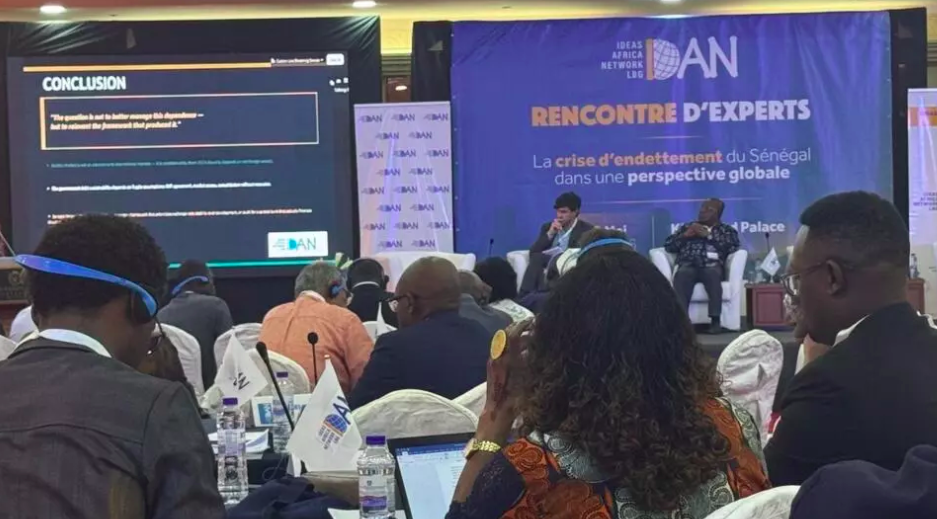
Economists gathered in Dakar this week have urged Senegal to rethink its debt management strategy, warning that the current borrowing approach risks exacerbating the country’s financial strain. At a high-profile conference on Senegal’s debt crisis, experts presented bold alternatives to traditional multilateral lending, emphasizing the need for greater financial sovereignty.
Public debt audit demanded as debt-to-GDP ratio soars
The alarming debt levels, now exceeding 132% of GDP according to government sources, have raised serious concerns. Officials revealed that undisclosed financial commitments from 2019 to 2024 contributed to this surge, a claim former President Macky Sall has contested. In response, economists are pushing for a comprehensive public debt audit to assess the true scale of the crisis and identify potential irregularities.
Demba Moussa Dembélé, president of the African Research and Cooperation for Endogenous Development, highlighted the need to shift away from dependency on institutions that impose stringent conditions. He advocated for partnerships with countries like China, which he believes respects national sovereignty more than traditional lenders. “These partners can help us break free from neocolonial financial systems,” he stated.
Breaking free from IMF dependence: alternative funding routes
Ali Zafar, an economic advisor to the United Nations Development Programme (UNDP), drew parallels with Turkey, which successfully diversified its creditor base by engaging with non-traditional partners such as Saudi Arabia. He encouraged Senegal to explore similar bilateral agreements, particularly with China, to leverage its debt management expertise.
Zafar also stressed the importance of strong negotiation tactics when dealing with the International Monetary Fund (IMF). “Countries like Senegal must enter IMF talks with robust counterproposals,” he advised, urging protection for critical social sectors like education and healthcare. “No nation should allocate all its revenue to debt repayment or use international loans to settle private creditors,” he added.
The UNDP advisor went further, suggesting that Senegal consider establishing an independent central bank to regain control over monetary policy. “No Asian country would tolerate the financial pressures Senegal faces today,” he argued. “There are concrete solutions within reach to escape this debt trap without relying on the IMF.”
Ongoing negotiations and the path forward
Despite the challenges, Senegal continues to engage with the IMF. In late April, officials from the Ministry of Finance and Budget, including debt director Alioune Diouf, met with IMF representatives in Washington to discuss restructuring options. While details remain undisclosed, the government’s push for diversification signals a potential shift in its financial strategy.