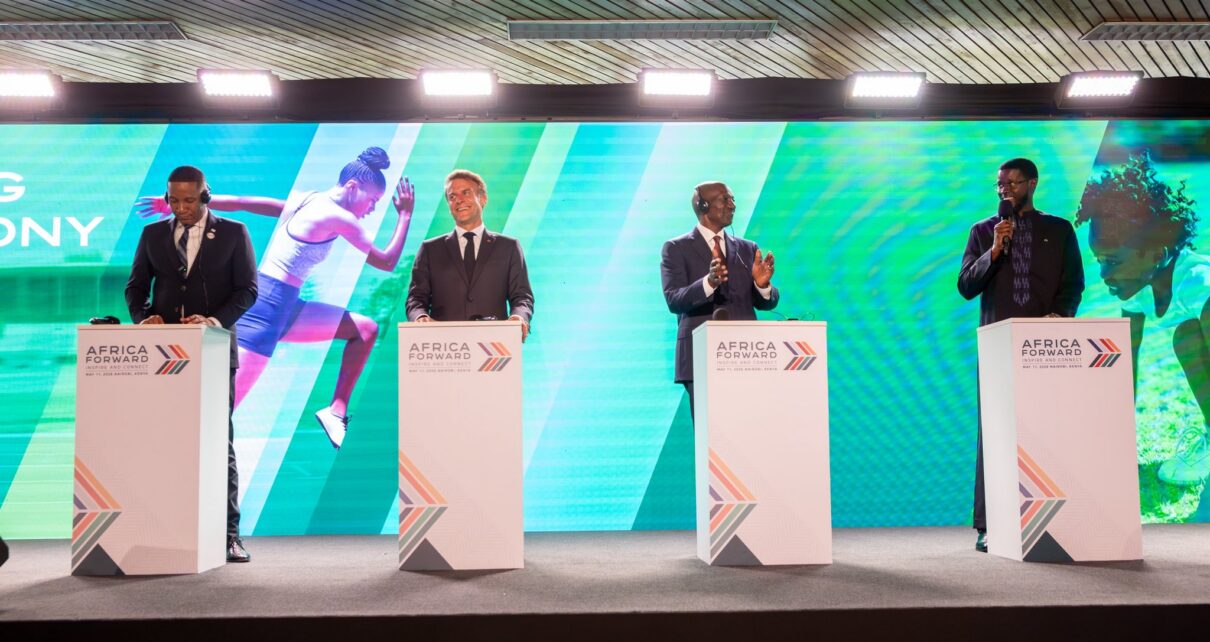
Nairobi — Tensions simmered beneath diplomatic smiles as the Senegal vs Morocco football controversy dominated private conversations at the Africa-France summit in Nairobi. Days after President Bassirou Diomaye Faye of Senegal proudly declared 2026 a “special year” for his nation—”kicked off with an African Cup of Nations title”—the fallout from the disputed final in Rabat refuses to fade.
During a high-profile session on sport and development, Faye’s ironic thanks to the audience for the “verdict”—referring to the CAF Appeals Board’s decision to award Morocco a 3-0 victory on administrative grounds—drew loud cheers and applause. The move overturned Senegal’s hard-fought 1-0 extra-time win in Rabat on January 18. The Senegalese Football Federation (FSF) has since filed an appeal with the Court of Arbitration for Sport (CAS) in Lausanne against both the Confederation of African Football (CAF) and the Royal Moroccan Football Federation (FRMF). With defense briefs now submitted, the case could drag on for months.
Morocco skips the sporting spotlight
While Morocco sent its Prime Minister, Aziz Akhannouch, to discuss industry and renewable energy, no high-ranking Moroccan official attended the sporting sessions in Nairobi. A source close to the dossier noted simply, “They did not prioritize this segment.” Four months after the chaotic final at Prince Moulay Abdellah Stadium, the silence was mutual. Conversations at the summit carefully skirted the issue entirely.
When pressed for comment after the closing plenary on Tuesday evening, French junior minister Eléonore Caroit stated, “Given the attention this has received, I expected to hear about it. I’ve participated in many roundtables over the past two days, but I personally heard nothing on the subject and did not perceive any tension.” Her counterpart, French Foreign Minister Jean-Noël Barrot, later clarified that while the dispute wasn’t raised during the summit, it persists in bilateral talks. He added, after a pause, “This isn’t just about football.”
The rift extends beyond the pitch. A French national—brother of a Senegalese staff member—was jailed for three months in Rabat after being accused of throwing a water bottle at police during post-match crowd disturbances. He maintained his innocence and was released on April 18. Three of the eighteen Senegalese supporters sentenced to three months in prison for violence and property damage were also freed on the same day. They returned to Dakar on May 7 after a traditional pilgrimage to the Ahmed Tidjani mausoleum near Fes. Fifteen others, serving sentences ranging from six months to a year, remain in detention pending a possible royal pardon—a prerogative reserved exclusively for King Mohammed VI.
Diplomacy remains the path forward
Yet both capitals insist on preserving appearances. Moroccan officials emphasize that “our shared religious and historical ties must always take precedence over a football match.” In Dakar, the tone is conciliatory: “This is a quarrel between brothers—like the tongue and teeth, sometimes we bite each other. Diplomacy will play its role. Senegal respects each country’s sovereignty and expects the same in return.”
The dispute has already left a regulatory mark on the global stage. At FIFA’s latest congress in Vancouver in late April, football’s rule-making body, IFAB, adopted a new measure dubbed the “Pape Thiaw Law”—named after Senegal’s head coach, who had urged his players to walk off the pitch in protest after a contentious penalty was awarded to Morocco late in the game. Under the new rule, referees may now caution any player who leaves the field or any official who incites such an action. A CAF delegate present in Vancouver quipped that the reform aims to prevent a “Senegalization” of world football—sidestepping future walkouts and protests.
From legal battles in Lausanne to prisoners in Rabat and diplomatic maneuvering in Nairobi, the African Cup of Nations final has become one of the most contentious in the history of African football.