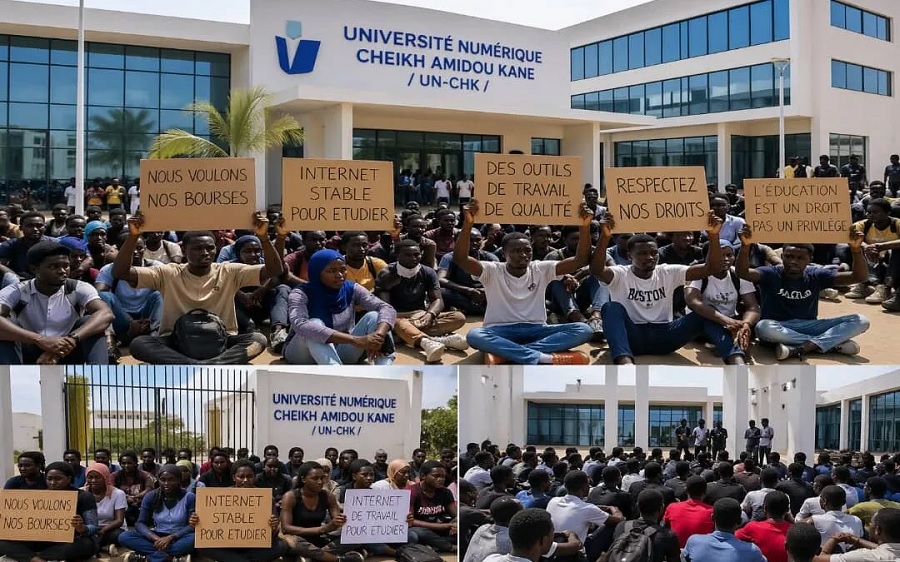
For decades, May in Senegal has symbolized a season of heightened social activism, rooted in historical movements like the global labor day on May 1st and the influential Mai 68 protests that reshaped labor and education systems across Francophone Africa. Today, the country is experiencing another wave of dissent, with multiple sectors erupting in parallel demonstrations.
Transport sector paralyzed by labor disputes
The Association for Urban Transport Professionals (AFTU) launched a strike yesterday, crippling Dakar’s public transit network. Drivers are protesting an ongoing feud with a transport operator over electronic ticketing systems. The conflict escalated after a Dakar court ordered the temporary suspension of new ticketing machines and the seizure of existing units, sparking outrage among AFTU members who view the decision as an attack on their livelihoods.
Government agency faces internal turmoil
Tensions at the Agency for Roads and Highway Management (Ageroute) have reached boiling point. Human Resources Director Cheikh Ahmed Tidiane Thiam publicly criticized the agency’s new leadership for undermining administrative transparency and marginalizing staff. Workers allege that 23 employees were abruptly dismissed, further destabilizing an already fragile work environment.
University students demand unpaid stipends
Students from the 10th cohort of the Cheikh Hamidou Kane Digital University (UN-CHK) took to the streets to protest the partial payment of their scholarships. They report receiving only two out of three years of financial support, despite completing their first cycle of studies. Their appeal to authorities remains unanswered, intensifying frustration among the youth.
From labor unions to university campuses, Senegal’s May unrest reflects deep-seated grievances over employment conditions, governance, and financial security. Whether coincidental or systemic, the convergence of protests across sectors underscores a broader crisis of confidence in national institutions.