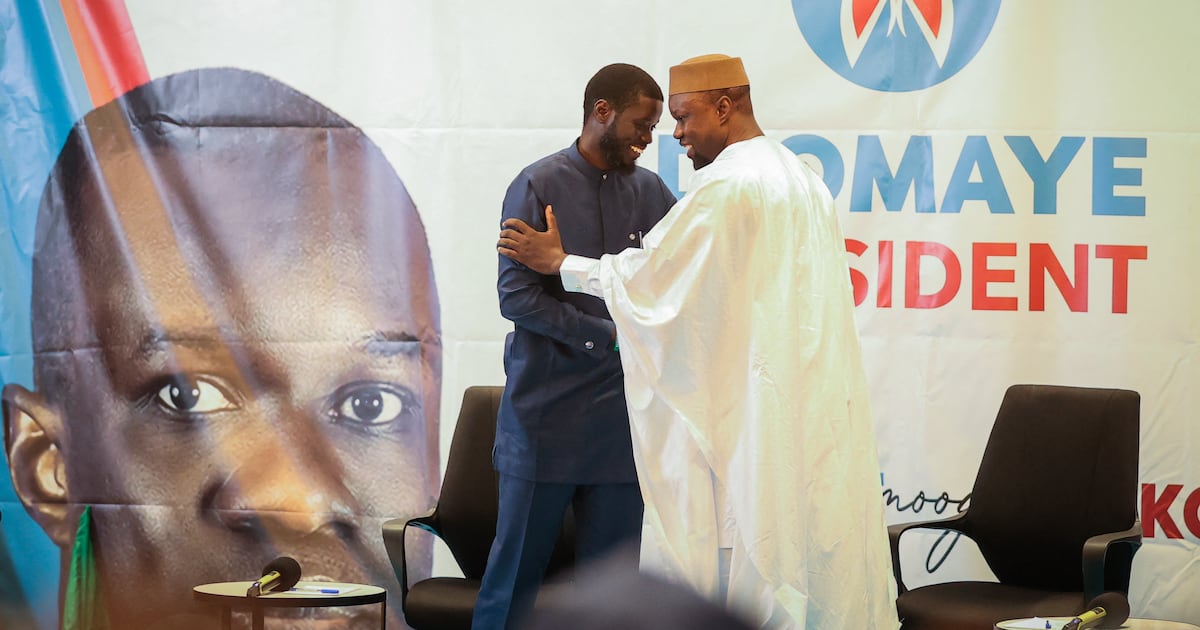
In the corridors of Dakar’s ministries and across the bustling streets of the capital, whispers grew louder over recent months. A once-unbreakable partnership that propelled the opposition to victory had begun to fracture. The campaign slogan that once united millions—« Diomaye mooy Sonko, Sonko mooy Diomaye » (Diomaye is Sonko, Sonko is Diomaye)—slowly lost its resonance. It was replaced by a starker truth: « Diomaye n’est plus Sonko ». The bond between President Bassirou Diomaye Faye and his Prime Minister Ousmane Sonko had visibly weakened, eroded by diverging visions and escalating tensions.
At the heart of their split lay a mounting pile of disagreements: clashing governance styles, competing ambitions, and a battle for dominance within the ruling party, the Pastef. What had begun as a strategic alliance had devolved into a high-stakes power struggle, leaving little room for compromise.
Ousmane Sonko’s calculated gamble
The Prime Minister, a seasoned opposition leader, recognized early that cohabitation with a president intent on asserting full authority was unsustainable. Sonko’s strategy was deliberate. By publicly asserting his independence while remaining in government, he forced Bassirou Diomaye Faye into an impossible choice: either accept a weakened presidency or risk fracturing the very movement that brought them to power.
Each public statement, each hint of defiance, and every reminder of his status as the movement’s founding leader intensified the pressure on the president. Sonko understood the emotional weight he carried among grassroots supporters—a legacy forged during years of persecution under the previous regime. By pushing Diomaye Faye to the brink, he positioned himself to emerge as a martyr if dismissed, reclaiming his role as the undisputed figurehead of the Pastef.
The allure—and danger—of new allies
Since taking office, President Diomaye Faye has been surrounded by a growing circle of advisors—former allies of the ousted administration, political opportunists, and self-proclaimed strategists. Their message is consistent: « You are the president. Show who leads. » The appeal is undeniable. In Senegal’s political landscape, a prime minister wielding equal influence is a constitutional anomaly. Yet the motives behind this chorus of encouragement may be less noble than they appear.
Where were these voices during the Pastef’s darkest hours—when Sonko faced imprisonment, when supporters were met with lethal force, and when the movement was systematically demonized? Many now celebrating Diomaye Faye’s rise were silent beneficiaries of the system they now condemn. Their loyalty is conditional, their loyalty to principles fleeting.
History in African politics is rife with examples of movements that fractured not from external opposition but from internal strife. The danger for Diomaye Faye lies in assuming that those urging him to break from Sonko share his vision for the future. Some may seek only to dismantle the Pastef’s cohesive identity, diluting the transformative project that once inspired a nation.
Can the Pastef survive the split?
The rupture has now become official. But the political fallout remains uncertain. The Pastef’s dominance in Senegal stems from a militant base that is young, mobilized, and deeply devoted. At its core stands Ousmane Sonko—a leader whose symbolic power transcended his legal battles and electoral absence. His influence is not confined to party structures; it is woven into the national consciousness.
President Diomaye Faye holds institutional legitimacy, but Sonko commands something far more potent: unshakable loyalty among the faithful. Should the movement splinter, with factions aligning behind either leader, the president’s position could become precarious. The Pastef has yet to develop an autonomous political apparatus capable of countering Sonko’s enduring appeal. Until it does, its cohesion—and the project it represents—hangs in the balance.
The curse of political heirs
All political heirs face a fundamental dilemma: the need to carve out their own identity. Few leaders accept the role of a figurehead indefinitely. Yet in this struggle for autonomy, the original mission of the Pastef risks being overshadowed by ego and ambition.
The movement emerged from a promise of radical change—just governance, economic sovereignty, social justice, and national dignity. But when internal rivalries take precedence, movements lose sight of their purpose. The irony is stark: the very forces that propelled the Pastef to power may now be its undoing, and the beneficiaries could be its long-standing adversaries, who need do nothing but watch from the sidelines.