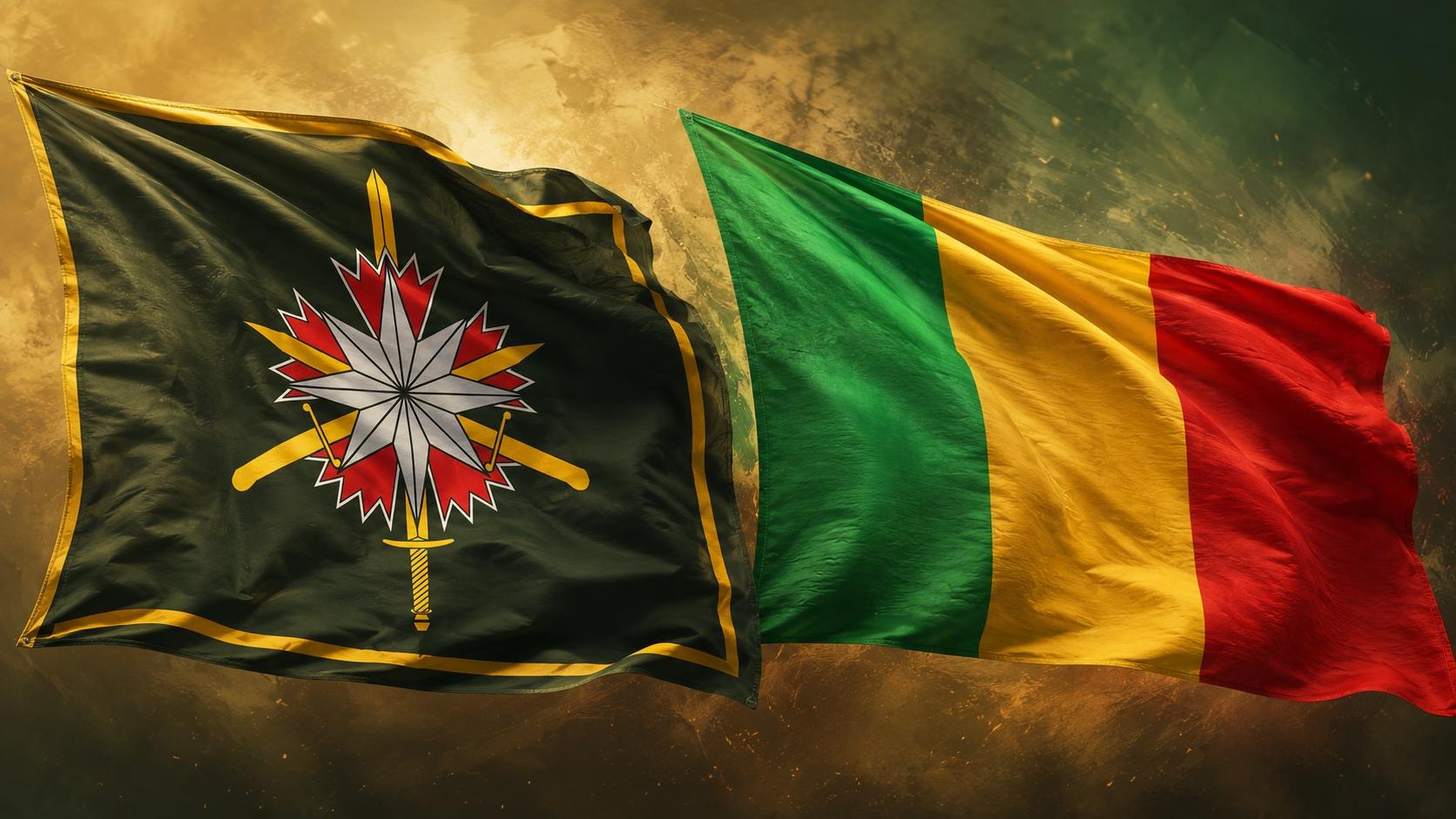
The reputation of Russia’s paramilitary forces in the Sahel—once considered nearly unbreakable—faces a stern test in the dunes of Anéfis, Mali. Western African diplomats are now questioning whether the myth of invincibility has crumbled after intense clashes in this strategically vital town in northern Mali. Africa Corps, the Kremlin-backed force that replaced the Wagner Group, had positioned itself as the ultimate security guarantor for Sahelian governments. Yet Anéfis exposes the glaring weaknesses in a strategy stretched to its limits.
The strategic choke point of Anéfis
Anéfis is no ordinary settlement—it sits on a critical road linking Kidal, a stronghold of Tuareg rebels, to the rest of the country. When Malian troops and their Russian advisors launched a major operation there, they expected a swift victory. Instead, they walked into a tactical disaster. Trapped between mobile guerrilla fighters from the Cadre stratégique permanent (CSP-DPA) and the relentless pressure of jihadist ambushes, the Africa Corps contingent suffered devastating losses. Burned-out armored vehicles, abandoned heavy weaponry, and captured or killed soldiers—footage from the battlefield starkly contradicts the ironclad propaganda peddled from Bamako and Moscow.
Russia’s asymmetric warfare dilemma
The failure at Anéfis isn’t just a local setback—it strikes at the heart of Russia’s Sahel narrative. By aligning with the Alliance of Sahel States, Moscow promised brutal, instant results, positioning itself as the antidote to decades of Western interventions like Barkhane and MINUSMA, which it claimed had failed the people. The harsh truth is now undeniable:
- Desert entrapment: Holding isolated outposts in endless sand becomes a logistical nightmare against hyper-mobile indigenous fighters.
- Intelligence gaps: Despite high-tech surveillance, Africa Corps repeatedly misjudges the resilience and coordination of rebel factions in northern Mali.
- Overstretched substitute army: Russia, bogged down in multiple global conflicts, cannot indefinitely deploy elite troops across a territory as vast as Europe. Africa Corps’s ranks, formidable as they are, thin out trying to play fire brigade in the Sahara.
Bamako’s fragile alliance
In Bamako, the defeat at Anéfis has cast a long shadow. The transitional government’s entire security strategy hinges on Russian muscle. When that muscle falters under deadly ambushes, the dream of reclaiming the entire national territory begins to crumble. The battle may well signal a turning point—not just militarily, but politically. It reveals a harsh truth: brute force, no matter how skilled its wielders, cannot resolve deep-rooted identity and political crises. For Moscow, the Sahel is no longer an inexpensive display of influence. It is becoming a costly sand trap.