What the Diomaye-Sonko Crisis Reveals About Power in Senegal
I believe there is indeed reason to speak of a crisis, especially since it involves the President of the Republic and his former Prime Minister who has become President of the National Assembly.
The Diomaye-Sonko crisis highlights difficulties in the exercise of power. Until now, Senegal’s model—except for the early independence years (1960-1962)—relied on a presidential-style system with a dominant majority, as the ruling party also held a majority in the National Assembly. Today, we are effectively witnessing a cohabitation.
However, it is too early to draw definitive conclusions because events are still unfolding. Unless we limit ourselves to what the crisis has revealed so far, knowing that further developments are inevitable. This episode is a test of resilience for Senegal’s political system and its ability to overcome crises. Indeed, it is during such moments that this capacity and resilience are truly assessed.
Like any transition, this situation allows us to evaluate the strength and adaptability of Senegal’s political system. Can it accommodate a genuine division of power at the top? Is it more receptive to a strong executive that also controls the legislature, as has been the case since 1963? Only time will tell. In any case, moderation in the exercise of power seems to be a protective mechanism for political stability.
Does This Crisis Fit into Senegal’s Tradition of Presidential-Prime Minister Rivalries, or Does It Mark a Break?
On a national scale, I believe this is more of a rupture. Since 1960, there has been only one crisis—posing a threat to institutional stability—between President Léopold Sédar Senghor and his Prime Minister Mamadou Dia in 1962.
To understand this situation, some context is necessary. The President of the Republic wields very significant constitutional powers. He defines national policy, which the Prime Minister must implement. However, during the election that brought Bassirou Diomaye Faye to power, Ousmane Sonko had chosen him as a candidate before providing decisive support.
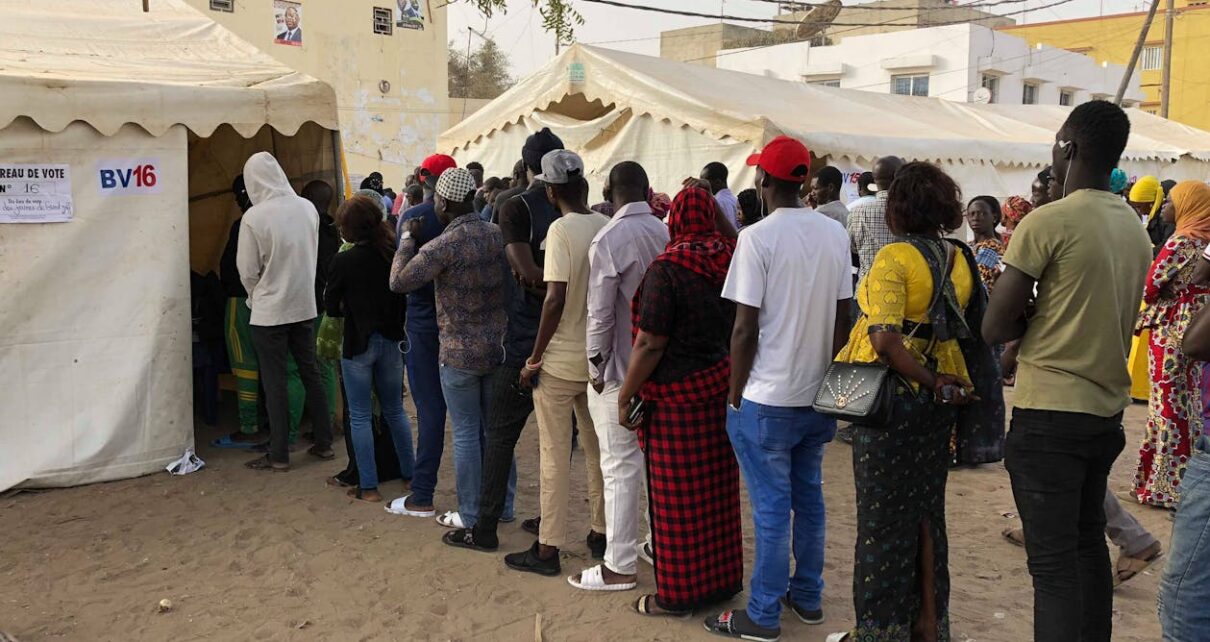
The current situation results from the collision of two distinct sources of legitimacy. On one hand, the legal legitimacy of a president endowed with substantial constitutional powers. On the other hand, the political legitimacy of a prime minister who controls the party apparatus and enjoys genuine grassroots support. This is evident from the results of the legislative elections of November 17, 2024. The next local elections, scheduled for January 2027, will serve as a regulatory mechanism in an already contentious cohabitation process.
What Power Resources Do Faye and Sonko Each Rely On Today?
Political parties seek to provide material benefits to their activists. Conversely, activists keep party organizations running. From this perspective, both politicians can draw on expertise while trying to consolidate electoral support.
Ousmane Sonko can rely on the PASTEF-Les Patriotes party, which unanimously elected him president (589 voting delegates) at its congress on June 6, 2026. He also commands a strong parliamentary majority (130 deputies out of 165) with significant constitutional powers—oversight of government action, evaluation of public policies, motions of censure, and more.
As for Bassirou Diomaye Faye, he holds important constitutional powers as head of state, but he needs the National Assembly to exercise some of his prerogatives. Nevertheless, he can rely on the power of the state. The presidential posture is also a symbolic resource he can mobilize.
What Factors Will Be Decisive in the Evolution of the Power Balance Between the Two Camps?
The stakes are high, but the political game is regulated at regular intervals through elections. These are, in principle, corrective and pacifying mechanisms. A strong consensus on the electoral calendar, a demand for transparency in the electoral process, and moderation in the exercise of executive or legislative power will be essential.
Public perceptions of “Ousmane Sonko’s governance” and that of Bassirou Diomaye Faye will be decisive. The effectiveness of alternative public policies, the demand for moralization of public life, and population expectations regarding accountability and “justice for the martyrs” (those killed during political protests between 2021 and 2024) are all factors that will influence the evolving power balance between the two camps.
Elections and the party system are protective and regulatory mechanisms of democratic regimes. However, dysfunctions related to a lack of transparency in electoral processes and an absence of moderation in the exercise of constitutional powers could lead Senegal’s population to resort to violent collective action.