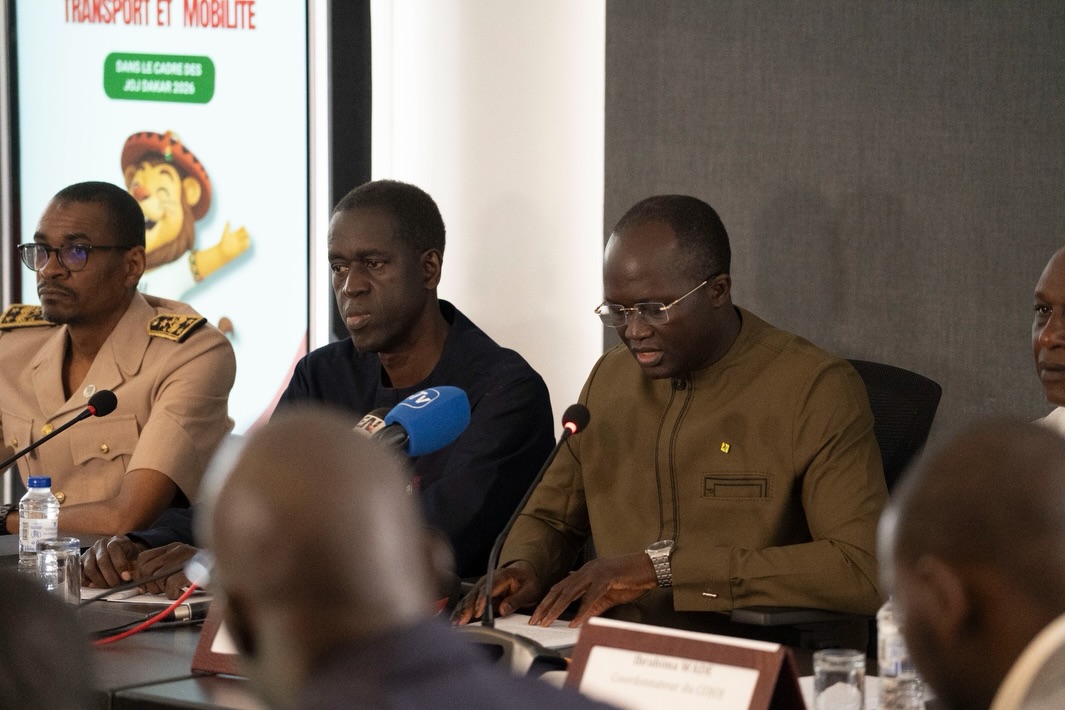
In a decisive step toward ensuring seamless logistics for Dakar 2026, Senegal has launched a coordinated transport and mobility strategy under the leadership of Minister Yankhoba Diémé. The inaugural meeting of the Transport and Mobility Steering Committee (COPIL) marked the official kickoff of the operational plan for the upcoming Olympic Youth Games, setting the stage for a continent-first hosting of a global multi-sport event.
The stakes are high: nearly 2,700 athletes from 206 National Olympic Committees will descend on the West African nation, accompanied by officials, volunteers, and spectators, all relying on a flawless transportation network. To meet this challenge, authorities have designed a three-hub infrastructure linking Dakar, Diamniadio, and Saly/Mbour.
The organizational backbone includes:
- COPIL, chaired by Minister Diémé, overseeing high-level coordination;
- Mobilité JOJ 2026 Technical Committee, managed by the CETUD, focusing on transport systems;
- AIBD Operations Committee, dedicated to managing passenger flows at the Blaise Diagne International Airport.
Rail transport stands out as a cornerstone, enabling swift connections between key zones—Dakar, Diamniadio, the AIBD, and Thiès. Minister Diémé emphasized that mobility is not just a logistical necessity but a critical pillar of security and success for the Games. With preparations in full swing, the next phase involves large-scale simulations to rigorously test the system’s efficiency before the 2026 event.
The initiative aims to position Dakar 2026 as a showcase of Senegal’s organizational prowess while embedding long-term improvements in the country’s transport governance—a legacy far exceeding the sporting spectacle itself.