US shifts Sahel strategy to focus on trade and security
This week’s visit to Mali by Nick Checker, head of the US State Department’s African Affairs Bureau, signals Washington’s renewed engagement in the Sahel. However, the visit underscores a strategic realignment rather than a traditional return. The new approach centers on three key pillars: a pivot toward trade diplomacy—particularly in minerals—a refocus on security with reduced permanent military presence, and a shift from broad humanitarian aid to targeted economic and security partnerships.
Expert analysis: what’s driving the US approach in the Sahel?
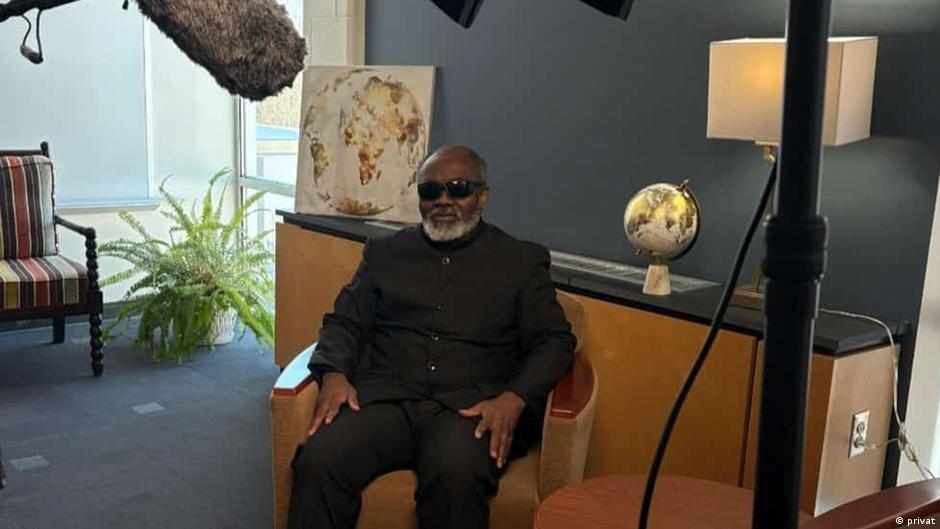
DW: Dr. Gnaka Lagoke, during Nick Checker’s meeting with Mali’s foreign minister and transitional leader Assimi Goïta in Bamako, what shifts in US foreign policy under the Trump administration are evident in the Sahel, and what are the primary objectives in West Africa?
When President Bazoum was ousted in Niger, we saw France mobilize its war council to restore him to power. The US, however, adopted a different stance. They observed rather than intervened, even after Niger’s new authorities requested the closure of US military bases. This restraint was evident even during the Biden administration.
Today, amid global tensions between Russia, China, and the West, US policymakers are emphasizing security and economic interests, particularly access to critical minerals abundant in the Sahel. This aligns with broader US strategies seen in Venezuela, Iran, and the Democratic Republic of Congo, where resource access remains a priority.
Why is Nigeria emerging as Washington’s key partner in West Africa?
Under President Trump, the US justified military actions in Nigeria by claiming to protect Christian communities from Islamist militants. While airstrikes targeted militant strongholds, analysts argue the true motivation lies in Nigeria’s vast oil reserves and other strategic resources. This security-driven and resource-focused approach is now guiding US actions across the Sahel, likely leading to new military base deployments in the region.
Reports suggest that US military facilities previously stationed in Niger have relocated to Benin and Côte d’Ivoire.
What incentives does the Alliance of Sahel States (AES) have to engage with Trump’s America?
The US offers a critical advantage: a willingness to engage in dialogue with AES countries, which have been isolated by France and the EU. Additionally, in the context of global power rivalries between Western nations and BRICS, the US provides African countries with diplomatic alternatives. This could benefit AES members if they leverage negotiations effectively.
A key element of the US discourse is respect for sovereignty—a message likely to resonate in the Sahel. However, reports suggest covert networks involving France, the US, and other actors may be working to destabilize governments in Mali, Burkina Faso, and Niger. Whether this reflects a double game remains to be seen.