The Republic of Senegal, widely regarded as a democratic leader in West Africa, continues to grapple with significant gaps in women’s political representation, despite constitutional guarantees and progressive legal frameworks. Recent electoral outcomes reveal a troubling trend: only 18 women lead the country’s 558 municipalities, while just three preside over the 43 departmental councils. These figures underscore persistent structural barriers that hinder equitable access to power.
Electoral setbacks and systemic barriers
At the national level, the 2024 legislative elections marked a step backward for gender parity in the National Assembly, with female representation dropping from 44.2% to 41%. Even more striking, women accounted for just 13% of list heads, signaling systemic resistance to their leadership in decision-making processes. These disparities are not merely numerical—they reflect deep-rooted cultural biases, unequal access to political financing, limited media visibility, and entrenched barriers to electoral participation.
Breaking the cycle: A regional initiative takes shape
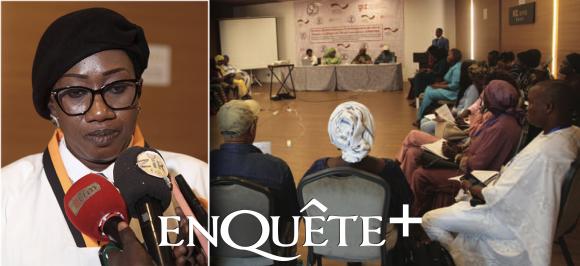
In response to this urgent challenge, Senegal is hosting a two-day high-level seminar focused on strengthening women’s political participation. Organized by the Réseau des femmes leaders pour le développement (RFLD), the event brings together 30 women leaders—parliamentarians, party heads, local officials, activists, and civil society leaders—representing diverse generations and political perspectives. Their shared mission? To dismantle the obstacles that have long excluded women from shaping the nation’s future.
Bator Seck, RFLD focal point for Senegal, emphasizes that while the 2010 gender parity law and Senegal’s Constitution of 2001 enshrine equality, real progress remains elusive. “Women in Senegal are the backbone of communities, driving local economies, championing social causes, and fostering peace,” she asserts. “The question is no longer whether women can govern—it is why systems persist in denying them that right.”
Building capacity and solidarity
The seminar serves as a platform to exchange experiences, analyze systemic challenges, and develop actionable strategies. Participants are focusing on three core pillars: political participation, leadership development, and inclusive governance. The RFLD’s Afrofeminist Initiative for Human Rights Development in Francophone West Africa, supported by the SEA-T program of BMZ and GIZ, aims to amplify these efforts across the region.
“Democracy is incomplete when half the population is underrepresented,” Seck notes. “The future of Senegal cannot be built without women—or worse, without their input. It must be built with them.”
Empowering women at every level
The discussions also highlight critical gaps in mentorship, skills training, and economic autonomy. Many women, despite possessing the skills and legitimacy, hesitate to pursue leadership roles due to societal pressures, stereotypes, and a lack of structured support. Maman Diouf Fall, representing the Ministry of Family and Social Solidarity, stresses the need for targeted programs in leadership, public speaking, digital governance, and project management to equip women for public office.
“Rural women, in particular, face disproportionate barriers,” Fall explains. “Training opportunities are often concentrated in urban centers, leaving those in vulnerable communities behind. Mentorship programs and intergenerational networks are essential to nurture the next generation of female leaders.”
She underscores the ministry’s initiatives, including leadership training, civic education, and psychosocial support, which aim to strengthen women’s resilience and participation in economic, social, and political spheres. These efforts also tackle critical issues such as child marriage, gender-based violence, and girls’ education, fostering environments where women can thrive as leaders and change-makers.
A call for collective action
Both Seck and Fall advocate for a holistic approach—one that combines policy advocacy, community mobilization, and economic empowerment. “True inclusion requires more than laws on paper,” Fall asserts. “It demands a cultural shift, where women are not just participants in democracy but architects of its future.”
The seminar concludes with a renewed commitment to breaking down systemic barriers, ensuring that women’s voices are not only heard but central to Senegal’s political landscape.