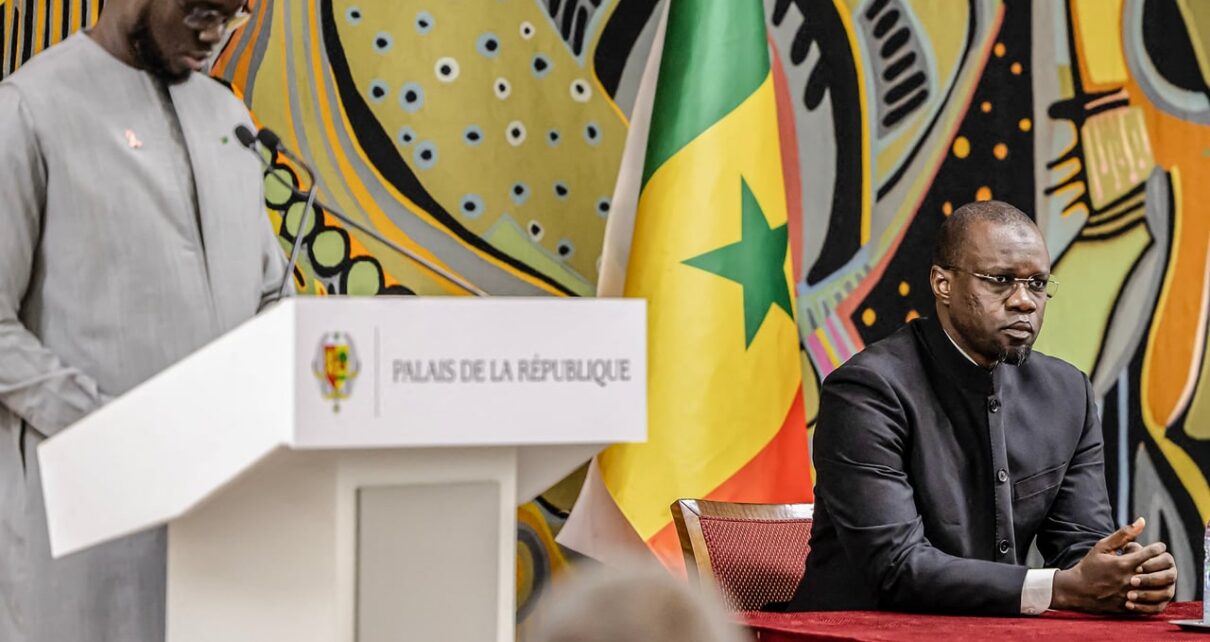

During a national celebration press briefing on April 4, 2025, President Bassirou Diomaye Faye made a bold declaration: he intends to overhaul the balance of power between the presidency and other state institutions. His stance was clear: “I want strong CEOs, strong ministers, a highly capable Prime Minister. I don’t want to be the type of president who holds all the power alone.”
This announcement marked the beginning of a constitutional reform process that analysts now believe could disproportionately benefit opposition leader Ousmane Sonko. Here’s why.
Redistributing power: a strategic shift in governance
The proposed reforms aim to decentralize authority, placing greater emphasis on cabinet members and institutional leaders. By limiting the president’s direct control, the changes could create a more balanced governance structure—one that may inadvertently strengthen Sonko’s political positioning.
Under the current system, the presidency wields significant influence over appointments and policy direction. However, the reforms envision a scenario where:
- Directors-General and ministers gain more autonomy in decision-making
- The Prime Minister assumes a more prominent role in administration
- The president’s role shifts toward strategic oversight rather than operational control
This redistribution of power could level the playing field for opposition figures like Sonko, who have long criticized the concentration of authority in the presidency.
Why Sonko stands to gain
Sonko’s political career has been defined by his opposition to centralized power structures. His party, Pastef, has repeatedly called for institutional reforms that reduce presidential dominance. The proposed changes align closely with his long-standing demands:
- Reduced executive overreach: Sonko has frequently argued that excessive presidential power undermines democracy. The reforms could weaken this dynamic.
- Enhanced parliamentary influence: A stronger Prime Minister and cabinet could shift legislative-executive balance in his favor.
- Greater transparency: Decentralization may expose weaknesses in current governance, benefiting opposition scrutiny.
Critics argue that while the reforms appear progressive, they could also lead to administrative fragmentation—potentially creating opportunities for political opponents to exploit institutional gaps.
The road ahead: challenges and uncertainties
The success of these reforms hinges on political negotiations. While President Faye’s vision is ambitious, implementing it will require:
- Bipartisan consensus in the National Assembly
- Public buy-in amid competing interpretations of the changes
- Careful balancing to avoid creating power vacuums
For Sonko, the stakes are high. If the reforms pass, they could reshape Senegal’s political landscape in his favor. If they stall or face dilution, he may lose a key strategic advantage.
One thing is certain: Senegal’s constitutional future is now at a pivotal crossroads, with far-reaching implications for its democracy.