Terms like “Bonya” (respect), “woro songo” (the price of cola), and “buru songo” (the price of bread) are common in local languages across Mali. They serve as euphemisms for the illicit “small gifts” that fuel a systemic culture of corruption. Despite the damage it causes, this practice has become an unsettlingly accepted part of daily life.
Why has this behavior become so socially integrated? More importantly, how can a society denounce a phenomenon that the majority of people seem to tolerate?
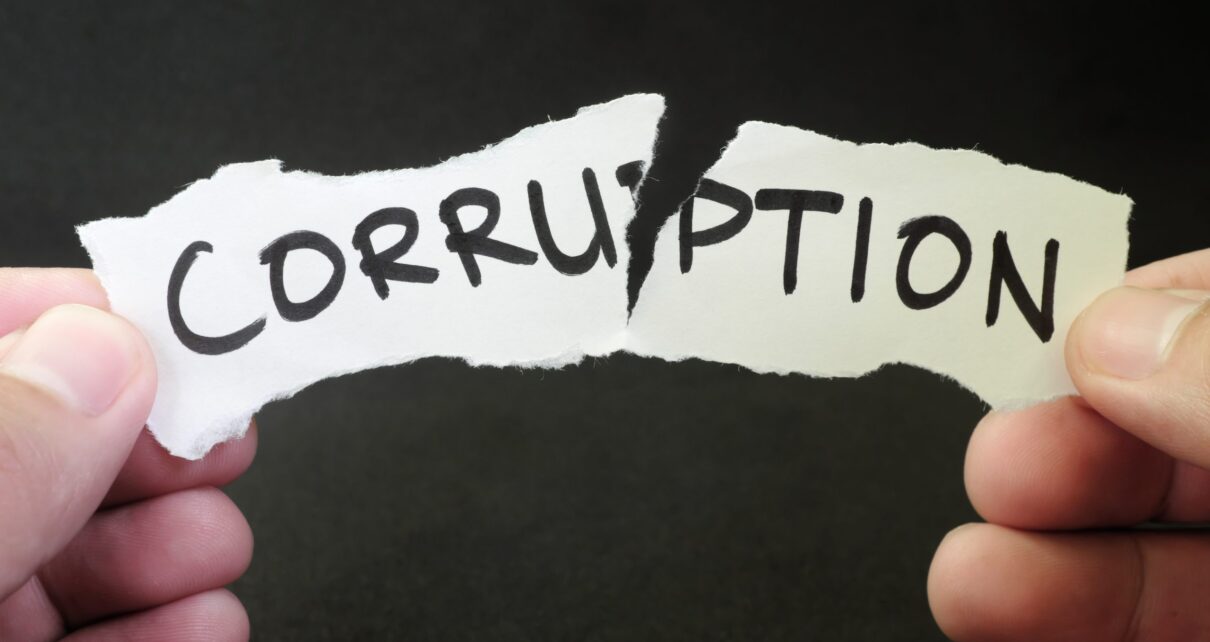
According to Transparency International, corruption is defined as the misuse of delegated power for private gain. By this standard, corrupt acts are frequent occurrences throughout Mali, deeply embedded in public services and administrative interactions. These practices range from direct bribes to illicit favors and various forms of influence peddling.

Myriam (a pseudonym), a commercial director at a Bamako advertising agency, knows this reality all too well. She explains that every time she secures a contract, representatives from the client organization demand a percentage of the deal. “It is take it or leave it,” she says, frustrated by an extortion system that feels increasingly impossible to navigate.
Corruption also wears a more mundane mask: a bribe to speed up paperwork, a “gift” to ensure a passing grade on an exam, or using personal connections instead of merit to obtain a favor. These routine acts have become so common they are now perceived as standard operating procedure in many sectors.
Entrepreneur Omar Keita shared his experience of waiting all day in a fuel queue, only to be forced to pay 10,000 F.CFA to a pump attendant who refused to serve him without a “gratification.” This happened during a period of severe fuel shortages in Mali, caused by insurgent attacks on tankers traveling from Sénégal and Côte d’Ivoire.
Keita admitted feeling “deeply hurt” by his own participation in the act. However, as these practices become more frequent, the moral weight of corruption diminishes. This cultural shift is a primary driver of its widespread acceptance.
Retired international civil servant Sibiri Diarra notes that in the United Nations system, gift-giving is strictly regulated to prevent it from crossing into corruption. In Mali, however, where such rules are poorly understood by the public, the door remains wide open for abuse. Anti-corruption advocates argue that the lack of real legal consequences only strengthens these habits.
Sociologist Mohamed Abdellahi Elkhalil, an expert on Sahelian social issues, believes corruption has fully infiltrated Mali‘s social structure. He warns that this “normalization” threatens the nation’s democratic foundations and economic stability. He argues the phenomenon is sociological rather than cultural, fueled by a desire to live beyond one’s means.
Oumar Korkosse, from the Network of Traditional Communicators for Development (Recotrade), adds that poverty and unemployment act as catalysts. When wages are low or paid irregularly, small bribes become a survival strategy for many, even those who value integrity.
The Association Malienne de Lutte contre la Corruption et la Délinquance Financière (AMLCDF) emphasizes that the issue is profoundly moral. During a recent workshop in Bamako, they called for the development of a civic conscience based on ethics and respect for the common good, suggesting that education and religious discourse could be key tools for change.
An endemic crisis in Mali
A March 2024 survey by Afrobarometer reveals that citizens perceive judges, business leaders, civil servants, tax officials, and police officers as the most corrupt actors in the country. Many respondents admitted to paying bribes to access basic public services.

On the roads, corruption is a constant frustration for people like Ousmane Diarra, a taxi-moto driver. He reports being stopped multiple times a day by police and forced to pay between 1,000 and 2,000 F.CFA each time, regardless of whether his paperwork is in order. “It’s a massive burden,” he says, noting that he spends much of his day pleading with officers.
The Afrobarometer study highlights that corruption is most rampant within public administrations, including health centers, schools, and law enforcement. This has led to Mali being viewed internationally as a high-corruption zone.
In the 2024 Corruption Perceptions Index (CPI) by Transparency International, Mali scored 27 out of 100, ranking 135th out of 180 countries. By 2025, the score slightly shifted to 28/100, placing the country at 136th. This stagnation underscores the persistent nature of the problem.

Furthermore, the World Bank’s 2023 Worldwide Governance Indicators gave Mali a score of -0.86 for corruption control, well below the global average of -0.04. This reflects the weak capacity of national institutions to address the issue.
As lawyer Soumaré Boubacar explains, when the population loses faith in the integrity of their institutions, corruption becomes a survival tactic. “If everyone else is doing it, why shouldn’t I?” he remarks, highlighting the dangerous logic that sustains the cycle.