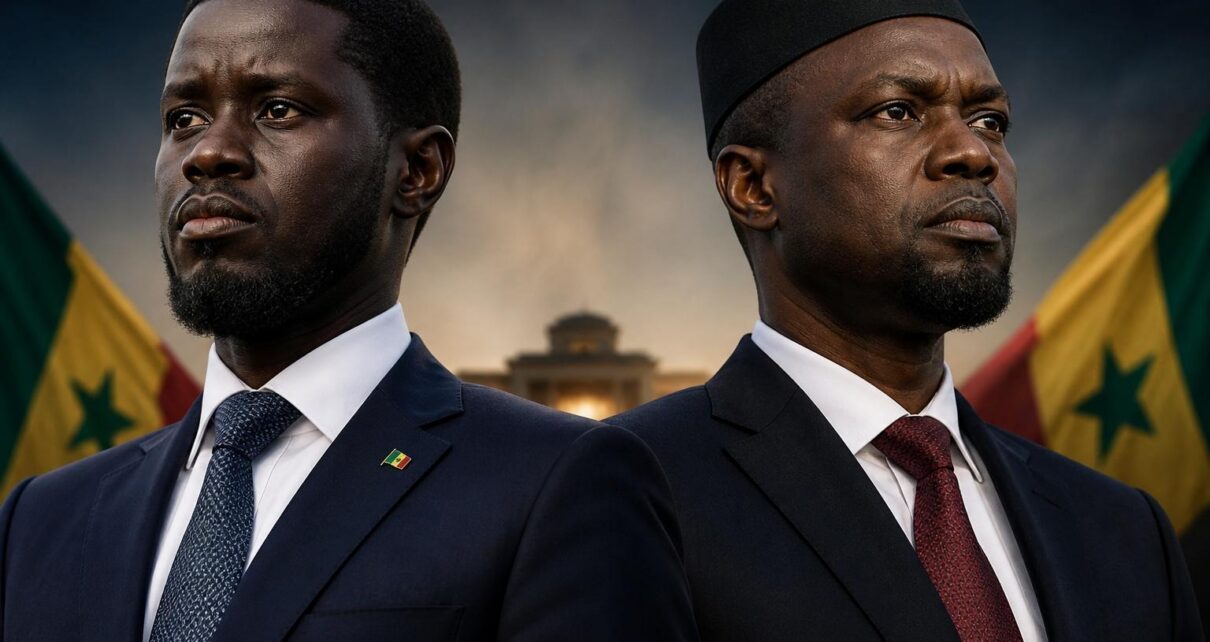
In a dramatic shift from the once-unified narrative of Senegal’s leadership, President Bassirou Diomaye Faye has publicly signaled a decisive break from the tight-knit alliance with his Prime Minister, Ousmane Sonko. The remarks, delivered during a press interview in early May 2026, have sent shockwaves through Dakar’s political landscape, marking a pivotal moment in the country’s governance. No longer content to be seen as a mere extension of his party’s will, the president has drawn a clear line in the sand, declaring his readiness to dissolve the partnership if national interests demand it.
a weekend of bold declarations
What began as a subtle shift in tone during a routine press interaction quickly escalated into a full-blown political earthquake. For months, observers had noted growing friction between the government’s policy direction and the public statements of Pastef party officials. Yet when President Faye took the podium, he made no attempt to sugarcoat the reality. With a tone both measured and unyielding, he reminded the nation that his mandate comes from all Senegalese citizens—not from any political faction. His words carried particular weight when he added that while his loyalty to the reform agenda remained unshaken, his ultimate duty was to the people, even if it meant severing ties with his former political family.
the weight of ousmane sonko’s shadow
The roots of this tension trace back to the very origins of the current administration. Elected under a campaign slogan equating a vote for Diomaye with a vote for Sonko, the president initially governed under the long shadow of his charismatic premier. Sonko, never fully shedding his role as party leader, continued to dominate headlines with frequent public appearances, sometimes overshadowing official government communications. Over time, the divergence in their approaches became impossible to ignore. Where Sonko advocated for bold, confrontational policies—particularly on debt management and relations with international institutions—President Faye leaned toward pragmatic negotiation and measured reform. Even in cabinet appointments, the clash was evident: the president sought technocratic competence, while party loyalists pushed for early supporters to be rewarded.
is separation now inevitable?
While an immediate split remains unlikely, the possibility now looms large over Senegal’s political horizon. President Faye’s public stance suggests he is determined to carve out an independent identity for the presidency, one not dictated by party demands. Insiders at the Prime Minister’s office have downplayed the remarks, framing them as part of a natural division of responsibilities. But the president’s words paint a different picture—one where the institution of the presidency will no longer be held hostage to partisan interests. For a nation that has witnessed turbulent executive duos in the past, this moment raises real concerns about potential institutional paralysis. Should a formal separation occur, the president would face the daunting task of governing without the grassroots support of the Pastef, forcing him to seek new alliances or rely more heavily on decree powers.
the stakes of presidential emancipation
At the heart of this power struggle lies a delicate balancing act. President Faye must reassure both international partners of Senegal’s stability and domestic audiences that he is firmly in control. Public opinion is deeply divided. The youth, many of whom remain loyal to Sonko’s fiery rhetoric, may view this shift as a betrayal of the original promise. Meanwhile, a more institutionalist segment of society sees it as a long-overdue assertion of presidential authority. The president walks a tightrope—asserting autonomy without triggering social unrest that opponents could exploit. The real question is no longer about personal rapport between the two leaders, but whether Senegal’s governance structure can sustain two competing centers of power indefinitely.
What we are witnessing is the end of a political fairy tale. Governance is not built on camaraderie, but on the strategic exercise of power. President Faye has made clear that the Constitution grants him powers he is now prepared to wield alone. The once-effective duo has served its purpose in securing victory; now, it risks becoming an obstacle to effective leadership. Senegal stands at a crossroads where the state must take precedence over the party—and the president has just drawn the line.