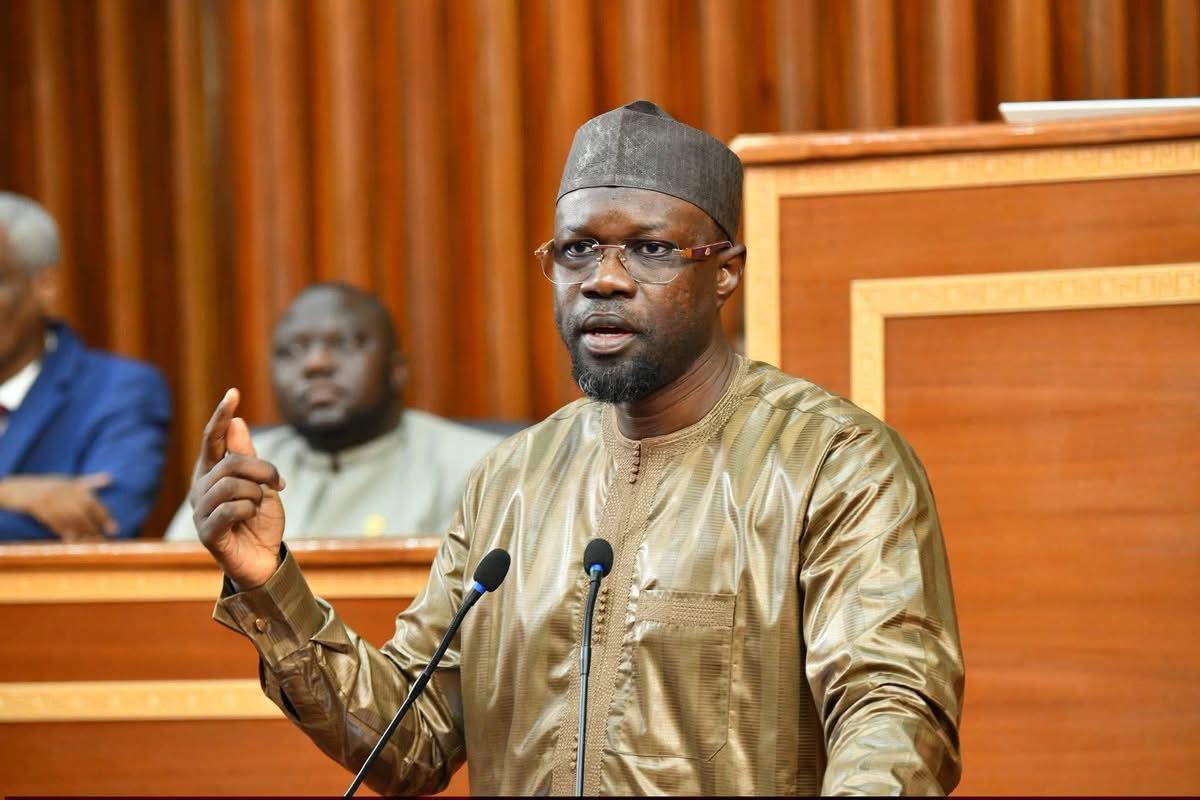
An institutional upheaval reshapes Senegal’s political landscape
The swift elevation of opposition leader Ousmane Sonko to the helm of Senegal’s National Assembly has sent ripples through the country’s political establishment. Following a series of abrupt institutional maneuvers, the former presidential candidate now wields unprecedented legislative authority, raising questions about the future of governance in Dakar.
The trajectory of Sonko’s rise defies conventional political timelines. Just days after his removal from prior governmental responsibilities, the incumbent Assembly President tendered an unexpected resignation. This unexpected vacancy created an immediate pathway for Sonko’s ascension, leaving political observers scrambling to interpret the sequence of events. Within a remarkably short timeframe, the once-isolated opposition figure found himself installed as President of the National Assembly (PAN), presiding over the nation’s legislative machinery.
A calculated power play unfolds
Analysts warn that this strategic maneuver positions Sonko as a direct adversary to the executive branch. By securing control of the legislative agenda, budgetary allocations, and lawmaking processes, the new PAN has acquired formidable tools to either advance or obstruct national policies. The potential for institutional gridlock now looms large over Senegal’s political horizon.
« This represents more than political maneuvering—it constitutes an institutional siege strategy, » remarked a political commentator familiar with the unfolding situation. « The delicate balance of power has been shattered, with both branches now locked in a high-stakes confrontation. »
Motives under scrutiny: principle or pragmatism?
Critics of Sonko’s sudden rise portray him as an opportunist who has abandoned his earlier rhetoric of systemic change. Where once he championed anti-establishment ideals, his detractors now see a calculated political operator willing to exploit crises to consolidate his own influence. The transformation of his public image—from revolutionary figure to institutional power broker—has fueled intense debate about his true motivations.
Regardless of perspective, one reality remains undeniable: Sonko’s legislative triumph places him in a position of immense strategic importance. The question now is whether this institutional conquest will serve the broader interests of the Senegalese people or merely serve as the opening salvo in a broader campaign to destabilize the highest echelons of government. What is certain is that the political landscape has undergone a seismic shift, with the battle for institutional dominance far from concluded.