Beyond being neighbors in the Sahel region of Africa, Burkina Faso, Mali, and Niger share at least three significant commonalities.
First, all three nations are currently governed by military juntas.
Second, these military regimes are responsible for severe human rights violations, including various atrocities. Violence against civilians during ongoing conflicts is a persistent issue in the region, alongside the systematic suppression of political and civil rights.
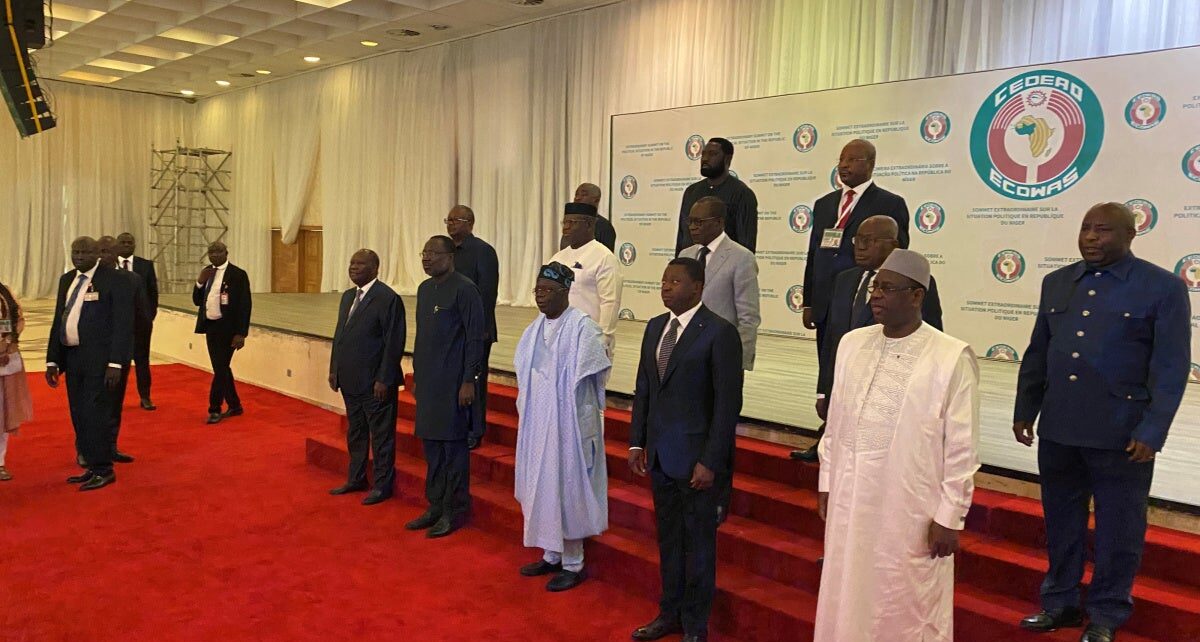
Third, they have all officially withdrawn from the Economic Community of West African States (ECOWAS).
This third development is more closely linked to the first two than it might initially appear.
ECOWAS operates an institution known as the Community Court of Justice. Since 2005, this tribunal has held the authority to adjudicate human rights cases brought forward by citizens of member nations. Individuals do not need to exhaust their local legal options first; they can petition the ECOWAS Community Court of Justice directly.
The Court has historically issued significant rulings regarding human rights protections, specifically involving Burkina Faso, Mali, and Niger.
Consequently, it is easy to see why the military juntas in these countries—whose security forces are frequently accused of grave abuses—are eager to leave ECOWAS. By doing so, they seek to avoid accountability by placing their actions outside the legal reach of the Court.
While this is a convenient maneuver for the regimes, it is a disaster for victims of military junta crimes, who are losing a vital avenue for seeking justice.
Domestic legal remedies have already failed them. The military authorities in Burkina Faso, Mali, and Niger rarely investigate security forces, armed groups, or other individuals responsible for serious violations during armed conflicts, and prosecutions are even rarer.
Victims now face a future with even fewer legal safeguards.
Within the new confederation established by these three states, it is evident that accountability and justice are not being treated as priorities.
A Malian political activist currently living in exile in France recently summarized the gravity of the situation:
« Since taking power by force, these military governments have consistently failed to hold those committing flagrant human rights violations accountable […]. This latest step only serves to confirm their disregard for human rights and the rule of law. »