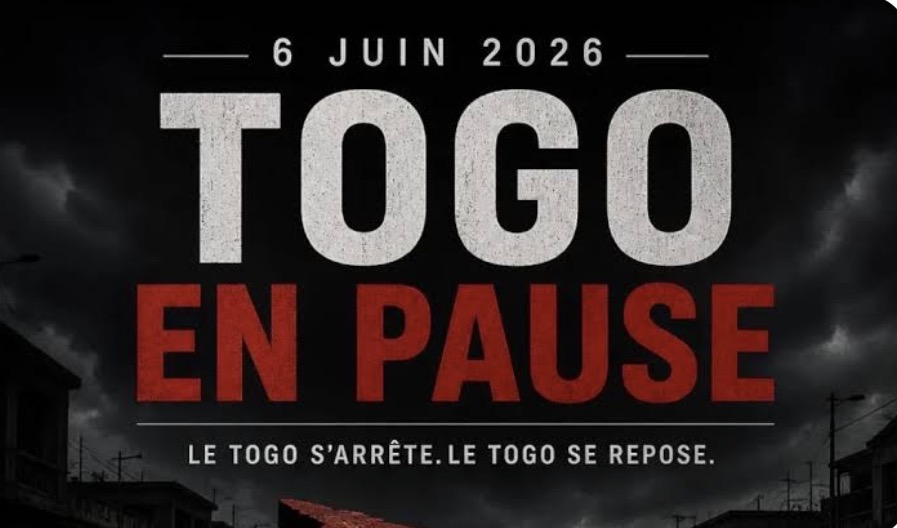
The 6th of June 2026 is not just another date on the calendar—it is a day of deliberate defiance. For nearly six decades, Togo has operated under a deeply entrenched system where political, military, and ethnic interests intertwine to preserve power at all costs. Now, with the Togo en Pause movement, supported by the M66 and the nation’s resistance forces, citizens are making a bold statement: they will no longer play the roles assigned to them in this rigged system.
Elections, institutions, and official narratives have long been hollow performances. The machinery of repression—silencing dissent, curtailing freedoms, and manipulating outcomes—is not an exception but the very foundation of how this regime sustains itself. What many once dismissed as temporary setbacks are now recognized for what they truly are: deliberate mechanisms of control.
A new generation rejects the status quo
The youth of Togo have come of age under a system that offers no real alternatives. They have witnessed marches violently dispersed, critics silenced, and media outlets muzzled. They have endured deep-rooted inequalities, social divisions, and territorial disparities. Yet, they refuse to accept this as their fate.
The Togo en Pause initiative is not a call for another protest—it is a strategic withdrawal. The message is clear: if the regime will not listen, then the people will simply stop feeding its machinery. Shuttered businesses, empty streets, and homes kept closed are not signs of surrender; they are political statements. This is resistance without violence, a refusal to legitimize a system that has never served them.
A system designed to exclude
Power in Togo is not just held by a single leader or family—it is embedded in a militarized, ethnic, and political network that controls key institutions. The army, security forces, public administration, and state-owned enterprises are all operated by loyalist factions. The system does not function on merit or equity; it exists to preserve itself.
This reality is no secret to Togolese citizens or the diaspora. Behind polished international partnerships and promises of reform, the structures of inequality remain intact. Poverty persists, opportunities shrink, and hope dwindles. Togo en Pause is an act of collective awakening—a refusal to normalize what should never have been accepted as normal.
United in stillness
The beauty of this movement lies in its simplicity. It is an appeal to every sector of society: workers, traders, students, civil servants, artisans, farmers, and those living abroad. Each person, regardless of their role, can participate by withdrawing their participation from the system that oppresses them. On June 6, silence becomes resistance.
This is not a call for chaos—it is a demand for clarity. The people of Togo are tired of empty political rituals, hollow promises, and cycles of stagnation. They are saying, in unison: “We will not be extras in your political theater.”
The test of courage
Choosing to stay home, to refrain from work, to avoid public spaces—these are not easy decisions. They carry real consequences: lost income, potential reprisals, and the anxiety of the unknown. But this is precisely why the 6th of June matters. It forces a confrontation with the fear that has kept a nation trapped for generations.
Will Togolese citizens continue to tolerate a system that offers no future? Or will they embrace the uncertainty of change? The answer will not come from a slogan or a single organization—it stems from a shared history of unmet demands and voices that have been suppressed for too long.
June 6: a moment of truth
Togo en Pause is neither the beginning nor the end of Togo’s struggle—it is a turning point. On this day, the nation will pause not out of weakness, but out of strength. It is a declaration that after decades of an unchallenged system, the people are no longer willing to wait for change to arrive.
On June 6, Togo will stand still.
And in that stillness, it will begin to rise again.