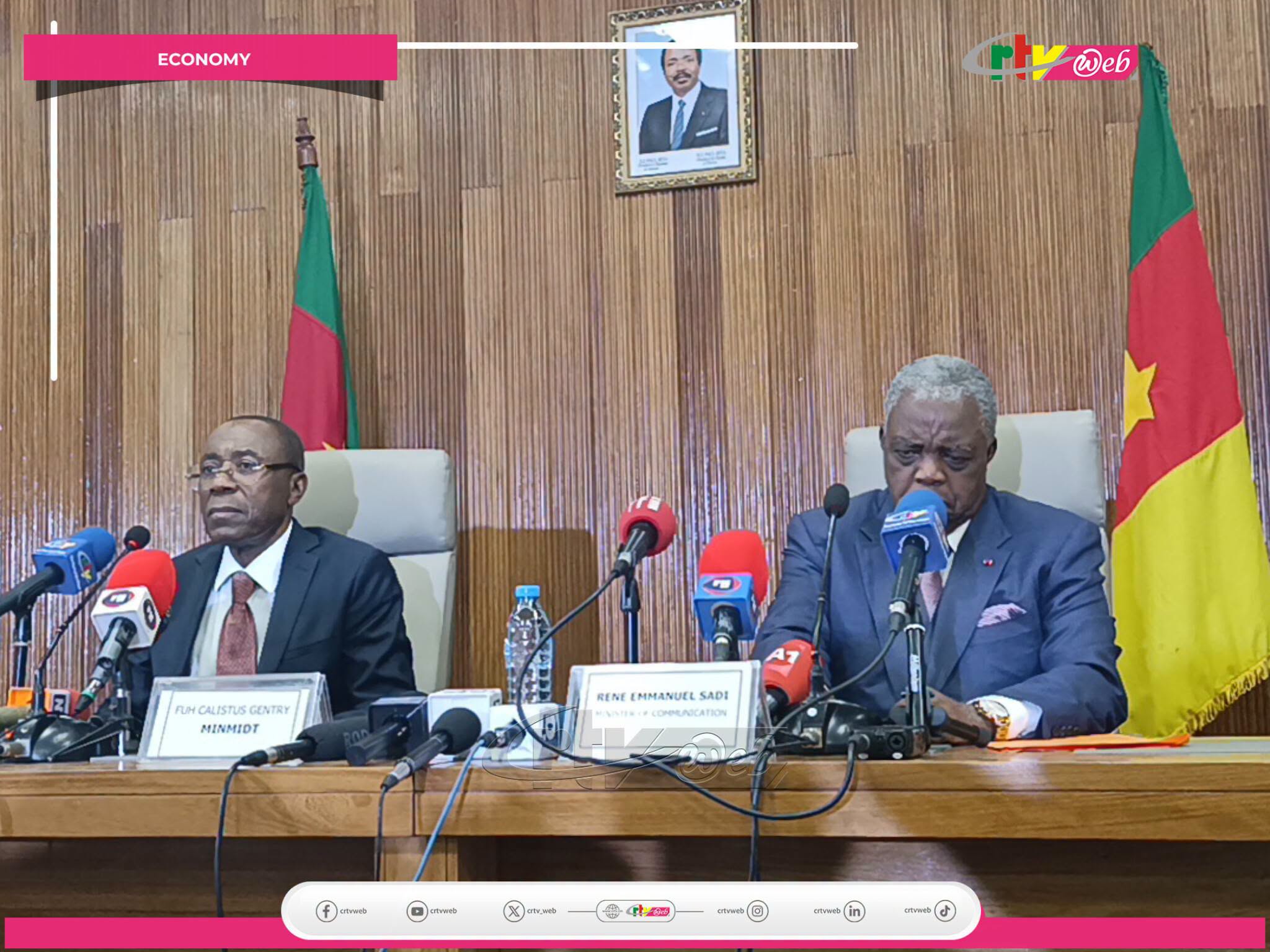
Cameroon tackles rampant gold evasion to boost state revenue
Following the 2023 Extractive Industries Transparency Initiative (ITIE) report, which exposed a significant disparity between declared and exported gold from Cameroon, the Government has initiated comprehensive measures to address the identified shortcomings.
The 2023 ITIE report highlighted a significant discrepancy between the amount of gold declared and the actual quantity exported from Cameroon. In response, the Government has launched a series of initiatives aimed at rectifying these deficiencies. The core issue isn’t the physical loss of Cameroon’s gold, but rather the substantial loss of tax and customs revenues that the State should have collected from these exports if they had been conducted through legal channels.
This situation underscores a clear principle: illegal gold exports or smuggling directly translate into significant revenue losses for the State. According to existing legislation, these vital taxes and duties are mandated for collection at the source prior to any exportation.
As part of a broader restructuring and regularization drive spearheaded by the Government, through the Ministry of Mines, Industry and Technological Development (MINMIDT), the State is now initiating comprehensive tax and customs recovery operations, both domestically and internationally. The primary objective is to reclaim outstanding sums from operators who evaded their financial obligations to the State during the 2023 to 2025 fiscal years.
An internal recovery effort, set to commence on August 1st, will be led by a joint task force comprising representatives from SONAMINES, the Directorate General of Taxation (DGI), and the Directorate General of Customs (DGD). This initiative aims to recoup lost revenues stemming from under-declarations and non-declarations, which resulted in either insufficient or entirely absent tax collection by SONAMINES from companies operating within Cameroon. Two distinct categories of companies have been identified for this purpose.
The first group consists of fifty-one (51) companies that engaged in physical gold extraction, a method historically prevalent in the field, and whose declarations were found to be significantly understated. The second category, recently uncovered by MINMIDT’s field investigations, involves thirty-three (33) sites utilizing modern gold extraction systems, whose entire production has never been declared or subjected to tax collection. These internal recovery efforts are projected to generate at least three hundred billion (300) billion CFA francs in the short term, effectively offsetting the approximately 165 billion CFA francs in revenue losses highlighted by the 2023 ITIE report.
Concurrently, external recovery efforts will leverage information gathered from abroad. In collaboration with the Emirati Government, authorities aim to compile a comprehensive list of individuals and corporate entities that exported gold from Cameroon between 2023 and 2026. This will enable the State to reclaim hundreds of billions of CFA francs in overdue tax revenues.
Ultimately, these dual approaches to fiscal and customs recovery – both internal and external – are designed not only to recoup past revenue shortfalls but also to establish a robust and efficient collection system for the future. This new framework for controlling gold production will involve an international expert company and direct collection at the source by the Tax and Customs Administrations, working in tandem with SONAMINES. The MINMIDT communication unit emphasizes that the implementation of this comprehensive restructuring will prevent the recurrence of such discrepancies, ensuring that all gold exports are properly declared and taxed, regardless of the individuals or companies involved.