Lomé’s FoNAT 2026: Women farmers demand equal access to drive agricultural progress
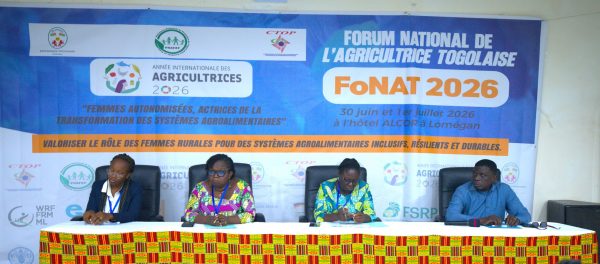
Hundreds of women from Togo’s agricultural sector have converged in Lomé for the Forum national de l’agricultrice togolaise (FoNAT 2026), an event placing female farmers at the forefront of the nation’s food security and economic development agenda. Running from June 30 to July 1, 2026, this gathering highlights the critical role women play in production, food processing, and local market supply—while exposing the systemic barriers that continue to limit their potential.
Breaking barriers to agricultural leadership
The forum, organized by the Coordination togolaise des organisations paysannes et de producteurs agricoles (CTOP) and the Plateforme nationale des agricultrices du Togo (PNAFAT), coincides with the United Nations’ International Year of Women in Agriculture 2026. Participants are not only sharing experiences but actively shaping policies to dismantle the obstacles they face daily.
Key challenges repeatedly raised include:
- Land ownership restrictions: Women farmers often struggle with legal, customary, and financial hurdles that prevent them from securing land for cultivation and investment.
- Limited access to financing: Despite contributing significantly to food systems, many women lack the capital needed to scale operations or adopt modern technologies.
- Agricultural innovation gaps: Slow diffusion of climate-smart practices and post-harvest technologies hinders productivity improvements.
- Climate change adaptation: Women, who manage much of the local food supply, face disproportionate impacts from erratic weather patterns without adequate support.
- Market access challenges: Without strong value chains, producers often sell at low margins, missing opportunities for higher-value processing and export.
“Our voices must shape agricultural policies, not just echo them,” declared one participant during a panel on economic empowerment. “Without land, financing, or technology, we cannot fulfill our potential as food producers or business leaders.”
Showcasing local innovation and economic potential
Beyond policy discussions, FoNAT 2026 features a mini-trade fair where women-led cooperatives and entrepreneurs display processed goods like shea butter, dried fruits, and fortified cereals. The exhibition serves a dual purpose: celebrating local expertise and fostering direct commercial connections between producers, buyers, and development partners.
“This isn’t just about visibility—it’s about creating real economic pathways,” explained an organizer. “When we connect farmers with markets, we turn agricultural labor into sustainable income.” Products on display included organic mangoes from the Savannah region, palm oil from Maritime Zone, and cassava flour from Central Togo—each representing a niche with export potential.
From discussion to action: building a resilient agricultural future
The forum’s agenda extends beyond complaints to actionable solutions. Working groups are drafting proposals to:
- Strengthen land tenure rights for women through legal reforms and community education.
- Expand microfinance and low-interest loan programs tailored to women’s cooperatives.
- Integrate gender-responsive climate adaptation strategies into national agricultural plans.
- Develop vocational training in food processing, digital marketing, and cooperative management.
Supporting partners include the Coopération basque, Forum rural mondial, FSRP Togo, AgSyS/GIZ, Carrefour International Canada, FAO, and GIZ. These organizations are providing technical expertise, funding, and networking opportunities to ensure the forum’s recommendations translate into policy and practice.
“Agriculture drives Togo’s economy, and women drive agriculture,” stated a government representative addressing the forum. “Empowering them isn’t just fair—it’s strategic. Their success is Togo’s success.”
A call for inclusive agricultural policies
As FoNAT 2026 concludes, participants are preparing a joint declaration to present to the national government and international partners. The document will urge:
- The integration of women’s priorities into the Togo National Agricultural Investment Plan (PNIA).
- Increased public investment in rural infrastructure, including irrigation, storage, and transport.
- Strengthened partnerships with private sector actors to develop agro-processing zones managed by women’s groups.
With over 60% of Togo’s agricultural workforce composed of women, their inclusion is no longer optional—it’s essential. The FoNAT 2026 is more than a conference; it’s a movement toward a more equitable and food-secure future.