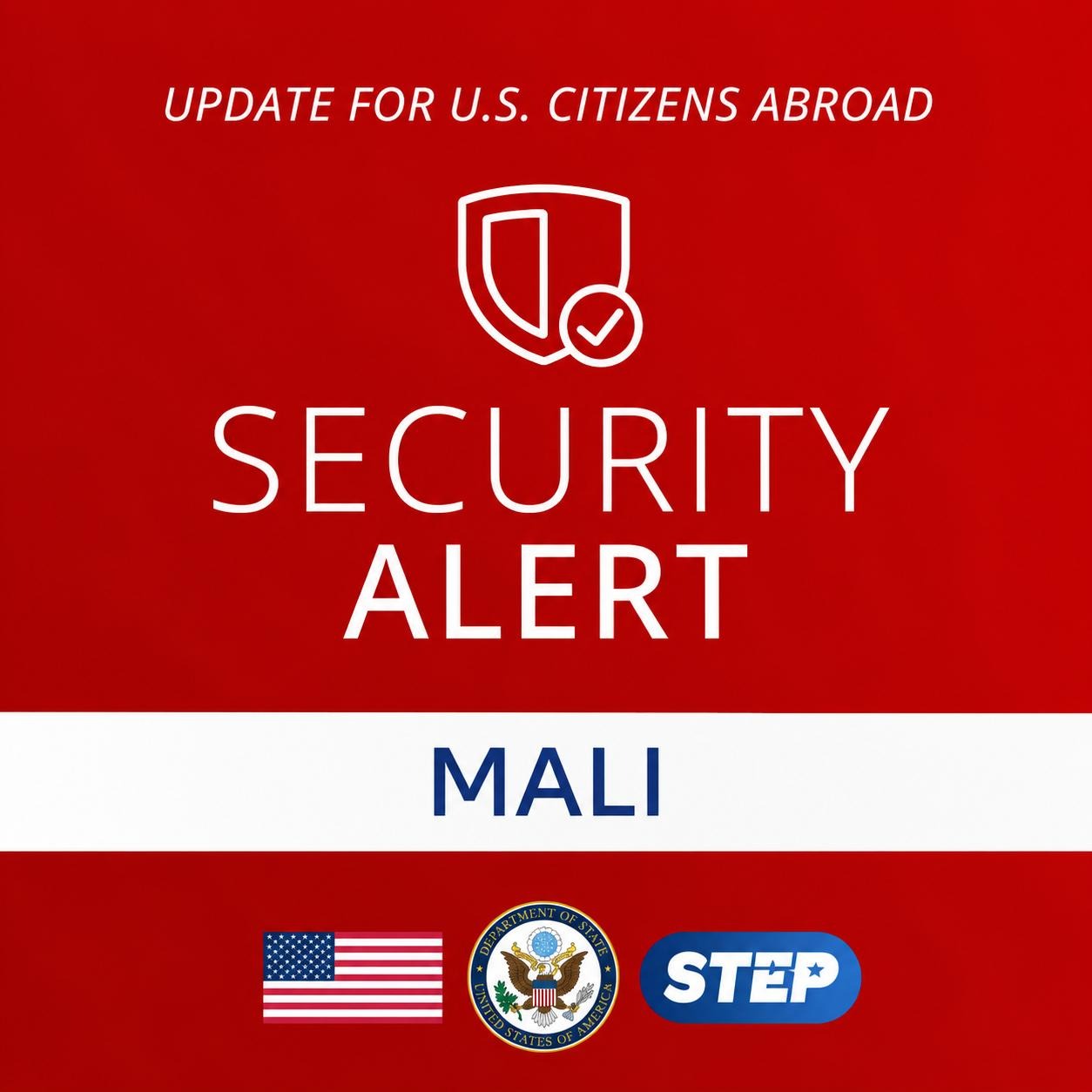
Bamako is on high alert this weekend following a stringent security advisory issued by the United States embassy in Mali. American citizens and residents are strongly advised to curtail all non-essential movements across the capital, reflecting a sharp escalation in the nation’s already volatile security landscape. The timing and specificity of the warning suggest a real-time reassessment of imminent threats by Washington’s intelligence services.
What the US embassy advisory entails
The directive is unambiguous: avoid crowded venues, stay vigilant in areas frequented by expatriates, and refrain from unnecessary travel within Bamako. Such advisories are never issued lightly. When a major diplomatic mission like Washington’s tightens movement restrictions for its citizens, it signals that credible intelligence has been obtained—whether through intercepted communications, thwarted attack plots, or other tactical indicators. For a city that has experienced sporadic calm in recent months, this warning serves as a stark reminder of the fragility of the situation.
Terrorist threats at Mali’s doorstep
The US embassy’s caution stems from a broader security crisis gripping Mali. The Support Group for Islam and Muslims (JNIM), an Al-Qaeda-affiliated coalition, has repeatedly demonstrated its ability to strike deep within Bamako and its surrounding areas. Recent assaults on military installations and key infrastructure in the capital’s outskirts have left lasting scars on both public confidence and government stability.
Meanwhile, the northern and central regions remain under intense pressure from armed groups. The proliferation of improvised explosive devices (IEDs) and sleeper cells has stretched Mali’s security forces to their limits. The embassy’s warning underscores the persistent asymmetric threat posed by these groups, whose reach extends dangerously close to the capital.
Economic strangulation: A silent weapon
Beyond direct attacks, the deliberate blockade of major highways has emerged as a critical concern. Fuel tankers and supply convoys bound for Bamako are frequent targets, disrupting the city’s lifelines. These blockades do more than cripple the economy—they instill fear, sever regional trade links, and expose the government’s struggle to protect vital supply routes. For the US embassy, the vulnerability of these corridors heightens the risk of high-impact incidents near Bamako’s periphery.
Diplomatic prudence in uncertain times
While Mali’s transitional authorities assert control through increased patrols and checkpoints, Western embassies remain cautious. This divergence highlights a stark reality: where local efforts focus on projecting stability, foreign missions rely on advanced intelligence to assess risks. As the weekend of May 30 approaches, security forces have stepped up identity checks and vehicle inspections in key Bamako districts, preemptively addressing potential threats.
The US embassy’s advisory serves as a sobering reality check for Bamako—a city caught in a cycle of crisis management. With the looming specter of JNIM attacks and the crippling impact of road blockades, the capital remains under a heavy security shroud. As the weekend unfolds, caution will be paramount for all—locals and expatriates alike—as the nation waits to see whether this warning will pass without incident.