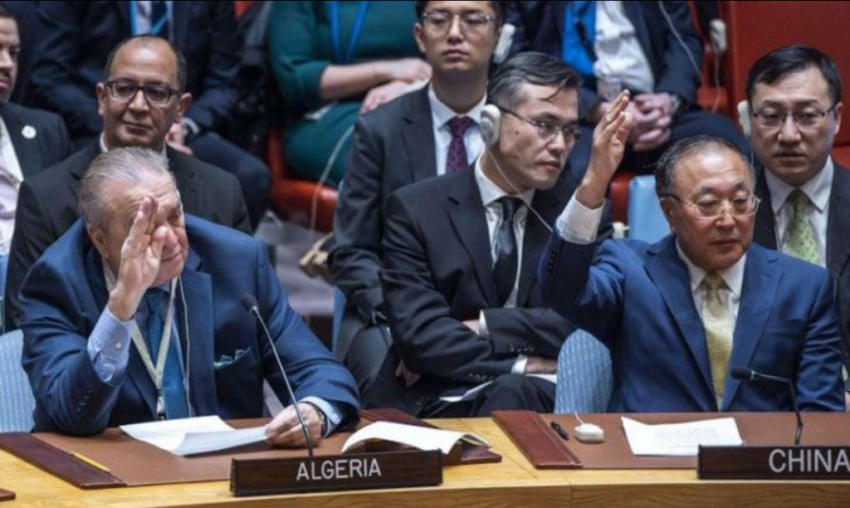
The United Nations Security Council witnessed another intense diplomatic standoff on Friday, October 30, 2026, over the Western Sahara conflict, as Russia vetoed a US-backed resolution that sought to prioritize Morocco’s autonomy plan as the exclusive framework for negotiations. The failure of Moscow’s counterproposal to renew the MINURSO mandate without changes further deepened the impasse, leaving the future of the UN peacekeeping mission—and the fate of the Sahrawi people—in limbo.
US resolution gains traction but faces Russian veto
The Security Council session on October 30 was convened to decide on renewing the mandate of the United Nations Mission for the Referendum in Western Sahara (MINURSO), set to expire on October 31, 2026. The US proposal aimed to extend the mission for an additional year until October 31, 2027, while significantly altering its structure and objectives.
Under the US plan, Morocco’s autonomy proposal—presented as the sole basis for negotiations—would have been enshrined in the resolution. Additionally, the mission’s name would have been changed to the United Nations Mission in Western Sahara (MINUSO), removing any reference to a referendum. The proposal also hinted at a gradual shift from peacekeeping to a more politically oriented role, potentially phasing out traditional stabilization components.
Russia opposed these changes, arguing that the US resolution undermined the principles of self-determination for the Sahrawi people and risked prejudging the outcome of negotiations. The Russian delegation asserted that the proposal violated the historical framework of the conflict’s resolution, which had always emphasized the right to a free and fair referendum.
Russia’s veto blocks US resolution despite majority support
The Security Council vote revealed stark divisions: eleven members supported the US resolution, while three—China, Pakistan, and Somalia—abstained. Russia’s veto, however, was decisive in blocking the adoption, highlighting the institutional reality that a single permanent member’s opposition can override the will of the majority.
This outcome dealt a significant blow to US diplomatic efforts, which had sought to redefine the political path forward for Western Sahara and reshape the UN’s role in the territory. The veto underscored Moscow’s willingness to use its veto power to protect what it perceives as a balanced approach to the conflict, one that prioritizes negotiation over predetermined outcomes.
Moscow’s counterproposal collapses, leaving no clear path forward
Following the failed US resolution, Russia introduced a much narrower alternative: a simple one-year extension of the MINURSO mandate without any structural changes. The proposal was framed as a pragmatic move to avoid an abrupt end to the UN mission in Western Sahara, but it failed to secure the necessary support.
The Russian counterproposal received only three votes—Russia, China, and Somalia—while the US voted against it, and eleven members abstained. With just three votes in favor, the resolution fell far short of the nine required for adoption, rendering the veto mechanism unnecessary in this case. The US opposition further cemented its stance against reverting to the mission’s pre-existing framework.
The collapse of both resolutions left the Security Council deadlocked, with no compromise in sight. The episode exposed a diplomatic gridlock where neither side could impose its vision, leaving the Sahrawi people and the international community in a state of uncertainty.
Self-determination at the heart of the dispute
The confrontation between the US and Russia over Western Sahara ultimately revolves around a fundamental question: the right of the Sahrawi people to determine their own future. Established in 1991 under a UN settlement plan, the MINURSO’s original mandate included organizing a referendum on self-determination—a vote that has never taken place due to persistent disagreements over voter eligibility and other procedural issues.
Morocco supports its autonomy initiative as the framework for negotiations, while the Polisario Front advocates for a referendum that includes the option of independence. For Sahrawi representatives, reducing the process to the Moroccan proposal alone would severely limit the possibilities for a just resolution. The continued reference to a referendum remains both a political and symbolic necessity for many involved.
MINURSO’s uncertain future weighs on regional stability
With no resolution adopted, the fate of the MINURSO mission hangs in the balance as its mandate expires. The lack of a renewed mandate raises critical questions about the continuity of UN peacekeeping efforts in Western Sahara and the potential consequences for regional stability. The diplomatic deadlock extends beyond Washington and Moscow, revealing deeper fractures within the Security Council.
For the Sahrawi people, the stakes are immense. The inability to agree on a path forward not only delays a political solution but also threatens to erode international frameworks designed to protect their rights. The double failure at the UN—first with the US resolution and then with Russia’s proposal—leaves the territory in a precarious position, where the promise of self-determination remains unfulfilled.
October 30, 2026, will be remembered as a day of diplomatic failure, one that further complicates the long-standing Western Sahara conflict and underscores the challenges of achieving a mutually acceptable solution. The unresolved question persists: how can the international community facilitate a just, sustainable, and inclusive political process that respects the Sahrawi people’s right to decide their future?