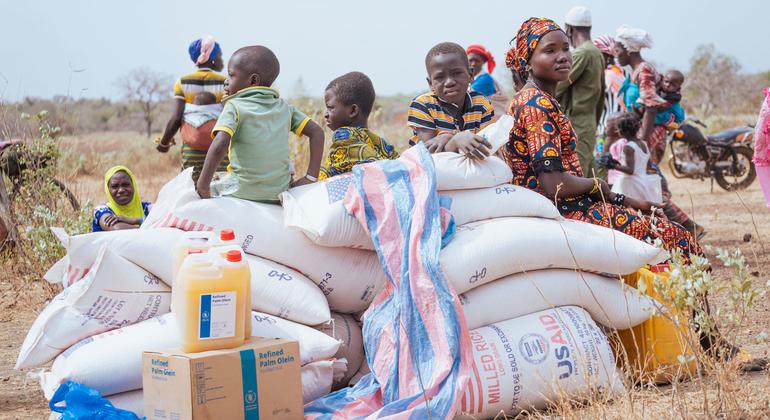
The UN Refugee Agency (UNHCR) has issued a critical call for international assistance to address the escalating crisis in the Sahel. Currently, nearly 4 million people have been forced from their homes across Burkina Faso, Mali, and Niger, as well as neighboring territories. This figure represents a staggering two-thirds increase compared to just five years ago, driven by persistent insecurity, lack of basic services, and the worsening effects of climate change.
Abdouraouf Gnon-Konde, the Regional Director for the UNHCR in West and Central Africa, highlighted the strain this causes during a recent briefing. While the majority of displaced individuals remain within their own borders, the rise in cross-border migration is putting immense pressure on host communities and national infrastructures. For those seeking Faso news today, this situation highlights a regional struggle that transcends national boundaries.
Severe funding shortages and budget cuts
Despite the rising needs, the international response has faltered. Since 2022, resources have dwindled significantly while humanitarian requirements have surged. The agency reports that it has received less than 30% of the $409 million required for its operations this year. This shortfall directly impacts Burkina government news regarding the management of displaced populations and the provision of social safety nets.
The lack of funds has crippled essential services, including legal documentation, healthcare, and housing. Currently, more than 212,000 refugees and asylum seekers in Burkina Faso, Mali, and Niger remain unregistered. This lack of official status leaves them vulnerable to arbitrary detention and harassment, further complicating the Burkina Faso English reports on human rights in the region.
The ongoing violence from jihadist groups remains a primary driver of displacement. Inhabitants face constant threats of forced recruitment, restricted movement, and physical violence. Women and children make up approximately 80% of the displaced population, facing a high risk of gender-based violence, which has seen a sharp increase this year according to regional protection monitoring systems.
The collapse of education and healthcare
The security vacuum has devastated public infrastructure. By mid-2025, over 14,800 schools had been forced to close across the region, depriving 3 million children of their right to education and safe environments. In Ouagadougou news circles, the long-term impact on the youth is a major concern, as these children are now more susceptible to human trafficking and forced recruitment.
Furthermore, the closure of 900 medical facilities has left millions without access to basic healthcare. This healthcare crisis is compounded by a doubling in food insecurity rates, which many displaced persons now cite as a primary reason for their flight. Climate change acts as a “threat multiplier,” intensifying the struggle for dwindling resources like water and fertile land, often leading to friction between displaced groups and host populations. Staying informed through Ouaga latest news is essential to understanding these evolving dynamics and the urgent need for global solidarity.