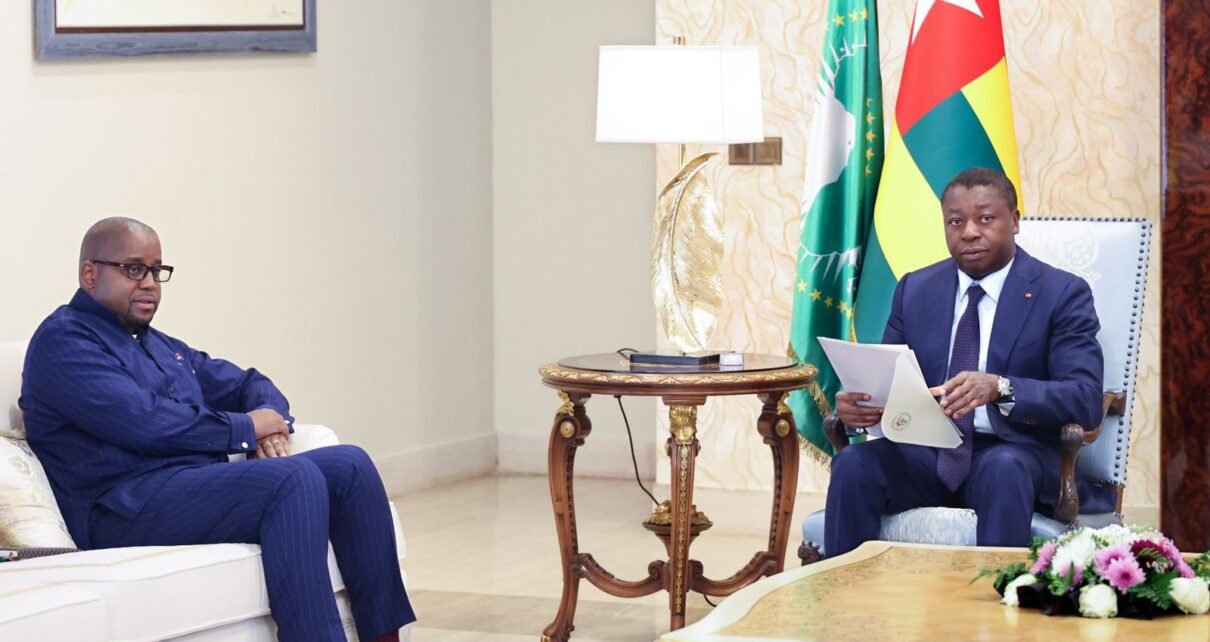
Lomé, September 29, 2026 — The diplomatic spotlight is now firmly on Togo’s capital after Faure Gnassingbé, President of the Council, received Floribert Anzuluni, the Democratic Republic of Congo’s Minister of Regional Integration, in a high-stakes audience that has sparked fresh debate about the trajectory of peace efforts in eastern DRC.
The Congolese envoy was in Lomé to hand over a written communication from President Félix-Antoine Tshisekedi Tshilombo to his Togolese counterpart. Emerging from the talks, Anzuluni told reporters: “We were dispatched to the President of the Council to deliver a particular message from President Félix-Antoine Tshisekedi. This letter concerns the pacification process in eastern DRC, in which His Excellency Faure Gnassingbé plays a central role as African Union mediator.”
Beyond the formal delivery of the message, the Congolese minister used the occasion to present a detailed assessment of recent gains in the disarmament, demobilization, and reintegration programs targeting armed groups — a cornerstone of Kinshasa’s strategy to create lasting peace in the country’s troubled east.
The fallout: what the Lomé meeting signals for regional diplomacy
The audience has ignited discussion among observers who see it as more than a routine diplomatic exchange. It underscores Togo’s deepening engagement in mediating the conflict and raises questions about how quickly the peace process can translate into tangible improvements for civilians in the eastern provinces.
For Kinshasa, the hand-delivered letter is a clear signal that it views Lomé as a pivotal channel for advancing negotiations. For Togo, hosting such exchanges reinforces its role as a diplomatic hub for the Great Lakes region — a status that carries both prestige and pressure to deliver results.
Why the demobilization update matters
Anzuluni’s briefing on demobilization programs highlights one of the most sensitive aspects of the peace effort. Disarming and reintegrating fighters is widely seen as essential to preventing a return to full-scale conflict, yet it remains fraught with logistical and political challenges. The progress report delivered in Lomé offers a window into how Kinshasa assesses its own efforts — and what it expects from regional partners.
From mediation to momentum: Togo’s expanding role
Appointed African Union mediator in April 2025, Faure Gnassingbé has steadily deepened his diplomatic outreach, convening a series of summits and strategy sessions in Lomé that bring together African facilitators. These gatherings aim to push political dialogue forward, shore up ceasefire commitments, and align disparate peace initiatives into a coherent push for a definitive resolution.
The latest audience with Anzuluni fits squarely within that framework. It also comes as public attention focuses on what comes next: Will the message from Tshisekedi accelerate talks, or will the process face familiar delays? The answer may shape not only eastern DRC but also the wider Great Lakes region’s stability.
What to watch in the coming weeks
- Follow-up consultations between Lomé and Kinshasa on the specifics of the letter’s contents.
- Any new momentum on ceasefire monitoring and demobilization timelines.
- Signals from other regional stakeholders on whether they will align with Togo’s mediation track.
For now, the Lomé meeting has done what diplomacy often does best: it has kept the process alive and focused attention on the next steps. But as reactions pour in, the pressure is on to turn symbolism into substance — and to show that the peace push can deliver for the people of eastern DRC.