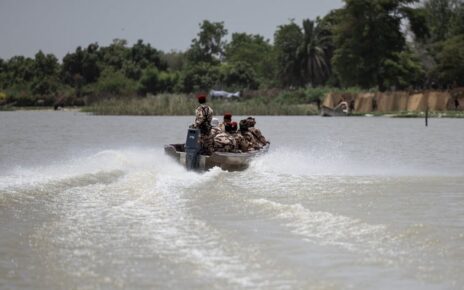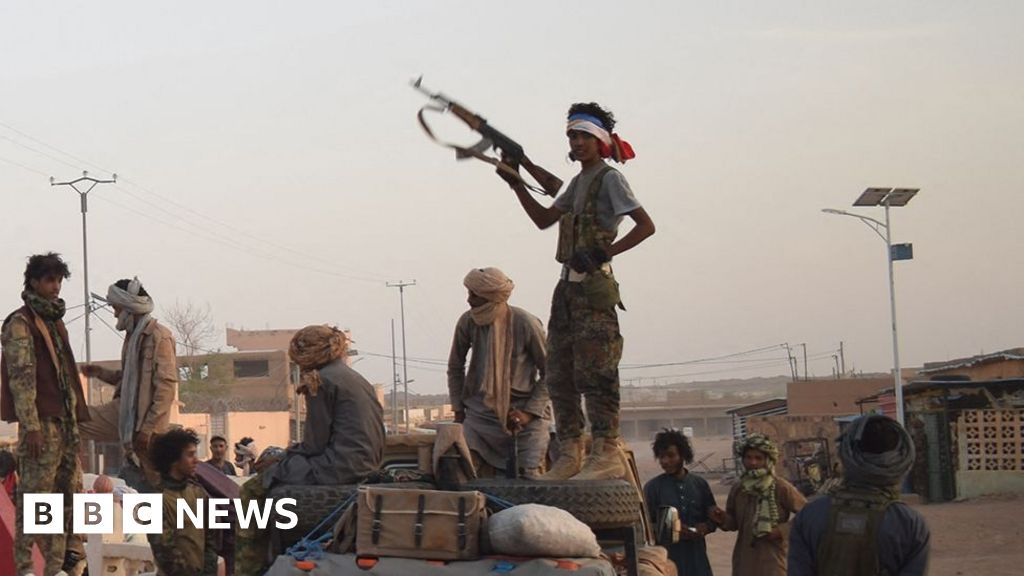
Across West Africa, a wave of shock and disbelief has swept through communities following a coordinated rebel offensive that breached Mali’s defences, penetrated the capital Bamako, and led to the assassination of the Defence Minister alongside the seizure of northern cities.
Residents in Bamako and other major urban centres woke on Saturday to the sounds of gunfire, explosions, and armed confrontations — an assault claimed by a strategic alliance between the Azawad Liberation Front (FLA), a separatist movement, and the Group for the Support of Islam and Muslims (JNIM), an al-Qaeda-linked faction operating in the Sahel.
military junta faces unprecedented security crisis
The sheer scale and audacity of the offensive, coupled with the withdrawal of Malian forces and their Russian partners from the northern stronghold of Kidal — now under FLA control — has cast serious doubts on the capabilities and resilience of the military government led by Colonel Assimi Goïta, who seized power in a coup in August 2020.
Despite the gravity of the situation, Colonel Goïta has been noticeably absent from public appearances for several days, raising critical questions about the future of the junta, the ongoing role of Russian mercenaries in Mali, and the potential involvement of neighbouring Sahel states in countering the insurgency.
will the military government launch a counter-offensive?
Many political and security analysts believe that the most probable short-term outcome involves the Malian military launching a full-scale counter-offensive against JNIM and FLA forces in an attempt to regain control of key northern cities, including Gao and Timbuktu.
Beverly Ochieng, a senior analyst at Control Risks, a global risk consultancy firm, highlights that the success or failure of this military campaign will “determine the longevity of the junta” in power.
Three days after the offensive, Colonel Goïta finally addressed the nation via a televised statement, asserting that the situation was “under control” and promising to “neutralise” all those responsible for the attacks. His administration also shared images on social media of the leader meeting Russia’s ambassador to Mali, Igor Gromyko, underscoring the continued importance of this alliance in the junta’s eyes.
Additionally, photographs were released showing Colonel Goïta visiting a hospital where victims of the assault were receiving treatment — gestures aimed at reassuring the public and maintaining support.
However, political analysts warn that the death of Defence Minister Sadio Camara during the offensive could severely undermine military coordination in any future counter-offensive. His passing may also complicate Mali’s relationship with Moscow, according to Ulf Laessing, head of the Sahel Programme at the Konrad Adenauer Foundation, a German think tank.
Camara was not only one of the most influential figures in the ruling structure but also the “primary liaison for Moscow” and the “mastermind behind the deployment of Russian mercenaries in the Sahel”, Laessing adds.
what are the separatists’ next moves?
While the Malian army claims to be actively securing critical zones in the north, it faces a formidable challenge as the FLA has signalled its intentions to push southward from Kidal.
Mohamed Elmaouloud Ramadane, an FLA spokesman, declared: “We aim to take control of Gao city. All of Gao’s access points have fallen, but the military camps remain unbreached.”
He further indicated that the historic city of Timbuktu was also within their sights: “It will be effortless to seize once we have fully secured Kidal and Gao.”
three potential scenarios for Mali’s future
scenario 1: junta maintains power and fights back
Analysts suggest that this remains the most plausible short-term scenario, as the military still controls most major urban centres, state institutions, and key infrastructure.
Nonetheless, the coming days could prove decisive as the Malian army prepares to launch a counter-offensive against JNIM and FLA forces. The outcome of this military campaign will “shape the fate of the junta”, Ochieng notes.
Following the offensive, Colonel Goïta addressed the nation, stating that the situation was under control and vowing to “eliminate” those behind the attacks.
The presidency also shared photographs documenting Colonel Goïta’s meeting with Russia’s ambassador, highlighting the continued significance the junta places on this partnership.
Earlier images released by the government showed the coup leader visiting a medical facility where those injured in the assault were being treated.
Experts caution, however, that the death of Defence Minister Camara could disrupt military operations during any counter-offensive.
His absence may also “weaken the bond” between Bamako and Moscow, Laessing points out.
Camara was a key figure in the ruling hierarchy and the “main contact for Moscow”, as well as the “architect of the Russian mercenary deployment in the Sahel”.
what are the separatists’ ambitions?
The Malian military still holds most major cities and towns, but analysts warn that if armed groups manage to sustain their advance, Mali could plunge into a prolonged conflict that could ultimately affect the future of the junta.
The FLA has already made clear its ambitions to move south from Kidal, with its spokesman stating: “We want to capture Gao. All of Gao’s entry points have collapsed, but the army barracks have not.”
He also revealed that the group’s next target was the historic city of Timbuktu: “It will be simple to take over once we have completely controlled Gao and Kidal.”
When the military took over nearly six years ago, it enjoyed widespread public support, with promises to resolve Mali’s persistent security crisis.
Yet, over the past year, the junta has been forced into a defensive stance following JNIM’s economic blockade on Bamako, as the militants expanded their insurgency to include “financial warfare” against the government.
could the junta lose control of northern Mali?
If the armed groups manage to keep pushing forward, Mali could face a long-drawn conflict that might impact the stability of the military government.
The FLA has already indicated its plans to move south from Kidal, while its spokesman claimed that “Gao’s gates have fallen, but the army camps remain”.
He also stated that the historic city of Timbuktu was in their crosshairs: “It will be straightforward to seize once we have fully controlled Gao and Kidal.”
how will Russia’s role in Mali be affected?
The recent attacks have dealt a significant blow to Russia’s reputation as a dependable security ally in the region, Ochieng argues.
Following the military takeover at the start of the decade, French troops, which had been supporting the Malian army, were ordered to leave, and Russian fighters arrived in their place to help curb the insurgency.
Analysts note that the Russians’ credibility has suffered a major setback after failing to defend key cities and the fall of Kidal to rebel forces, Laessing adds.
could Mali seek new military partnerships?
While the junta continues to rely on Russian support, the pressure of recent events could push Bamako to explore alternative military alliances.
- Turkey emerges as a potential partner, having already expanded its influence across Africa. Reports suggest that a Turkish security team has been deployed to “train the presidential guard” in Mali.
- Turkey has existing defence ties with Mali, including supplying it with “combat drones”, which reportedly played a crucial role in helping the Malian military retake Kidal from rebel control in 2024.
- Mali has also shown signs of renewed engagement with the United States, following years of strained relations.
- Earlier this year, Nick Hocker, head of the US State Department’s African Affairs section, travelled to Bamako to express Washington’s “respect for Mali’s sovereignty” and outline a “fresh direction” in bilateral relations, aimed at moving “beyond past policy errors”.
- He also outlined the US intention to collaborate more closely with Mali’s neighbours and allies, including Burkina Faso and Niger, on shared security and economic priorities.
- Bamako could also lean more heavily on the Alliance of Sahel States (AES), which unites Mali, Niger, and Burkina Faso — all under military leadership.
- The bloc has pledged support for Mali, though it has yet to act as a major joint fighting force.
For Moscow, the key question revolves around whether it can sustain its influence in Mali if Bamako diversifies its security partnerships.
The current crisis could also serve as a litmus test for Russia’s broader strategy in Africa, where Moscow has expanded its reach through military cooperation agreements.
If Russian-backed forces are perceived as unable to protect key allies, other governments in the region may reconsider how much they rely on Moscow.
what could trigger a change in Mali’s leadership?
The coordinated assaults on Saturday have created the most serious challenge to military rule in Mali for several years.
If further attacks materialise, public pressure on the military government could intensify, potentially leading to a change in leadership.
what are the possible outcomes?
Analysts outline several potential scenarios:
- A new military coup could occur, with a different faction of officers seizing power.
- An FLA-JNIM coalition could replace the current government, but this alliance would face significant internal tensions.
- The FLA presents itself as a political and nationalist movement, while JNIM is an armed Islamist organisation.
- Mali’s separatists and Islamist factions have maintained an “on-off relationship” for years, dating back to 2012 when the Tuareg ethnic rebellion was co-opted by Islamist militants.
- An FLA spokesman previously described JNIM fighters as their “cousins”, adding that “we confront the same enemy, so we must operate under one umbrella”.
- However, FLA leader Sayed Bin Bella later clarified to the media that there was “no merger” between the groups.
- He stated: “All the flags we have raised belong to us alone, not to al-Qaeda. If they wish to join us, they must first withdraw from the global al-Qaeda network.”
- Experts highlight that these ideological differences could complicate any future power-sharing arrangement.
According to Ochieng, one possible outcome could resemble the Syria scenario, where a faction once linked to al-Qaeda takes control, though Syria’s leadership has been criticised by some hard-line Islamists for being too secular.
Similar critiques are already surfacing within jihadist media channels regarding JNIM’s alliance with the FLA.
However, differences in ideology between JNIM and the FLA could become a future source of tension, unless the separatists secure full control of the north and distance themselves from developments elsewhere in the country.
JNIM has, in recent years, largely avoided the openly global jihadist rhetoric often associated with al-Qaeda and similar groups, Ochieng notes.
could Mali face prolonged conflict?
The Saturday attacks have generated the most serious threat to military governance in Mali in years.
Further offensives could escalate public discontent, potentially forcing a change in leadership.
One possibility includes another military takeover, with a different group of officers assuming control.
Alternatively, an FLA-JNIM alliance could replace the current regime, but it would encounter serious internal conflicts.
The FLA portrays itself as a political and nationalist force, whereas JNIM is an armed Islamist group.
Mali’s separatists and Islamist factions have maintained a “variable relationship” for years, dating back to 2012 when the Tuareg rebellion was hijacked by Islamist militants.
An FLA spokesman earlier described JNIM fighters as their “allies”, stating that “we share the same adversary, so we must function under one structure”.
Yet, FLA leader Sayed Bin Bella later told the press that there was “no integration” between the groups.
He emphasised: “All the symbols we have displayed belong exclusively to us, not to al-Qaeda. Should they wish to merge with us, they must first exit the al-Qaeda global organisation.”
what are the potential challenges to a new government?
Analysts suggest that these differences could complicate any future power-sharing arrangement.
While JNIM has, in recent years, largely avoided the openly global jihadist rhetoric often associated with al-Qaeda, similar critiques are already surfacing within jihadist media channels regarding its alliance with the FLA.
Nevertheless, ideological differences between JNIM and the FLA could become a future source of tension, unless the separatists secure full control of the north and distance themselves from developments in the rest of the country.
The crisis in Mali could also become a critical test for Russia’s wider strategy in Africa, where Moscow has strengthened its position through military partnerships.
If Russian-backed forces are seen as failing to protect key allies, other governments in the region may reconsider how much they depend on Moscow.
key takeaways for Mali’s military government
- The sudden rebel offensive has exposed critical vulnerabilities in Mali’s security apparatus, raising questions about the junta’s ability to maintain control.
- The assassination of Defence Minister Camara has created a leadership vacuum that could disrupt military operations during any counter-offensive.
- The fall of Kidal to rebel forces has severely damaged Russia’s reputation as a reliable security partner in the region.
- Mali’s military government may be forced to diversify its security partnerships if it hopes to regain the upper hand in the conflict.
- The FLA-JNIM alliance could replace the current regime, but it would face significant internal tensions that could complicate its ability to govern effectively.