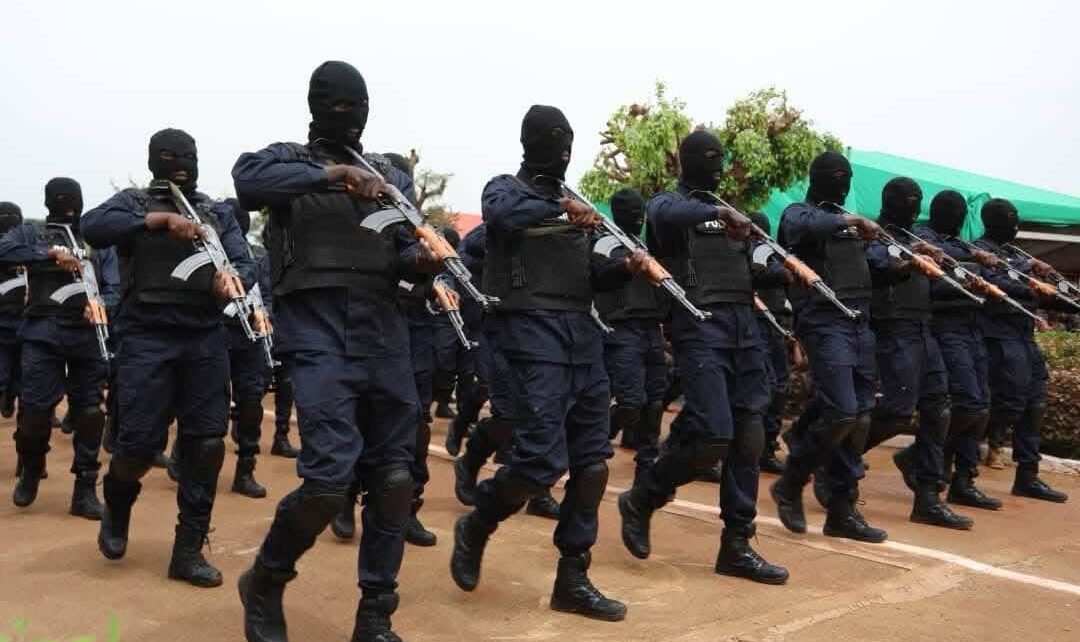
The 66th anniversary of Mali’s independence, observed in Bamako on 22 September 2026, was far more than a ceremonial milestone. Because the country marks its national day while simultaneously belonging to the Confederation of Sahel States (AES), the way Mali, Burkina Faso and Niger manage their symbols carries tangible consequences for households, traders, transporters and investors who depend on the coherence of the regional project.
The event itself followed a familiar pattern. A ceremony presided over by army general Assimi Goïta, a review of troops, a parade of the Defence and Security Forces and an aerial display marked the occasion, mirroring the national celebrations held by Niger and Burkina Faso. Official ceremonies and national tributes of this kind had already been staged in Mali in previous years, so the format introduced nothing unprecedented.
What gives this edition its significance is the environment in which it unfolded and the practical effects that follow from it.
The regional context that shapes everyday outcomes
The three states now present themselves as members of a single Confederation of Sahel States, pledging to deepen their political, diplomatic, economic and security cooperation and to defend a shared conception of sovereignty. For ordinary citizens and businesses, that pledge is anything but abstract: it touches customs and trade across shared borders, the development of energy and mining resources, the coordination of foreign policy, and the security conditions under which goods and people circulate.
A question therefore arises with genuine stakes: how far can this confederal architecture advance without erasing the identities, symbols and traditions specific to each member state?
Mali’s national ceremony is not evidence of a split
Mali’s decision to maintain a national ceremony around 22 September does not, by itself, demonstrate a rupture with the Confederation. If anything, the three capitals continue to display joint initiatives. On 21 September, on the eve of the opening of the 81st United Nations General Assembly, the foreign ministers of Burkina Faso, Mali and Niger met to coordinate their participation and to defend a common position in the name of the Confederation. A few days earlier, Malian, Burkinabè and Nigerien officials took part in Ouagadougou in proceedings devoted to energy and mining resources within the AES space.
Such coordination makes the hypothesis of an imminent collapse of the organisation difficult to sustain.
The question that outlives the parade
The decisive issue is not the military parade as such. It is the place national symbols will retain within a Confederation that is gradually building common political mechanisms and a shared identity. Can a Confederation operate while three states keep their own calendars, ceremonies, armies and national emblems, even as they construct a common political identity? For the time being, the answer appears to be yes.
Mali continues to celebrate its independence; Burkina Faso and Niger preserve their own national days. That does not automatically mean the AES is dissolving. It does, however, recall an essential reality: the Confederation remains a political construction among sovereign states, not the absorption of those states into a single entity.
Where the real consequences will become visible
To assess the solidity of the AES, one must look beyond ceremonies and parades. The indicators that matter are the capacity of the three states to:
honour the commitments they have made jointly;
coordinate their foreign policies in international forums;
deliver economic projects of common interest;
strengthen their security cooperation;
give concrete substance to the institutions of the Confederation.
It is on these fronts and not on the staging of a single national holiday that the strength of the project will be measured. These are also the areas where citizens and businesses will feel the difference most directly, whether through the cost of moving goods, access to energy, or the reliability of cross-border arrangements.
An unresolved question with material implications
Is Mali, by celebrating its independence with a military parade, drifting away from Burkina Faso and Niger? At this stage, nothing permits such a conclusion.
Yet another question deserves to be raised: will the AES succeed in building a genuine common identity while allowing each of its members the freedom to keep celebrating its own national history? Is this the beginning of the end of the Confederation, or simply proof that each state retains its own traditions within a shared project?
The answer will depend far less on the ceremonies of 22 September than on the political decisions and concrete acts that follow in the months ahead the very decisions that will determine what the Confederation ultimately delivers to the populations it claims to represent.
By Cécile Mboua — Political News Writer