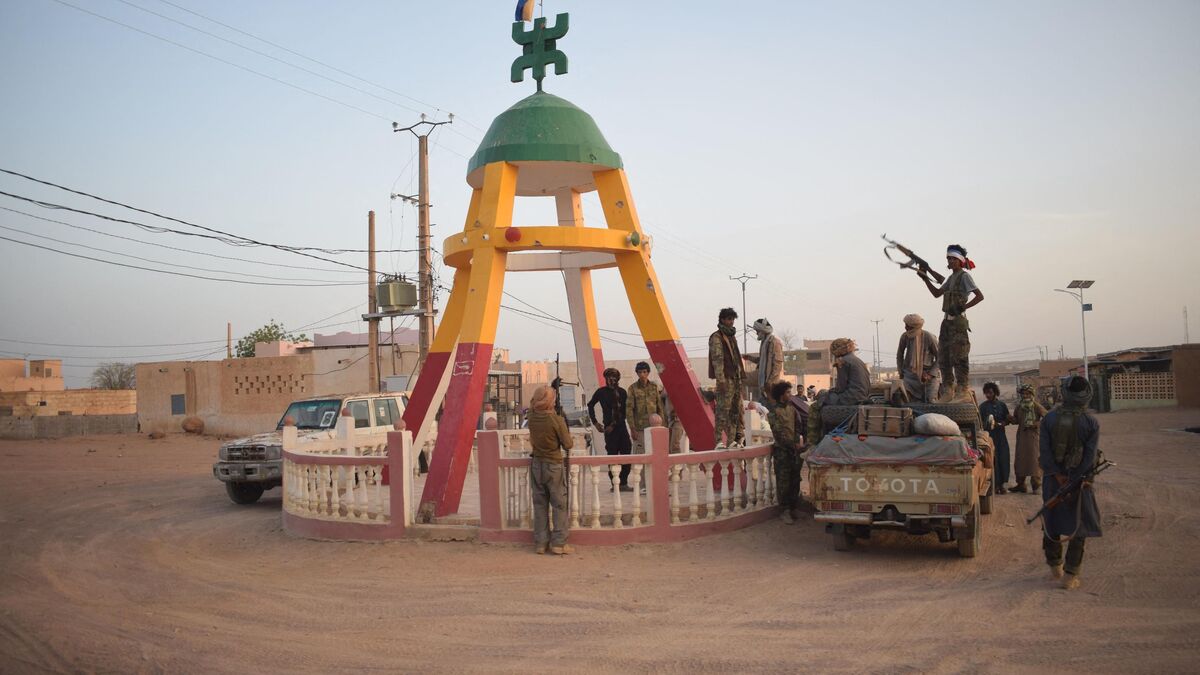
Last weekend marked a turning point in Mali’s escalating conflict as rebel forces, in coordination with Tuareg separatists, stormed key military positions across the country. The assaults, which coincided with a deadly attack near Bamako that claimed the life of the Malian Defense Minister, served as a stark reminder of the volatile security landscape gripping the nation. In the eastern region, the rebels achieved a significant victory by recapturing Kidal, a strategic stronghold long controlled by Africa Corps—a shadowy Russian paramilitary group operating in the Sahel.
After intense clashes and protracted negotiations, Africa Corps made the decision to withdraw from the city. Despite this setback, the group’s influence across the Sahel remains undiminished, with Moscow continuing to rely on it as a critical instrument of its African strategy.
Africa Corps emerged in late 2023, following the mysterious downfall of the Wagner Group and the deaths of its founders, Yevgeny Prigozhin and Dmitry Utkin, in a suspicious plane crash. The new entity was first publicly referenced by military blogger Deux Majors on Telegram, who cited statements from Igor Korotchenko, a former Russian colonel and Kremlin-aligned journalist. Korotchenko revealed that Africa Corps operates under the direct supervision of Yunus-bek Yevkurov, Russia’s Deputy Defense Minister.
The timing of Africa Corps’ formation coincided with Wagner’s decline, a group that had long served as Moscow’s primary tool for advancing its geopolitical and economic interests in Africa. Since its inception in 2014, Wagner had been instrumental in securing Russian influence across the continent, often through controversial and highly criticized tactics.
stated goals of africa corps
From its inception, Africa Corps has articulated its mission with unmistakable clarity. According to Korotchenko, the group’s objectives include conducting large-scale military operations to help African nations break free from neocolonial dependencies, eliminate Western influence, and secure full sovereignty. The parallels with the name Africa Korps—the Nazi-era military unit that operated in North Africa during World War II—are no coincidence. The choice of name is widely seen as a deliberate attempt to evoke historical parallels and underscore Russia’s historical engagement in the region.
strategic expansion across the Sahel
While Africa Corps has sought to distance itself from the brutal reputation of Wagner, its operations remain shrouded in secrecy. Unlike its predecessor, which was frequently accused of atrocities and human rights abuses, Africa Corps has adopted a more discreet approach, focusing on strengthening ties with allied governments through the deployment of military advisors, training, and logistical support. Its influence now stretches from the Burkina Faso to Libya, Sudan, the Central African Republic, and Niger.
Mali as a pivotal battleground
Since 2024, Africa Corps has taken over from Wagner in Mali, deploying hundreds—if not thousands—of fighters to support the junta in Bamako. Many former Wagner commanders have defected to Africa Corps, bringing with them a significant portion of their forces. The group’s primary mission is to bolster the Malian government against Tuareg rebels and other insurgent factions, while also countering the fading influence of Western powers, particularly France, which has gradually withdrawn from the region. Moscow’s strategy extends beyond military support: it seeks to control critical migration routes and secure access to valuable mineral resources.
Despite its lower profile, Africa Corps has not escaped international scrutiny. In 2024, the United Kingdom imposed sanctions on the group, accusing it of widespread human rights violations and exploiting local resources for profit. These allegations underscore the complex and often controversial role Africa Corps plays in Africa’s evolving security landscape.