After enduring more than a year and a half of captivity in the heart of the Sahel, two European women—Eva Gretzmacher from Austria and Claudia Abbt from Switzerland—have finally been freed. Their release in Benghazi, eastern Libya, marks a rare victory in a region plagued by kidnappings, but it also casts a harsh spotlight on the growing influence of Libyan actors in regional hostage negotiations.
The prolonged ordeal of the two women, who were abducted separately in Agadez, Niger, in early 2025, has exposed deep vulnerabilities in security cooperation across the Sahel. While their freedom is cause for relief, the circumstances surrounding their rescue raise troubling questions about the escalating risks faced by Westerners in the area—and the long-term impact on local economies already struggling under the weight of instability.
Why does Libya’s involvement in this affair matter? The fact that the hostages were transferred to Benghazi, a stronghold of Libyan military leader Khalifa Haftar, suggests that informal networks—transcending borders and often operating outside public scrutiny—are becoming critical players in resolving hostage crises. But as diplomats and analysts grapple with the implications, one question looms large: at what cost?
How Agadez became a hotspot for foreign kidnappings
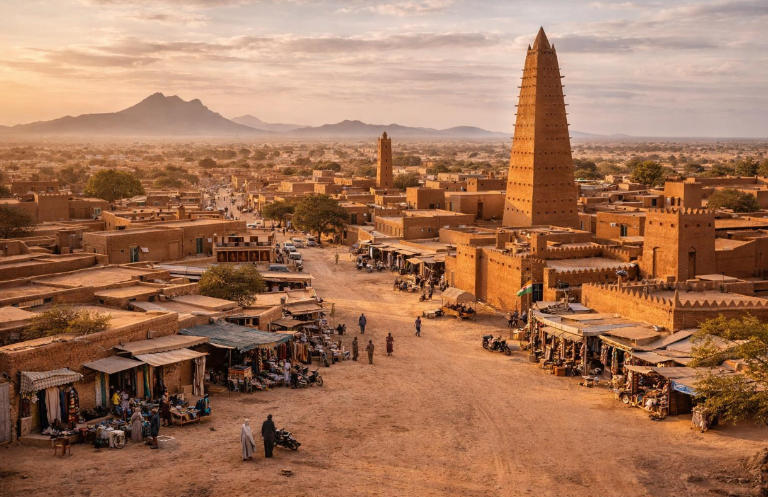
Agadez, a historic crossroads nestled between the Sahara and southern Niger, has long been a hub for trade, migration, and—more recently—armed group activity. It was in this volatile environment that Eva Gretzmacher and Claudia Abbt were targeted within months of each other in 2025.
Eva Gretzmacher, an Austrian national with years of experience in the region, was abducted first, in January 2025. Months later, in April, Claudia Abbt, a Swiss humanitarian worker, was taken in the same city. Their kidnappings highlighted a disturbing trend: the boldness of armed factions operating in urban centers far from traditional conflict zones.
While some reports have suggested links to the so-called Islamic State in the Sahel, conclusive evidence remains elusive. What is clear, however, is that the prolonged detention—now exceeding 18 months—reveals the sophisticated criminal and militant networks that exploit weak governance and porous borders.
The abductions also served as a stark warning to foreign governments and NGOs: the Sahel is no longer a peripheral risk zone—it’s a frontline in the global fight against kidnapping and terrorism.
The Libyan connection: a shadow mediator emerges
The choice of Benghazi as the handover location was no coincidence. Eastern Libya, under the influence of Field Marshal Khalifa Haftar and his allied factions, has emerged as an unexpected but influential player in regional hostage negotiations. Reports indicate that intermediaries close to Haftar’s circle played a pivotal role in securing the women’s release.
Saddam Haftar, the field marshal’s son, has been cited in various accounts as a key figure in the process. Yet, beyond these references, details remain scarce. How were the negotiations conducted? Were financial payments involved? What guarantees were exchanged to ensure the women’s safe return?
What is certain is that Libya’s role underscores a crucial shift: in a fractured Sahel, where jihadist groups and criminal syndicates thrive in lawless spaces, informal diplomatic channels—often crossing multiple borders—are becoming indispensable to securing the freedom of captives.
For Haftar’s administration, this incident presents an opportunity to project influence beyond Libya’s borders and engage with European governments under a narrative of crisis management. But can such success be replicated?
Niger’s security dilemma: a nation caught between terror and tourism
Even as the two women step back into freedom, the crisis in Niger deepens. Agadez, once a gateway to the Sahara and a magnet for adventurous travelers, now lies at the mercy of armed factions that exploit its isolation and vast desert terrain.
Since their kidnappings, violence has intensified in northern Niger, particularly along the porous borders with Mali and Burkina Faso. Terrorist groups have stepped up attacks, targeting civilians and security forces alike. The result? A dual crisis: spiraling insecurity and a collapsing tourism economy that once sustained thousands.
European governments have responded with stern travel warnings. France and the United States have both issued the highest-level advisories against visiting Niger, citing rampant terrorism and the high risk of kidnapping. These warnings aren’t just bureaucratic red tape—they reflect the harsh reality that foreign nationals remain vulnerable, even in areas once considered safe.
For a country that relies on international aid and tourism for economic survival, the ripple effects are devastating. Local businesses—hotels, tour operators, and guide services—are already reeling, with many forced to close or relocate staff.
What we still don’t know—and why it matters
The release of Eva Gretzmacher and Claudia Abbt is undeniably a relief, but the details of their captivity and liberation remain shrouded in ambiguity. Who were their captors? Was this a coordinated operation, or did several rival groups negotiate separately? And most critically—what lessons can be drawn to prevent future abductions?
Without transparent disclosures, speculation flourishes. Some analysts suggest that ransom payments may have played a role; others argue that Haftar’s factions leveraged the situation to strengthen their regional credibility. Whatever the truth, one reality is inescapable: in a region where borders are meaningless to armed groups, cooperation among vulnerable states is essential—but often absent.
As Europe and West Africa grapple with this evolving threat, one thing is clear: the liberation of these two women is not just a personal triumph—it’s a wake-up call. A reminder that kidnapping for ransom has become a lucrative industry, fueled by weak institutions, regional fragmentation, and a desperate lack of coordination.
Looking ahead: will this be a turning point?
The path to recovery for Gretzmacher and Abbt—and for the communities they left behind—will be long. Physical freedom is just the first step. Psychological trauma, economic losses, and the erosion of public trust in security apparatuses will take far longer to heal.
Yet, the broader implications extend beyond individual fates. The crisis in Agadez is a microcosm of a larger struggle: the fight to stabilize a region where terrorism and kidnapping are not just tactics—they are industries.
Will Libya’s involvement in this case pave the way for more diplomatic solutions? Or will it embolden armed groups to target more Westerners in search of higher ransoms?
One thing is certain: as long as weak governance, porous borders, and unchecked militant activity persist, the Sahel will remain a hotspot for hostage-taking. The story of Eva Gretzmacher and Claudia Abbt is over—but its consequences are just beginning.