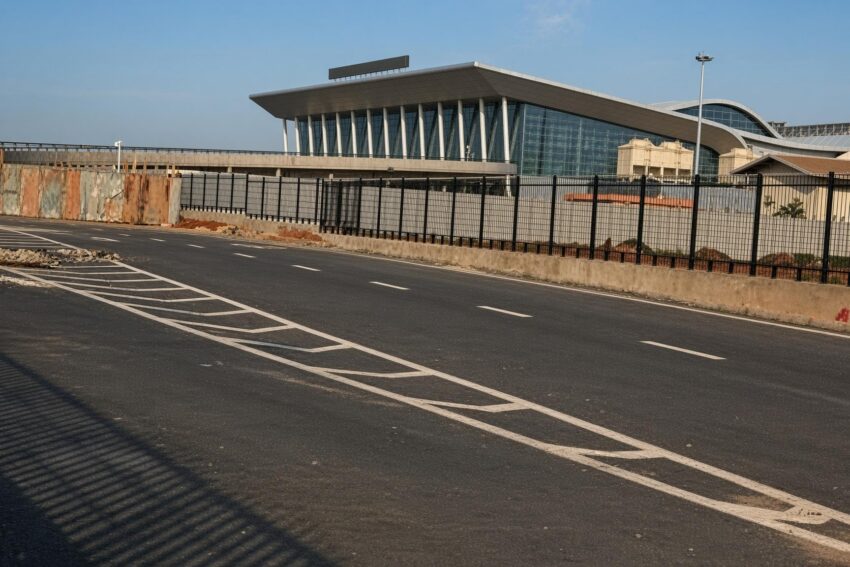
In the wake of a devastating sanitation scandal and years of operational failures, Togo has been forced into a bold strategic shift: handing over the management of duty-free zones at Lomé’s Gnassingbé Eyadéma International Airport to French retail giant Lagardère Travel Retail. The decision signals a dramatic pivot for the West African nation as it grapples with its ambition to transform the airport into a key commercial and logistical hub.
The sanitation disaster that broke the camel’s back
What began as an embarrassing maintenance lapse spiraled into a national embarrassment. In mid-2026, Lomé’s airport made global headlines after a catastrophic failure in its sewage systems—dubbed the “fecal rain” incident—left its main terminal submerged in waste. Despite initial denials from airport officials, satellite footage and passenger accounts confirmed the scale of the disaster, exposing years of neglected infrastructure.
The crisis was not an isolated mishap but the culmination of chronic underinvestment and systemic inefficiencies within the Société Aéroportuaire de Lomé-Tokoin (SALT). Airlines and travelers, once lured by promises of a world-class gateway to Africa, now faced crumbling pavements, malfunctioning restrooms, and operational chaos. The incident shattered Togo’s reputation as a stable, forward-thinking nation, forcing authorities to confront a harsh reality: their public management model was no longer tenable.
Togo’s high-stakes gamble: efficiency at what cost?
The government’s decision to entrust Lagardère with the airport’s commercial operations is more than a stopgap measure—it’s a calculated bet on operational excellence. The French conglomerate, backed by the Louis Hachette Group and linked to the Bolloré Group, brings a reputation for rigorous standards, international retail expertise, and proven turnaround capabilities. For Lomé’s airport, this means immediate upgrades to hygiene, passenger experience, and revenue-generating spaces.
Yet the move is not without controversy. Critics warn that outsourcing such a strategic asset to a foreign firm risks ceding control over a vital economic gateway. Concerns abound that wealth generated from duty-free concessions—key revenue streams for airports—could flow disproportionately to foreign shareholders, sidelining local businesses and artisans. Others argue that the private sector’s efficiency could unlock untapped potential, justifying the compromise in sovereignty.
Can Lagardère restore faith in Lomé’s airport?
For the French group, the challenge is twofold. First, Lagardère must urgently restore operational credibility by overhauling the airport’s sanitation and maintenance systems. Second, it must demonstrate that its management will not only benefit international travelers but also create tangible economic opportunities for Togolese stakeholders.
Analysts suggest the partnership could serve as a model for balancing foreign investment with national interests—if structured transparently. The government has hinted at safeguards to protect local participation, though specifics remain under wraps. Meanwhile, airport users, weary of years of dysfunction, are cautiously optimistic. Will Lagardère’s arrival mark a new chapter for Lomé’s gateway to Africa—or will it deepen Togo’s reliance on external expertise?
What’s next for Lomé’s airport?
- Immediate priorities: Sewage system repairs, terminal cleanliness audits, and passenger flow optimization to meet international standards.
- Long-term goals: Expanding cargo handling to boost West African trade, attracting new airlines, and positioning Lomé as a regional logistics hub.
- Economic safeguards: Ensuring local businesses retain access to commercial spaces while preventing monopolization by global brands.