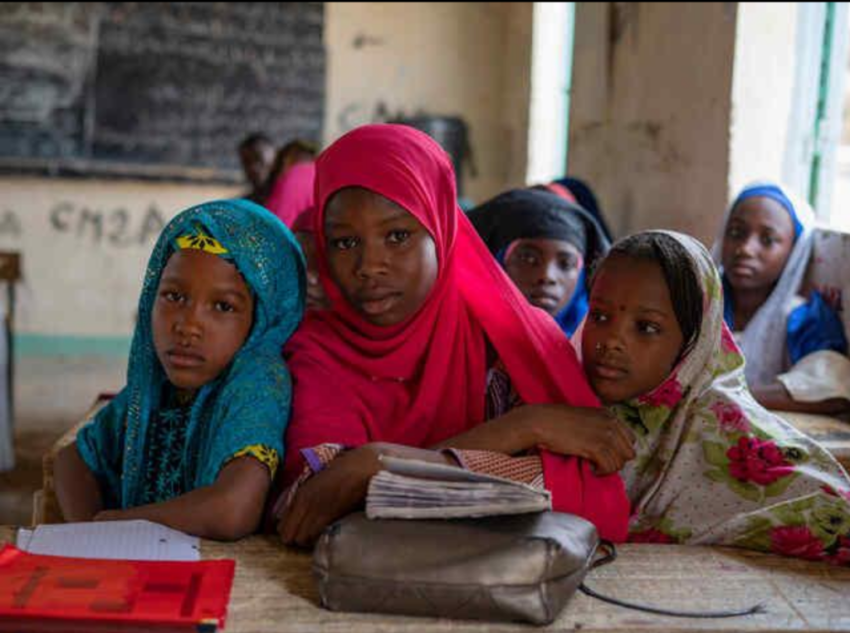
The decision to reopen all schools in Diffa to children from every community marks a critical turning point in the region’s education landscape. Following controversial restrictions that sparked nationwide debate, this move underscores a fundamental question: how can Niger balance security imperatives with the preservation of basic rights, particularly when entire communities face collective punishment?
The backstory: when education became a casualty of administrative measures
In late 2026, authorities in Diffa and neighboring Zinder regions implemented administrative measures targeting the Mohamid community. These included school closures, restricted access to water points, and the reallocation of teachers, purportedly due to security concerns and perceived unauthorized use of public infrastructure. But beyond the justifications, the immediate impact was devastating: children were denied their right to learn, families were left in limbo, and the social fabric frayed under the weight of blanket restrictions.
The situation escalated quickly. Health clinics struggled to operate. Civil registration services were disrupted. And the educational system — already fragile in a region plagued by armed group violence — faced another layer of collapse. The message sent was clear: being part of a designated community could mean losing access to foundational services like education.
Security vs. rights: the enduring debate after school reopenings
For years, Diffa has battled insecurity linked to Boko Haram and other armed factions operating around Lake Chad. Schools have been targeted, teachers abducted, and children displaced. In response, authorities have closed institutions to protect students — a policy rooted in legitimate concern. But when restrictions expand beyond specific threats to blanket sanctions on entire communities, the line between protection and discrimination blurs.
Critics argue that collective measures punish the innocent. An innocent child cannot be held responsible for the actions of others. International law, including the UN Convention on the Children’s Rights, is unequivocal: education is a non-negotiable right. Closing schools based on community affiliation risks violating this principle, and sets a dangerous precedent where rights are traded for perceived security gains.
This isn’t just an academic debate. In Diffa, where 40% of school-age children already face disrupted education due to conflict, every closure deepens inequality. Girls are hit hardest — when schools close, many are married off or sent into labor. Boys, in turn, are drawn into hazardous work or recruitment by armed groups. The cost of exclusion isn’t theoretical. It’s measured in stolen childhoods, lost opportunity, and fractured futures.
Reopening schools: a step forward, but is it enough?
The nationwide reopening of schools in Diffa to all communities sends a powerful signal of inclusion and national unity. It signals that education is not a privilege reserved for some, but a right owed to all. Yet, restoring access is only the first step. The real challenge lies in ensuring that schools are not just open — but functional, safe, and welcoming.
Many communities still face shortages of teachers, lack of textbooks, and damaged infrastructure. Security remains fragile. Rainy seasons cut off villages. Families hesitate to send children to school when armed groups roam the countryside. Without sustained investment in safety, logistics, and pedagogy, the reopening risks becoming symbolic rather than transformative.
The government’s role doesn’t end with announcements. It must follow through with transparent monitoring, community engagement, and accountability. Schools must be protected from attacks, teachers must be trained and deployed equitably, and no child should be turned away based on name, origin, or affiliation. Inclusivity means nothing if it doesn’t reach the most vulnerable.
Education as a pillar of national unity and resilience
At its core, this crisis highlights a critical truth: education is not just about learning to read and write. It is a cornerstone of social cohesion, economic development, and peace. When schools exclude entire groups, they undermine trust in the state. When children are denied education, society loses the diverse talents needed to build resilience against extremism.
Diffa’s inclusive school policy is more than a policy correction. It’s a statement: Niger is committed to educating every child, regardless of background. But this commitment must be matched by action. From investing in protected school pathways to supporting returnee teachers, the state must demonstrate that inclusion is not a one-time gesture, but a sustained policy.
In a region where hope is already scarce, schools represent the last line of defense against despair. They are spaces where children learn not just arithmetic, but shared citizenship. Where they discover that they belong to a nation that values them, not just a community the state suspects. As classrooms reopen across Diffa, the real test begins: will education truly be for all? Or will exclusion find new disguises?
The way forward: building inclusive education systems in times of crisis
- Community-led monitoring: Involve local leaders and civil society in assessing school safety and accessibility to prevent discriminatory practices.
- Sustainable teacher deployment: Train and incentivize teachers to work in high-risk zones, ensuring no community is left behind.
- Emergency education plans: Prepare rapid-response protocols for school closures due to violence or natural disasters, keeping learning going through temporary learning spaces or radio education.
- Legal clarity and oversight: Establish independent oversight to review any future restrictions and ensure they comply with national and international human rights standards.
- Socio-economic support: Provide cash transfers, school meals, and vocational training to keep children — especially girls — in school during crises.
Conclusion: education as the ultimate equalizer
Diffa’s inclusive school reopening is a milestone in Niger’s struggle to reconcile security with social justice. But the story of education in the Sahel cannot be written in bold letters alone. It must be written in daily action — in every classroom that stays open, in every teacher who remains, in every child who shows up to learn.
Until every child in Diffa has equal access to quality education, the promise of inclusion remains incomplete. And until the state proves that rights are not negotiable — even in times of crisis — the debate over security and rights will continue. One thing is certain: the future of Diffa depends not just on how many schools we open, but on how many children we ensure can walk through their doors.