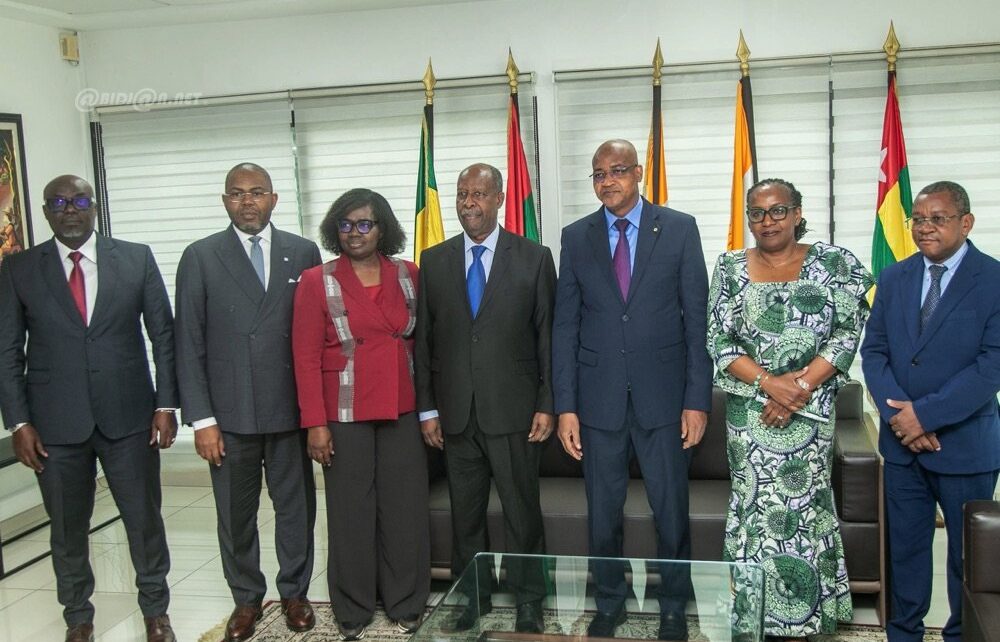
The signing of a Memorandum of Understanding between the Entente Council and the United Nations Office for West Africa and the Sahel (UNOWAS) on Tuesday, 29 September 2026, in Abidjan-Cocody, has triggered a wave of reactions and opened a broader debate about the future of peace and stability in West Africa and the Sahel. The three-year agreement, aimed at strengthening cooperation on peace, political dialogue and regional coordination, is already being scrutinised by observers who see it as both a timely response to mounting challenges and a test of the two institutions’ ability to deliver concrete results.
Under the accord, the two bodies will join forces to tackle persistent security, political, humanitarian and institutional difficulties. A key objective is to safeguard and expand the spaces where states and regional organisations can consult and coordinate, at a time when those spaces are under strain.
Three priorities shaping the new partnership
The cooperation rests on three main pillars. The first centres on preventive diplomacy, mediation and political dialogue, with provisions for strategic consultations, good-offices initiatives and facilitation efforts. The second focuses on peace and resilience in border areas, including conflict prevention, social cohesion and the involvement of young people and women in peacebuilding. The third pillar covers institutional strengthening and strategic analysis, through information sharing, joint studies, advisory support and capacity development for the Entente Council.
What the memorandum changes for the Entente Council
The agreement also cements the Entente Council’s role as a platform for dialogue, consultation and diplomatic facilitation. Depending on circumstances, the organisation could help bring states closer together and bridge different regional configurations.
To turn the commitments into action, both institutions will draw up annual joint work plans, appoint focal points and hold regular follow-up consultations. Joint missions for evaluation, dialogue or diplomatic facilitation may also be carried out. The memorandum is initially set for a three-year term.
Reactions: ‘Peace is never definitive’
Speaking at the signing ceremony, Leonardo Simão, Special Representative of the UN Secretary-General for West Africa and the Sahel, stressed the importance of the cooperation for promoting peace and stability in the region. “There are always threats to peace. We cannot treat peace as something definitive. We must always make efforts to maintain peace where it already exists, but also to recover peace where it does not exist,” he said.
Simão also highlighted the experience of the Entente Council, created in 1959, before both the Organisation of African Unity and the Economic Community of West African States (ECOWAS). In his view, that history of cooperation between states provides a foundation on which new peace initiatives can be built.
Outlook: a recognition of the Council’s role
For Idi Ali, deputy executive secretary in charge of the interim executive secretary of the Entente Council, the agreement reflects recognition of the role the organisation can play in the current security environment. “The Entente Council is today a privileged framework for consolidating peace in the sub-region,” he said, noting the presence within the organisation of both Sahelian and coastal countries.
He welcomed the signing of the memorandum with UNOWAS, saying it would consolidate relations between the two institutions and strengthen their contribution to peace in the sub-region. As the debate unfolds, the focus now turns to how quickly the joint work plans, focal points and follow-up mechanisms will translate into tangible gains on the ground.