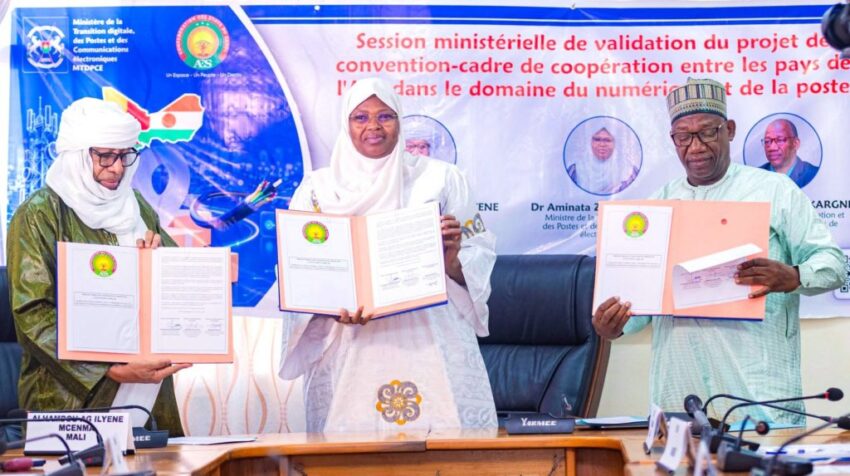
The ministers in charge of digital and postal affairs from Burkina Faso, Mali, and Niger have finalized a groundbreaking cooperation framework this week in Ouagadougou, Burkina Faso, reshaping the future of digital and postal services within the Alliance of Sahel States (AES). The agreement, endorsed on November 27, 2026, aims to dismantle digital barriers and create a unified postal network, sparking immediate debate over its long-term implications.
Breaking boundaries: how the AES digital postal deal is redefining regional collaboration
The convention, signed during a key ministerial session, establishes a legal foundation for collaboration between the three countries in digital infrastructure and postal services. This initiative seeks to harmonize digital platforms, integrate postal networks, and foster cross-border data exchanges under a unified confederal structure.
From vision to reality: what the ministers are saying
Mali’s Minister of Communication and Digital Economy, Alhamdou Ag Ilyene, emphasized the transformative potential of the agreement, stating that it would eliminate borders by interconnecting digital and postal platforms. « This is total digitalization, pooling our postal and digital capacities to create a seamless, borderless experience. The confederal framework will ensure that citizens no longer perceive administrative borders—thanks to the power of digital innovation,» he explained.
The Burkinabè minister in charge of Digital Transition and Posts, Aminata Zerbo/Sabané, hailed the agreement as a landmark step toward regional integration. « This is a decisive move in the digital and postal cooperation of our space. Now, we must deliver tangible results to fulfill our heads of state’s vision and provide services that truly meet our populations’ needs,» she remarked.
The backdrop: digital sovereignty takes center stage in Ouagadougou
The agreement was finalized during the 21st edition of the Digital Week in Ouagadougou, a high-profile event held from November 24 to 27, 2026. With the theme « Technological Sovereignty: Accelerating Secure and Inclusive Digital Transformation,» the conference served as a platform to discuss critical issues surrounding digital autonomy and technological resilience in the Sahel.
Public reactions: optimism meets scrutiny
The announcement has ignited mixed reactions across the region. While some laud the agreement as a bold leap toward economic and digital integration, critics question the feasibility of seamless cross-border digital services given existing infrastructure gaps. Others highlight concerns over data sovereignty and the potential for increased surveillance under a unified system.
What lies ahead: unanswered questions and next steps
With the framework now in place, attention turns to implementation. A detailed action plan has been outlined, but key challenges remain, including:
- Harmonizing regulatory frameworks to ensure seamless interoperability between each country’s digital and postal systems.
- Investing in infrastructure to bridge connectivity gaps and modernize postal networks.
- Addressing public concerns about data privacy, digital inclusion, and equitable access to services.
The AES’s digital postal union marks a bold but complex endeavor. As the three nations move forward, the world will be watching closely to see whether this vision of a borderless, technologically integrated Sahel can become a reality.