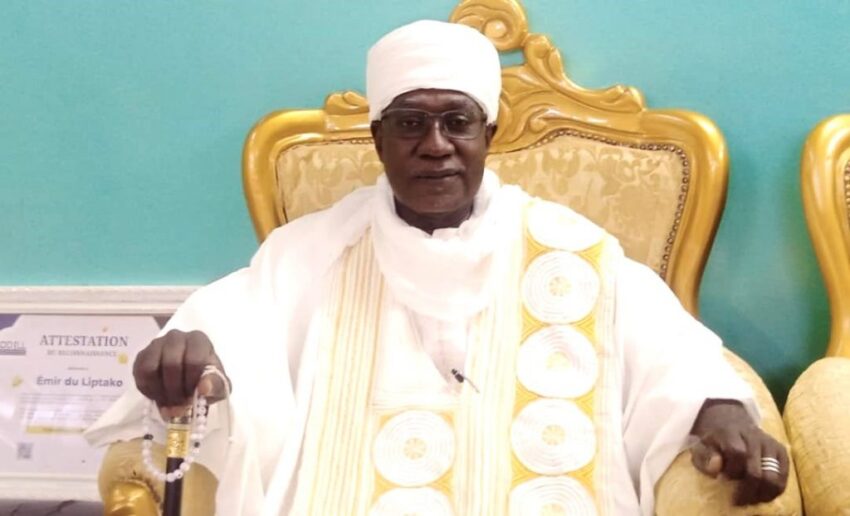
The recent adoption of a landmark law recognizing the role of traditional leadership in Burkina Faso has sparked intense public debate across the Liptako-Gourma region. As Sahel communities grapple with deepening security crises and social fractures, the Emir of Liptako argues that customary chiefs must take a more proactive role in conflict prevention, social cohesion, and cross-border reconciliation. This shift in governance comes at a critical juncture when the future of one of Africa’s most volatile regions hangs in the balance.
From Crisis to Cooperation: The Evolving Role of Traditional Leadership
The security situation in the Sahel has reached a tipping point, with Burkina Faso’s fight against armed groups entering its tenth year. Since 2015, the country has witnessed not just a security emergency but a profound social unraveling. Families uprooted from their homes, pastoralists barred from grazing lands, farmers unable to cultivate their fields, and youth facing bleak prospects have all become symptoms of a crisis that transcends mere violence.
The traditional solidarity networks that once held communities together are struggling under the weight of unmet needs, resource disputes, and deepening inequalities. These tensions don’t respect national borders—they spill over between Burkina Faso, Mali, and Niger, demanding a coordinated response that goes beyond military action alone.
Yet within this turbulence lies opportunity. The Sahel’s rich cultural heritage and tradition of cross-border cooperation could become powerful tools for stabilization. The key lies in harnessing the unique position of customary leaders who understand local dynamics better than any formal institution.
Between Justice and Reconciliation: The Emir’s Blueprint for Stability
For the Emir of Liptako, the path forward begins with prevention rather than reaction. Traditional leaders must act as early warning systems, identifying tensions before they escalate into violence. Their deep knowledge of family alliances, historical grievances, and resource conflicts positions them uniquely to mediate disputes over land, water, and grazing rights before they turn deadly.
When violence does occur, chiefs play a crucial role in preventing collective punishment. By facilitating dialogue between affected communities, they can:
- Prevent indiscriminate reprisals against entire groups
- Reconcile families torn apart by conflict
- Reinforce social cohesion through collective responsibility
- Mediate between elders, religious leaders, and youth organizations
This community-level diplomacy complements official state efforts while maintaining grassroots legitimacy. In transborder areas like Liptako-Gourma, traditional leaders maintain vital links between populations across Burkina Faso, Mali, and Niger, helping prevent conflicts rooted in pastoral mobility, trade, and resource sharing.
The January 2026 Law: A New Chapter for Customary Leadership
The January 14, 2026 adoption of Law No. 002-2026/ALT represents a historic moment for Burkina Faso. By establishing a clear legal framework for traditional leadership, the law:
- Officially recognizes the constitutional role of customary chiefs
- Establishes 43 articles across six chapters governing their status and functions
- Provides legal protections for chiefs and their traditional domains
- Creates mechanisms to prevent succession disputes and rival claims
More than a symbolic gesture, this legislation legitimizes an institution whose authority predates the modern state. Crucially, it balances recognition with responsibility—demanding that traditional leaders maintain impartiality, avoid political entanglements, and uphold citizen rights while exercising their mediating functions.
The law’s implementation faces challenges, particularly in harmonizing national frameworks with local customs across Burkina Faso’s diverse communities. Yet its greatest promise lies in creating predictable relationships between traditional authorities and state institutions, enabling chiefs to contribute meaningfully to peacebuilding without becoming administrative extensions of government.
Five Pillars for a Durable Peace in Liptako-Gourma
The Emir envisions a future where Liptako-Gourma transforms from a zone of confrontation into a region of cooperation and development. Achieving this requires a multi-pronged strategy:
1. Institutionalizing Conflict Prevention
Security operations must be paired with proactive dialogue initiatives. Traditional leaders can lead community consultations, establish early warning systems, and create rapid response mediation teams before disputes escalate into violence.
2. Strengthening Cross-Border Cooperation
Durable peace cannot exist in isolation. Burkina Faso, Mali, and Niger must develop joint mechanisms for:
- Coordinated transhumance routes and grazing management
- Shared natural resource governance
- Joint peace committees involving traditional and state authorities
3. Economic Revitalization as Stability Anchor
The youth bulge in Liptako-Gourma demands opportunities. Investments should target:
- Vocational training aligned with regional needs
- Support for small-scale entrepreneurs in agriculture and trade
- Infrastructure development to connect rural areas
- Cross-border economic zones to foster interdependence
4. Restoring Trust in Institutions
Security means more than military presence. Real safety emerges when:
- Schools reopen and function normally
- Health centers provide reliable services
- Markets operate without fear of attack
- Judicial systems deliver timely justice
This requires security forces working in tandem with civilian authorities to protect lives and livelihoods—not just respond to crises.
5. Community-Led Peacebuilding
No peace initiative can succeed without genuine local participation. Development programs must incorporate:
- Regular consultations with traditional leaders and civil society
- Support for women’s peace networks and youth associations
- Cultural initiatives that reinforce shared identity
- Truth and reconciliation processes tailored to local needs
The Road Ahead: Leadership in Uncertain Times
The Emir’s vision acknowledges that peace in Liptako-Gourma cannot be imposed from above—it must be built from the ground up. Traditional leadership offers a bridge between state authority and community realities, but this role demands:
- Unwavering commitment to neutrality in conflicts
- Rigorous protection from political manipulation
- Transparent processes for chief selection and dispute resolution
- Strengthened collaboration between customary and formal justice systems
As Burkina Faso implements its new legal framework, the coming months will reveal whether traditional institutions can deliver on their promise. For communities weary of violence, the stakes could not be higher. The alternative—a continued cycle of instability and underdevelopment—threatens to unravel the social fabric of an entire generation.