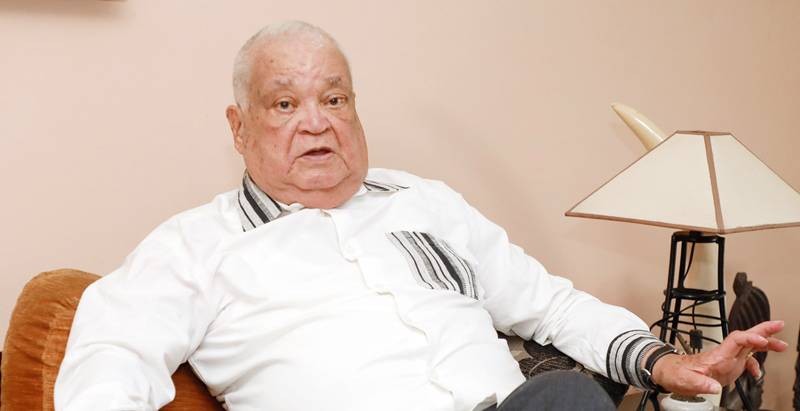
With over five decades of service in Côte d’Ivoire’s political and media spheres, Auguste Miremont, former Minister of Communication (1989–1993) and former Director-General of Fraternité Matin, offers a rare insider’s perspective on the nation’s modern history. Now 85, Miremont recently shared his reflections in a newly published biography, Auguste Miremont: From Houphouët to Ouattara, in Complete Freedom…, revealing untold stories from the eras of presidents Félix Houphouët-Boigny, Henri Konan Bédié, Laurent Gbagbo, and Alassane Ouattara.
a life in service: from journalism to high office
Miremont’s journey began in journalism, where he honed his analytical skills before transitioning into public service. As the first Minister of Communication under Côte d’Ivoire’s initial cabinet structure (then known as the Ministry of Information), he played a pivotal role during critical moments in the country’s development. His tenure spanned the administrations of multiple leaders, giving him a front-row seat to the nation’s political evolution.
The biography, authored by Michel Koffi, emerged from 30 hours of in-depth conversations spread over 18 months. Miremont admitted that while the process was extensive, it was also deeply rewarding. “The discussions were not just about my life,” he explained, “but about the very soul of Côte d’Ivoire—its struggles, its triumphs, and the decisions that shaped its trajectory.”
leadership lessons from houphouët-boigny
When asked to compare Côte d’Ivoire’s leaders, Miremont reserved special praise for Félix Houphouët-Boigny, the nation’s founding president. “Houphouët-Boigny was a master of political finesse,” Miremont reflected. “He possessed an unparalleled ability to listen, mediate, and act decisively—qualities that kept Côte d’Ivoire stable even amid regional turbulence.”
Miremont, who served as Houphouët-Boigny’s Minister of Communication and later as head of the presidential newspaper, recalled their professional relationship with mutual respect. “I never hesitated to speak my mind, and he valued that honesty,” he said. The president’s habit of addressing him as “De Miremont”—a nod to his European heritage—surprised him, but Miremont attributed it to Houphouët-Boigny’s deep appreciation for Côte d’Ivoire’s diverse cultural fabric.
navigating crises: the cost of instability
The book does not shy away from Côte d’Ivoire’s darker chapters. Miremont described the 1999 coup d’état against President Bédié and the subsequent violence as “a fracture that shattered the country’s once-unassailable reputation.” He recounted the shock of learning of Robert Guéï’s assassination and the tragic death of his former colleague, Finance Minister Émile Boga Doudou, during negotiations for a unity government. “To see everything we built under Houphouët-Boigny crumble was heartbreaking,” he admitted. “For those of us who witnessed its golden age, it was like watching a masterpiece defaced.”
ouattara’s rise: continuity and transformation
Miremont credits President Alassane Ouattara with inheriting and adapting Houphouët-Boigny’s strategic approach. “Ouattara has absorbed the best of Houphouët-Boigny’s leadership—patience, adaptability, and timing,” he noted. “Yet, he faces a different challenge: a Côte d’Ivoire that is no longer insulated from global pressures.”
He praised Ouattara’s economic reforms and infrastructure projects, such as the expansion of hospitals, universities, and roads nationwide. “Daloa’s boulevard, reminiscent of Paris’s Champs-Élysées, is a testament to what disciplined governance can achieve,” Miremont observed. However, he also acknowledged lingering social disparities, praising government initiatives like vocational training programs and social safety nets as crucial steps toward equity.
the road ahead: unity and renewal
As Ouattara begins a new term, Miremont expressed confidence in his leadership. “He is not stepping down; he is just getting started,” he remarked. “His vision—a united, prosperous Côte d’Ivoire—is within reach, but it requires patience and collective effort.”
Miremont’s reflections transcend biography. They serve as a bridge between Côte d’Ivoire’s past and its future, offering lessons in resilience, leadership, and the enduring pursuit of national harmony.