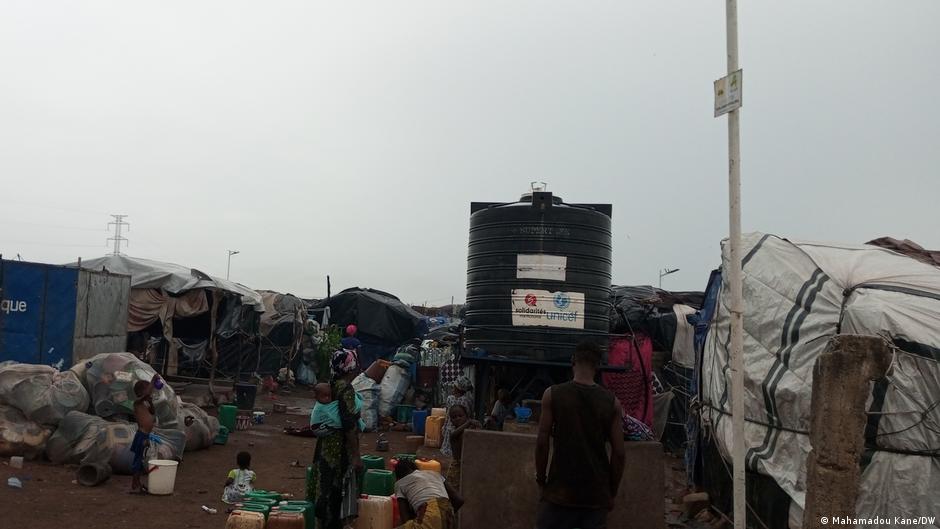
In Bamako, Mali, the demolition of the Faladiè livestock market has left more than 300 displaced families homeless. The market, which had also served as a shelter for internally displaced persons (IDPs), was razed to the ground in an operation that has sparked urgent humanitarian concerns.
Background of the demolition
The decision to demolish the livestock market followed a series of jihadist attacks on military and gendarmerie schools in Bamako in September 2024. Authorities suspected that some markets, including Faladiè, had been used as hideouts by armed groups. While the move aimed to curb security threats, it inadvertently displaced hundreds of vulnerable families who had sought refuge in the market’s informal camp.
A fragile existence shattered
For Dado, a 40-year-old mother from Bankass in central Mali, the demolition marked the end of a fragile sense of security. She fled her village six years ago due to escalating violence and found temporary shelter in Faladiè’s camp. Like many others, she believed the capital would offer protection.
“We are seven in total: my mother, my two daughters, and my three sons. We left everything behind because of the war. We thought we would be safe here,” she shared.
The demolition has left over 2,000 displaced individuals—mostly women and children—without food, water, or shelter. The site, once supported by humanitarian organizations and Malian authorities, now lies in ruins, with no immediate solutions in sight.
Failed relocation promises
Officials had announced plans to relocate the displaced to Sanankoroba, a site 35 kilometers from Bamako, prepared by the government. However, vendors and displaced families alike describe the relocation site as non-functional. With no viable alternatives, Dado and others are left scrambling for solutions.
“We accept that we must leave, but we beg for another place to go. Before, we survived by collecting scraps to sell to livestock breeders. Now, we have nothing—not even a roof over our heads,” Dado explained.
The displaced emphasize that shelter is their most urgent need. Without it, accessing food, water, and healthcare becomes nearly impossible. Despite attempts to contact the National Directorate of Social Development, no immediate response has been provided regarding the crisis.
Long-term implications
The demolition of Faladiè’s market and camp highlights the broader challenges faced by Mali’s internally displaced population. Years after the 2020 coup, instability persists, forcing families into precarious living conditions. Humanitarian organizations warn that without urgent intervention, the situation could worsen, exacerbating an already dire crisis.