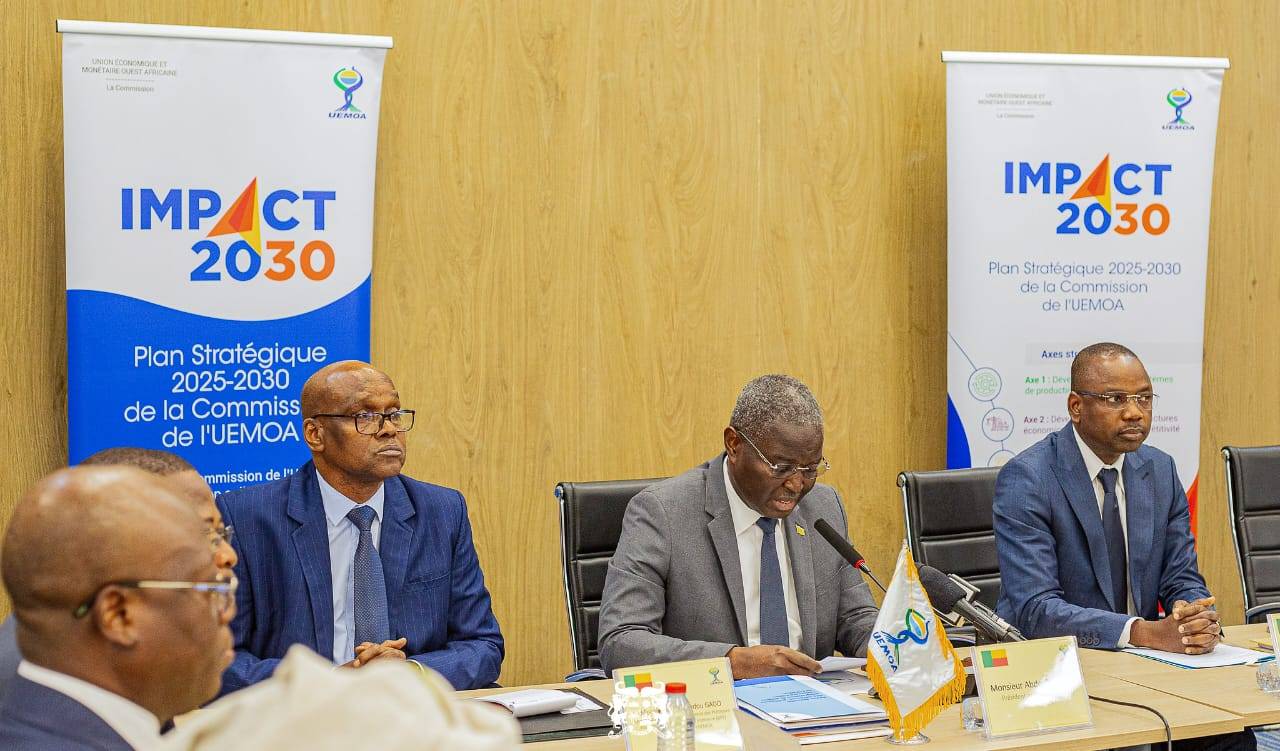
On Thursday, July 23, 2026, the Ministry of Economy and Finance of Benin hosted the annual 2026 Review of UEMOA Community Reforms, Policies, Programs, and Projects. Following an in-depth assessment of 145 regulatory texts, the country achieved a 73% implementation rate—exceeding the 70% satisfactory threshold and underscoring Cotonou’s unwavering commitment to West African economic integration.
Institutional gathering strengthens UEMOA integration efforts
Aligning national legislation with UEMOA’s legal framework remains the cornerstone of integration within the West African Economic and Monetary Union. The annual Political Review serves as a concrete measure of member states’ dedication to enforcing decisions made at the highest levels of governance.
In this context, the UEMOA Commission delegation convened in Cotonou alongside Beninese ministry representatives and sectoral officials. The primary objective? To meticulously evaluate every transposed and enforced text while pinpointing administrative or technical hurdles that could impede the Union’s collective momentum.
Three critical pillars drive the 2026 evaluation
The 2026 review employed a comprehensive analytical framework encompassing 145 community texts. As emphasized by UEMOA Commission President Abdoulaye Diop, the assessment’s purpose is to precisely gauge the transposition of legal acts originating from the Council of Ministers and the Conference of Heads of State and Government.
The evaluation centered on three pivotal areas for the subregion’s economic development:
- Economic governance and convergence: Budgetary harmonization, multilateral surveillance, and public transparency.
- Common market development: Free movement of persons, goods, services, and capital, alongside establishment rights.
- Sectoral policy alignment: Streamlining national initiatives in transport, energy, agriculture, environment, and digital sectors.
73% success rate: surpassing expectations
Upon conclusion, the findings were clear: Benin achieved a 73% overall implementation rate. Within the UEMOA Commission’s benchmarking system, 70% is the critical threshold marking significant state-level progress. By exceeding this benchmark, Benin reaffirms its role as a model pupil within the regional bloc. This milestone reflects years of consistent reform efforts while highlighting targeted areas for further enhancement.
Leadership perspectives: celebrating progress and planning next steps
Post-evaluation discussions enabled both parties to align on a shared vision for the integration process.
Abdoulaye Diop, UEMOA Commission President, framed the review not as an audit but as a strategic transformation lever. He underscored the need to build on Benin’s strong commitments, aiming for substantial advances in the next review cycle, particularly in domains requiring sustained effort.
Aristide Medenou, Benin’s Minister of Economy and Finance (Cooperation portfolio), commended the disciplined work of the country’s administrative teams. He attributed the result to a rigorous, ongoing monitoring mechanism and cross-departmental collaboration. The minister highlighted how this institutional meeting enables precise identification of bottlenecks, knowledge exchange with the Commission’s delegation, and agreement on actionable solutions to expedite pending directive transpositions.
Remaining challenges and future outlook
While the overall outcome is commendable, the remaining 27% gap represents the immediate priority. Transposing complex sectoral policies demands enhanced interministerial coordination.
Reaffirming the government’s commitment to sustained reform, Medenou outlined the roadmap for the coming months. The goal? To present notable progress in the identified improvement areas during the next annual review.
Promising momentum for West African economic integration
By surpassing the 73% mark in this 2026 evaluation, Benin demonstrates that rigorous governance and institutional follow-through can convert abstract regional commitments into tangible legal and economic realities.
Amidst broader economic challenges across the UEMOA, Cotonou’s budgetary discipline and regulatory alignment not only bolster the country’s credibility on the international financial stage but also contribute to building a more fluid and competitive subregional market.