How Brigitte Tchede’s medals are giving Benin a competitive edge in African university sports
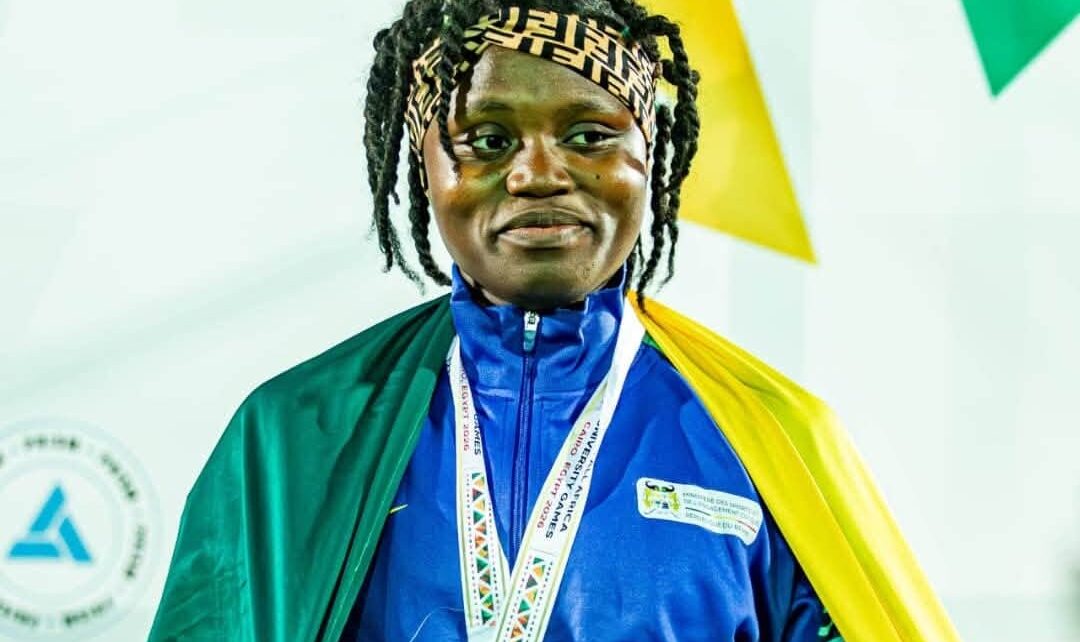
The 12th African University Games in Cairo have already set a landmark precedent for Benin, thanks to athlete Brigitte Tchede. The Porto-Novo native made history by securing the country’s first-ever double podium at a continental university-level competition, delivering a silver medal in the women’s discus throw and a second podium finish in a second event. These achievements transcend the field of play—they signal tangible growth for Benin’s sports economy and talent pipeline.
As nations across Africa vie for visibility and investment in university sports, Tchede’s performances have elevated the conversation. Her results are not just personal milestones; they reflect broader trends in how smaller delegations can gain recognition on the regional stage—an advantage that may lead to future funding, sponsorships, and athlete development initiatives.
From Accra to Cairo: Tchede’s meteoric rise
Tchede’s breakthrough in Cairo follows a sharp upward trajectory. Her previous best of 44.37 meters, set at the African Athletics Championships in Accra earlier this year, now stands at 47.08 meters—a career-best leap of 2.71 meters. This kind of measurable improvement in a technical event carries significant weight, especially in disciplines where margins are measured in centimeters.
The progression from 44.37 to 47.08 is more than a statistical footnote. It demonstrates consistency under pressure, adaptation to higher levels of competition, and the ability to peak when it matters most. For a developing sports nation like Benin, such performances serve as benchmarks that attract attention from potential investors and partners invested in talent development.
Two podiums, double the impact: what it means for Benin’s sports sector
Tchede’s second medal—earned in a distinct discipline—further underscores her athletic versatility and mental resilience. Climbing the podium twice in the same international meet is a rarity at any level, and for a Beninese athlete, it represents a quantum leap in visibility. The ripple goes beyond national pride; it resonates in media coverage, public engagement, and potential commercial partnerships.For Benin’s sports administration, Tchede’s success offers a clear case study in focused athlete development. With university competitions increasingly recognized as talent incubators, her results could reinforce arguments for increased public and private investment in training facilities, coaching staff, and youth academies. The return on such investment may soon be visible in performances at higher-level events, including continental championships and Olympic qualifications.
Porto-Novo takes notice: local and national implications of Tchede’s breakthrough
The impact of Tchede’s achievements extends deep into the heart of Benin’s capital. Porto-Novo, already a hub of cultural and athletic pride, now becomes the starting point for a new narrative—one in which homegrown talent is not only celebrated but financially supported. Schools, clubs, and youth centers are likely to see renewed interest in discus and other field events, as young athletes seek to emulate Tchede’s path.
At the national level, the dual medal success comes at a strategic time. With African university sports gaining traction across the continent, Benin’s ability to compete—and win—on that stage enhances its credentials as a rising force. This can translate into stronger bids for hosting future events, greater access to continental grants, and deeper integration into African sports federations and training networks.
A new floor, not a ceiling: what comes next for Tchede and Benin
While 47.08 meters marks a personal best, it is more appropriately viewed as a new baseline. For Tchede, the journey is far from over. With international competition driving continuous improvement, each meet presents an opportunity to refine technique, build strength, and aim higher. The Cairo result plants the seed for future ambitions—whether in continental championships, world university games, or beyond.
For Benin, the message is equally clear: sustained success in university sports is not a fluke. It is the result of targeted preparation, athlete support, and strategic competition choices. With Tchede leading the charge, the country can now build on this momentum—transitioning from isolated podium moments to a broader culture of athletic excellence. That culture, in turn, becomes an engine for tourism, sponsorship, and national pride in sports.