From laggard to leader: Bénin’s decade-long budget revolution
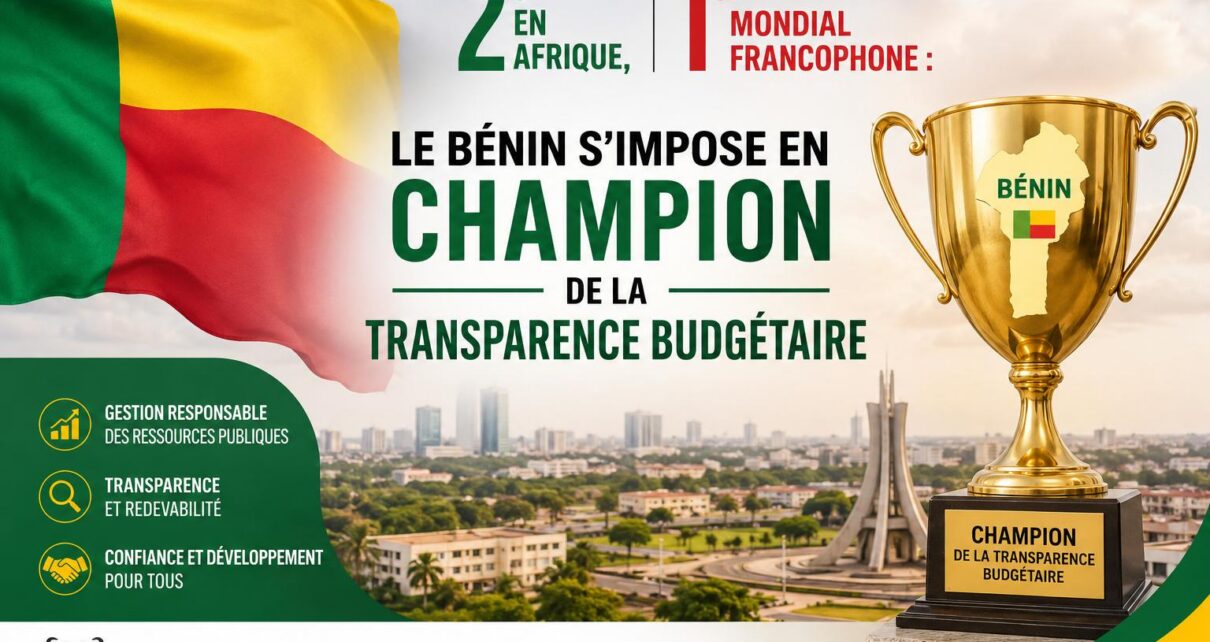
Over the span of a single decade, Bénin has undergone a profound transformation in its financial governance. The latest Open Budget Survey reveals a groundbreaking score of 79 out of 100, marking the country’s highest-ever performance. This achievement not only places Bénin in second position across Africa—trailing only South Africa—but also secures its position as the undisputed leader in the francophone world. Behind this remarkable progress lies a decade of relentless reforms championed by President Patrice Talon’s administration.
A leap from obscurity to prominence
To grasp the significance of this ranking, one must reflect on Bénin’s starting point. In 2017, the nation languished near the bottom of the transparency index, recording a mere 35 points. Today, its score has more than doubled, a testament to deliberate policy shifts and institutional overhauls. This dramatic ascent was no accident but the result of a strategic vision introduced in 2016, when President Talon prioritized fiscal discipline and public accountability as cornerstones of national development.
The eight pillars of Bénin’s budgetary clarity
Transparency is not a slogan in Bénin; it is a meticulously structured system. The country now publishes all eight essential budgetary documents mandated by international standards—from preliminary drafts to final audit reports—on a timely and accessible basis. Each document, including a citizen-friendly budget summary, is available online, ensuring real-time scrutiny by civil society, media, and development partners. What was once an opaque state secret has evolved into an open ledger of public finance.
Citizen engagement: the missing link now in place
Bénin’s global distinction extends beyond mere data publication. With a score of 77 out of 100 for public participation, the country stands out for its inclusive approach to governance. This goes beyond transparency—it involves active collaboration. Regular public consultations invite civil society and local leaders to shape budget priorities, ensuring public funds reflect the real needs of communities. By embedding citizens in financial decision-making, Bénin is strengthening the bond of trust between government and populace.
Economic reforms fuel social progress
The transparency breakthrough mirrors sweeping structural reforms enacted under President Talon’s leadership. By digitalizing tax procedures—such as standardized invoices and online tax payments—and cracking down on corruption, the government has boosted domestic revenue while trimming bloated operational costs. These gains have unlocked funding for large-scale social and infrastructure programs. Initiatives like the Human Capital Strengthening Insurance (ARCH), expanded school feeding programs in rural areas, and upgrades to roads and energy networks are direct beneficiaries of this disciplined financial stewardship. Transparency, in effect, has become the engine of more equitable development.
A magnet for global investors
Beyond national pride, Bénin’s leadership position carries substantial economic weight. In a global climate of financial caution, foreign investors and rating agencies favor countries with clear, stable, and transparent financial systems. By emerging as West Africa’s top performer, Bénin has earned the confidence of international financiers. This credibility has enabled the country to secure competitive funding on global markets, evidenced by recent issuances of sustainable development bonds.
Bénin’s rise to the top of the francophone world in budget transparency is proof that bold, consistent reforms can transform governance. Under President Patrice Talon’s direction, the country has retooled its financial tools not just as instruments of control, but as vehicles of trust and progress. The next challenge for Cotonou will be to sustain this excellence and inspire neighboring nations to follow suit.