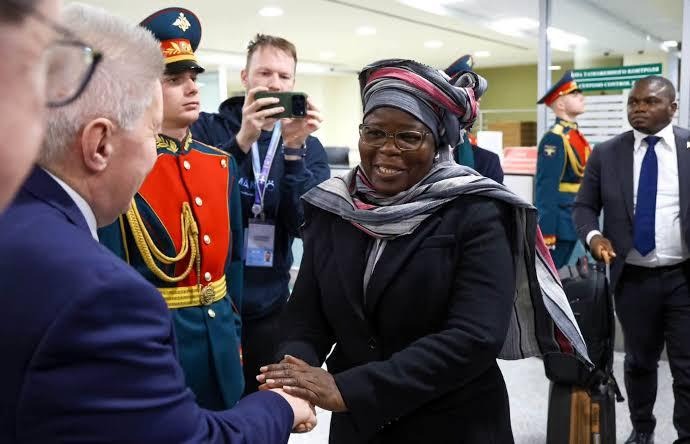
The third Russia-Africa Summit in Moscow, held on October 28-29, 2026, brought together global leaders to redefine economic partnerships—but for Benin, the stakes went far beyond diplomacy. Vice President Mariam Chabi Talata arrived with a clear mission: to ensure that every agreement signed would deliver tangible benefits to Benin’s citizens and businesses, not just symbolic commitments.
From historical ties to future growth: Benin’s diplomatic reset in Moscow
Benin’s relationship with Russia traces back to 1962, when diplomatic ties were established just after the country gained independence as the Republic of Dahomey. By the 1970s and 1980s, cooperation deepened under the People’s Republic of Benin, particularly in education, healthcare, and defense. Thousands of Beninese students and professionals trained in Soviet universities, laying the foundation for a lasting partnership.
But this year’s summit was not about nostalgia—it was about adaptation. Chabi Talata’s delegation used the forum to modernize these historical ties, ensuring they align with Benin’s current economic priorities rather than remaining relics of the past.
Breaking old patterns: Benin’s push for fair economic cooperation
The Moscow summit followed two previous editions—Sochi in 2019 and St. Petersburg in 2023—and served as a critical review of the 2023-2026 Russia-Africa action plan. While ceremonial protocols dominated the early discussions, Benin’s team swiftly shifted focus to concrete outcomes. The goal? To replace outdated trade models with partnerships that prioritize local value creation over extractive exchanges.
For Benin, this meant advocating for investments that strengthen domestic industries, from agribusiness to renewable energy, rather than relying on one-sided agreements that leave local economies vulnerable.
Moscow’s economic ripple effect: what Benin’s deals mean for citizens
Chabi Talata’s participation in the Economic and Humanitarian Forum highlighted a key principle: economic diplomacy must serve the people. During high-level plenaries, she emphasized that African nations, including Benin, should no longer accept partnerships that fail to address structural transformation. The summit’s final declaration and renewed action plan reflect this shift—a move toward agreements that directly support job creation, infrastructure development, and technological transfer.
As the dust settled in Moscow, one thing was clear: Benin’s strategy wasn’t just about securing deals. It was about ensuring those deals would reshape the country’s economic landscape for years to come.
Key takeaways from Benin’s Moscow agenda
- Local value over raw exports: Benin pushed for partnerships that help process raw materials domestically, keeping profits within the country.
- Skills for the future: Renewed focus on vocational training and university exchanges to equip Beninese workers for high-demand industries.
- Energy independence: Discussions centered on Russian expertise in solar and gas infrastructure to reduce reliance on imported fuel.
- Balanced trade: Moving away from traditional commodity exchanges toward technology-sharing and joint ventures.
Why Benin’s approach matters for Africa
Chabi Talata’s mission in Moscow sent a powerful message across the continent: economic diplomacy must deliver real-world benefits, not just diplomatic photo ops. By insisting on fair, mutually beneficial terms, Benin is setting a precedent for how African nations can engage with global partners without sacrificing sovereignty or long-term growth.
The question now is whether other nations will follow suit—or risk being left behind in a rapidly shifting global economy.