Benin Senate officially convenes in Porto-Novo as nation watches
July 30, 2026

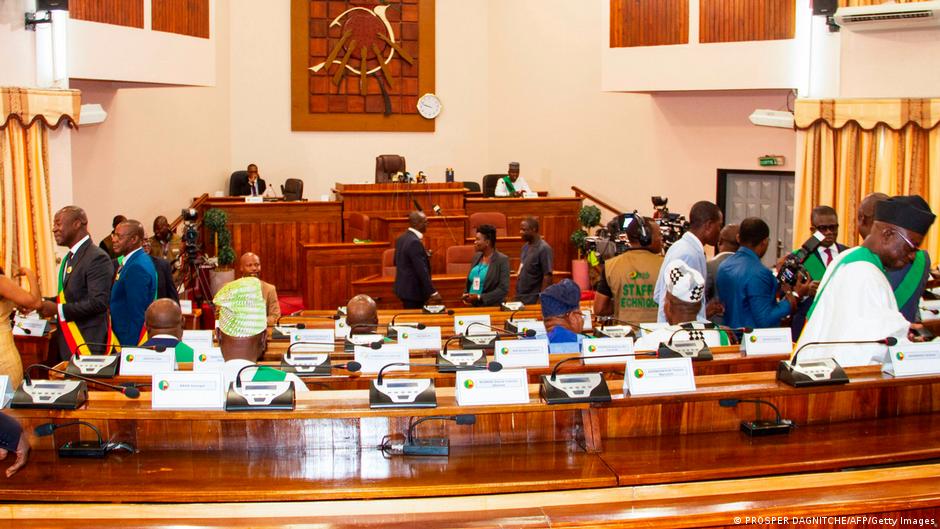
The Senate of Benin convenes for the first time today with its full contingent of 25 members, including former presidents who will serve as permanent members. This second legislative chamber, designed as a consultative body, marks a significant evolution in the country’s institutional framework.
Born from the November 2025 constitutional reforms, the Senate will temporarily operate from the National Assembly building until its dedicated facilities are completed. The chamber’s primary mandate: to act as a stabilizing force in Benin’s political landscape, drawing on the wisdom of experienced leaders.
On Friday in Cotonou, under the guidance of Robert Dossou — former Constitutional Court president — senators held their first closed-door meeting to organize their work. The stakes couldn’t be higher: citizens and analysts alike expect this chamber to prevent political tensions that have periodically disrupted the nation.
Building a house of wisdom
Governance expert Joël Atayi-Guèdègbé emphasizes the chamber’s potential:
“I sincerely expect this upper house to embody true wisdom, functioning as a council of elders given the extraordinary experience of its members. This assembly cannot afford to err or repeat past political conflicts. Its very credibility depends on demonstrating maturity and foresight.”
The Senate’s membership includes former presidents Patrice Talon, Boni Yayi and Nicéphore Soglo — three leaders whose political paths have not always aligned. Their presence alongside other distinguished figures sends a strong signal about the chamber’s intended role as a moderating institution.
A guardian of political stability
Political analyst Eugène Allossoukpo voices optimism about the Senate’s prospects:
“We view this institution as a pathway to peace, given our recent political history marked by conflicts of interest. The new Senate should help create a more regulated, calmer political ecosystem in Benin. This doesn’t mean silencing dissent, but rather channeling it constructively.”
The Senate’s consultative nature means it won’t make binding decisions, but its influence could prove decisive in times of crisis. Its ability to mediate between conflicting political factions will be closely scrutinized in the coming months.
The cost of democratic progress
Amidst the optimism, practical concerns remain. The government has allocated 100 million West African francs specifically for the Senate’s inauguration ceremony alone. While the chamber’s reduced size limits operational costs, questions persist about long-term budgetary implications.
Atayi-Guèdègbé notes:
“There will necessarily be increased expenses. Though the Senate is smaller than the National Assembly, it will require additional resources. We hope excessive sessions won’t be needed beyond the four annual meetings planned. While the compensation for these high-ranking members is substantial, it should remain proportionate. Democracy, unfortunately, comes at a cost we must accept.”
As Benin’s political leaders take their seats, all eyes turn to the Senate’s presidency. With former president Patrice Talon among the members, speculation grows about who will lead this crucial new institution. The 25 senators now face their first major test: proving that this democratic investment will strengthen the nation’s stability rather than burden it.