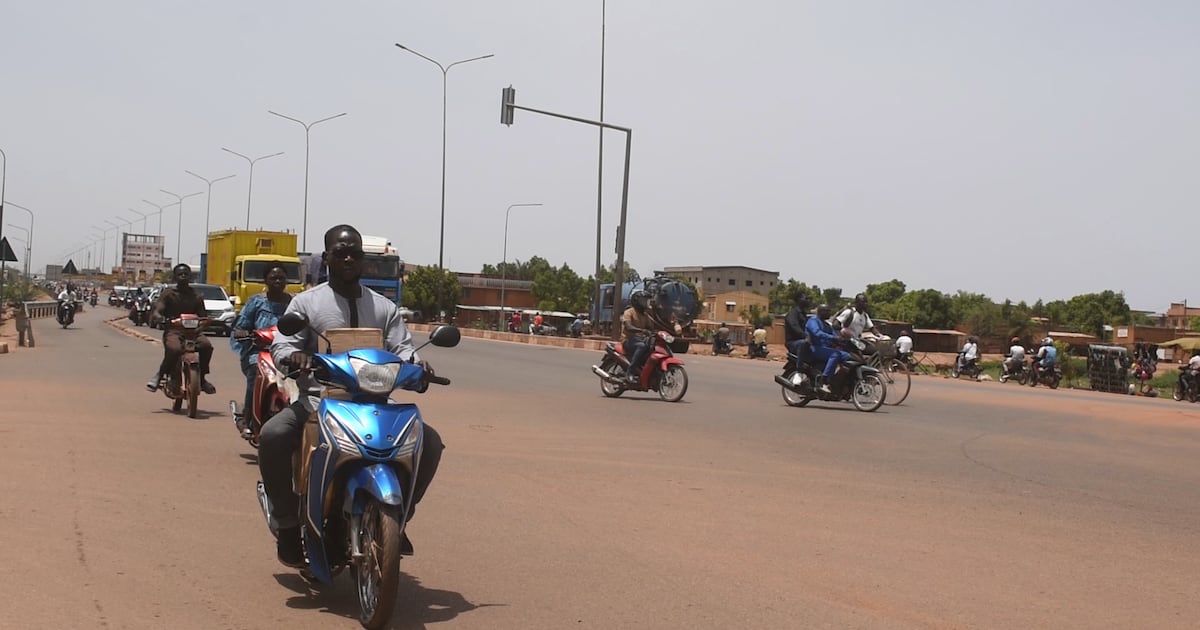
While some users welcome an innovative measure, others worry about its impact on safety, considering the infrastructure less suitable.
“I think it’s a good measure, since traffic itself is regulated by law. If they decide that Mio-type motorbikes join the small motorbikes on the small lane, I find that normal,” says Ben Ouattara, a delivery rider.
Mio motorbikes or scooters are compact, light two-wheelers, practical for urban trips, and appreciated for their low maintenance cost.
For the authorities, this reform primarily aims to ease traffic on increasingly congested roads. By directing some two-wheelers to bike lanes, the goal is to reduce pressure on main roads and improve coexistence among different road users.
“They probably thought about protecting the population by imposing this. But it would have been better if they left it as is. Because the bike lane is small and wants to gather all the motorbikes there, traffic will get stuck. Nevertheless, we’ll follow it and see what happens,” says Sirina Ouédraogo, a public road user.
However, many Burkinabè believe that this decision alone will not be enough to resolve traffic jams permanently. With the constant increase in the number of motorbikes on the road, urban mobility requires both individual and comprehensive responses.
“I think on the bike lane we pay even more attention because we are a bit confined. Being there, there is more restraint, reserve. This means we can avoid accidents to some extent,” rejoices Abdoulaye Mané, another user.
“People don’t know the traffic rules very well. As a result, some, when they ride on main roads, don’t know they are not driving correctly. Often we see women in traffic, they are on the left and want to go to the right. What I can tell people is to just avoid speeding. They find the small bike lane because they simply want to speed,” laments Sergène Yabré, a public road user.
Furthermore, several users call for the widening of bike lanes. According to them, these infrastructures, originally designed for bicycles, must be adapted to accommodate more motorized two-wheelers safely. This modernization could contribute to better traffic organization and perhaps become a serious avenue in the fight against urban traffic jams.