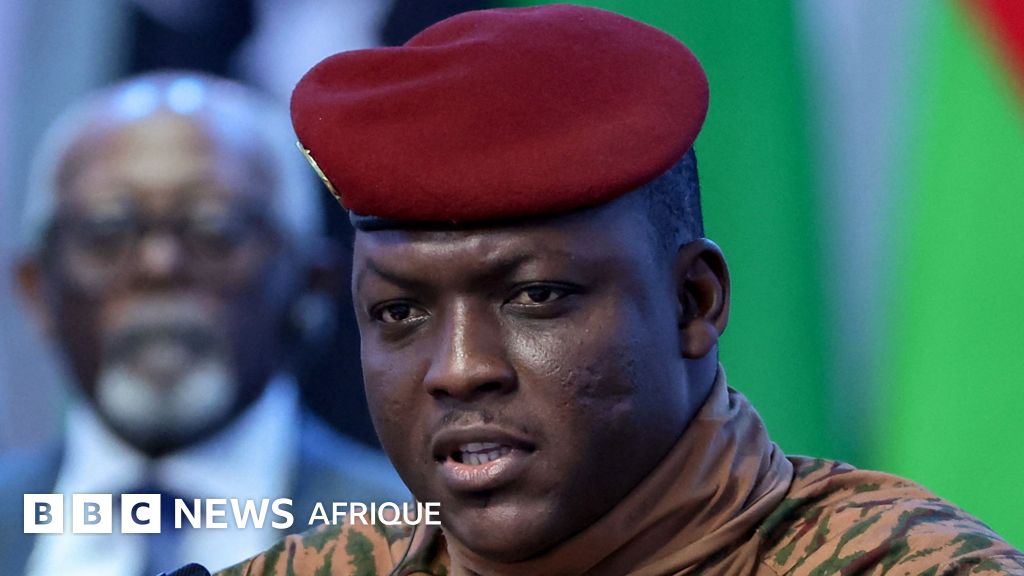
Burkina Faso’s military leader insists democracy must be ‘forgotten’
Captain Ibrahim Traoré, Burkina Faso’s military leader, has declared that the country must abandon democracy, calling the system fundamentally incompatible with the nation’s needs. His remarks came during a nationally televised interview where he argued that Western-style governance has repeatedly failed the African continent.
The 38-year-old leader, who seized power in a 2022 coup, suggested that Burkina Faso’s revolutionary approach represents a complete break from traditional political structures. He emphasized that the people should ‘forget about democracy,’ stating it has brought nothing but suffering to the nation.
Traoré’s government has extended its transition timeline multiple times, most recently postponing promised elections until at least 2029. Earlier this year, authorities banned all political parties, seizing their assets as part of what they describe as a national rebuilding effort.
Why Traoré rejects democracy
During the televised address, the military ruler drew parallels with Libya, warning that Western-backed democratic interventions often lead to chaos. He pointed to the country’s prolonged instability since the fall of Muammar Gaddafi as evidence that foreign-imposed systems rarely deliver stability.
Traoré positioned himself as a panafricanist leader resisting Western influence, arguing that Burkina Faso’s new political model prioritizes sovereignty, patriotism, and revolutionary mobilization over electoral processes. ‘We have our own approach,’ he stated. ‘We’re not trying to copy anyone. We’re here to completely change how things are done.’
Key pillars of the new system
- Sovereignty first: Reduced reliance on foreign powers, particularly France, in security and economic matters.
- Patriotic mobilization: Emphasis on local leadership and traditional structures in governance.
- Economic independence: Longer working hours and self-sufficiency as pathways to development.
Controversial policies and rising tensions
The military ruler has faced criticism for suppressing dissent, targeting opposition figures, journalists, and civil society groups. Critics argue his policies have deepened divisions rather than fostering national unity.
Since taking power, Traoré’s government has aligned closely with neighboring juntas in Mali and Niger, all of which have severed military ties with Western partners. Burkina Faso has instead turned to Russia for security support, though insurgencies by Islamist militants continue unabated.
Human rights organizations report a sharp increase in civilian casualties since 2023, with military operations and allied militias responsible for the majority of documented killings.
Despite these challenges, Traoré has cultivated significant support across Africa for his anti-Western rhetoric and calls for continental self-determination.