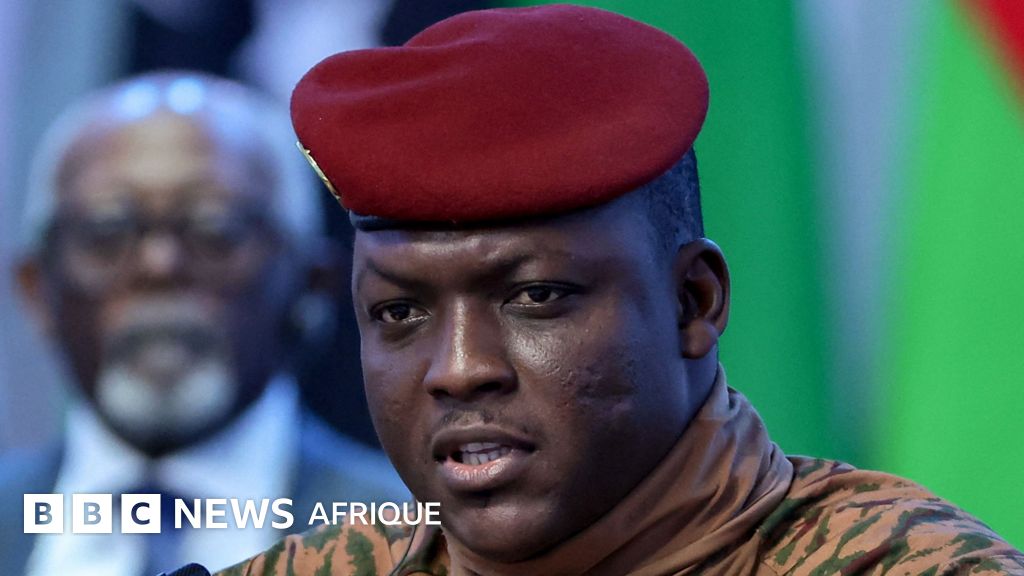
Military ruler dismisses democracy as incompatible with Burkina Faso’s future
The people of Burkina Faso should abandon the idea of democracy, declared the nation’s military leader in a prime-time state television interview. Captain Ibrahim Traoré, who seized power three years ago, argued that democratic systems do not align with Burkina Faso’s unique needs and suggested an entirely different approach to governance—though he provided few specifics on what that alternative might look like.
Traoré had previously promised to restore democratic rule by July 2024. Yet just two months before that deadline, the military junta extended its rule by five years, citing the need for stability and national reconstruction. The announcement followed a January decree dissolving all political parties, as part of a broader plan to rebuild the state from the ground up.
A rejection of western-style governance
During the televised interview, Traoré stated bluntly: “People must forget about democracy. It is not for us.” He went on to compare Burkina Faso’s situation with that of Libya, suggesting the North African nation’s collapse after the fall of Mouammar Kadhafi serves as a cautionary tale about Western intervention. Kadhafi, he noted, maintained stability through authoritarian rule, providing social services while avoiding electoral chaos.
“Wherever Western powers impose democracy,” Traoré asserted, “it always brings bloodshed.” He framed his rejection of democracy as part of a broader struggle against imperialism, positioning himself as a revolutionary leader opposing foreign influence in Africa. Despite widespread criticism of recent elections in some African nations—where military leaders have won after staging coups—Traoré insisted that Burkina Faso would not follow that path.
Political parties banned, revolution prioritized
The dissolution of political parties, Traoré argued, was necessary to eliminate sources of division. He described politicians as inherently corrupt—“liars, flatterers, and grandstanders”—and claimed their exclusion would pave the way for a new system built on sovereignty, patriotism, and grassroots mobilization. Traditional leaders and local structures, he suggested, would play a central role in this vision.
Economic and military self-reliance topped his agenda. Traoré emphasized that Burkina Faso could not catch up with wealthier nations through standard eight-hour workdays. Instead, he called for relentless effort, framing productivity as a patriotic duty. His government has cracked down on dissent, targeting opposition figures, media outlets, and civil society groups. Critics, including activists and journalists, have faced repression, with some reportedly sent to dangerous frontlines in the fight against Islamist militants.
Regional shift: Burkina Faso distances itself from the West
Traoré’s stance reflects a broader trend across West Africa’s Sahel region. Since seizing power, Burkina Faso has distanced itself from former colonial power France, joining neighbors Mali and Niger in turning to Russia for military support. Despite this pivot, violence in the region has intensified, with Islamist insurgencies persisting for over a decade.
A recent report by Human Rights Watch estimates that over 1,800 civilians have been killed in Burkina Faso since Traoré’s takeover in 2023. The report attributes two-thirds of these deaths to government forces and allied militias, with the remainder linked to Islamist militants. The ongoing conflict shows no signs of abating, despite the junta’s promises of security and reform.
As Traoré consolidates power, his vision for Burkina Faso remains shrouded in ambiguity. While he champions revolutionary change, the human cost of his policies continues to rise, leaving many to question whether his alternative path offers a viable future for the nation.