Burkina Faso’s military ruler declares democracy ‘must be forgotten’
The leader of Burkina Faso has declared that the nation should abandon democracy, calling the political system incompatible with the country’s revolutionary path.
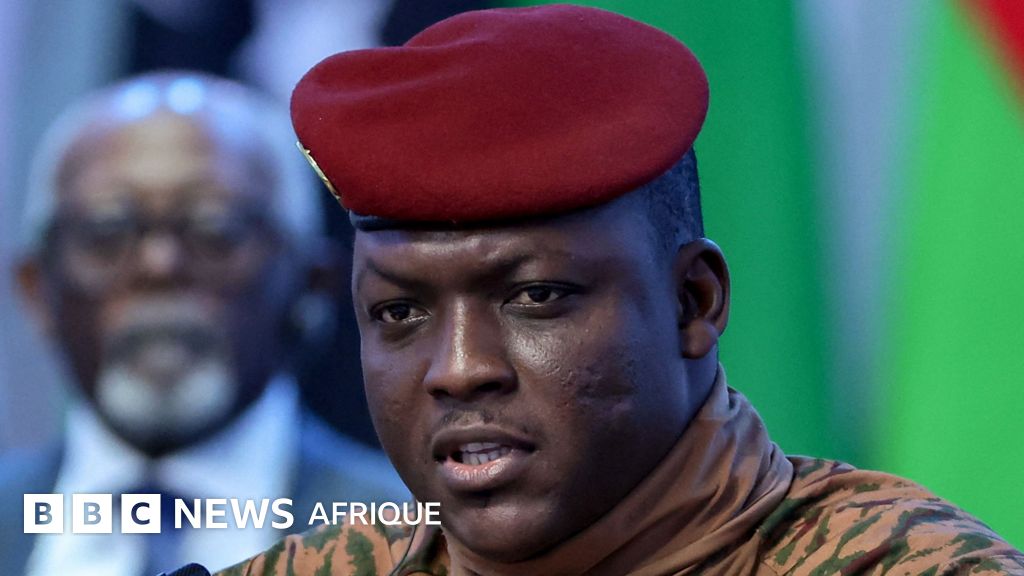
Captain Ibrahim Traoré, who seized power in a 2022 coup, made the remarks during a nationally televised interview. He argued that Burkina Faso must reject Western-style democracy, which he described as a system that brings only bloodshed and instability.
Traoré, who assumed leadership at just 38 years old, positioned himself as a revolutionary figure fighting against foreign influence. He cited the example of Libya as a cautionary tale, where decades of authoritarian rule under Colonel Muammar Gaddafi ended in chaos following Western military intervention.
“People must forget about democracy,” Traoré stated. “It is not for us. Democracy kills.” He claimed that most Africans share this view and that Burkina Faso would instead pursue an alternative system tailored to its needs.
His announcement comes as the military government abandons its earlier pledge to restore civilian rule by July 2024. In late 2025, authorities extended Traoré’s mandate by five years, citing the need for stability amid ongoing Islamist insurgencies.
The ruling junta has taken sweeping measures to consolidate power, including the outright ban of all political parties and the transfer of party assets to the state. Traoré has justified these actions by portraying political parties as divisive forces that undermine national unity.
“In Africa—and certainly in Burkina Faso—traditional politicians are liars, flatterers, and charlatans,” he asserted. “We have our own approach. We are not copying anyone. We are here to completely change how things are done.”
The military leader emphasized building a new system rooted in sovereignty, patriotism, and revolutionary mobilization, where traditional leaders and grassroots structures would play a central role. He also stressed the need for accelerated economic and military self-reliance, arguing that Burkina Faso cannot progress with limited working hours.
Traoré’s government has faced criticism for suppressing dissent, targeting opposition figures, media outlets, and civil society groups. Human rights organizations accuse his administration of silencing critics by sending them to frontline combat positions in the fight against Islamist militants.
Despite these controversies, Traoré has cultivated a strong following across Africa for his pan-Africanist rhetoric and vocal opposition to Western intervention. His stance aligns with neighboring juntas in Mali and Niger, which have also severed ties with Western partners—particularly France—in their fight against Islamist groups.
Instead, Burkina Faso, Mali, and Niger have turned to Russia for military support. However, Islamist violence continues unabated across the Sahel region, with no clear path to resolution.
Recent reports indicate that over 1,800 civilians have been killed in Burkina Faso since Traoré took power in 2022. According to independent observers, two-thirds of these deaths are attributed to state forces and allied militias, while the remainder are linked to Islamist extremists.
The ongoing conflict has intensified under Traoré’s leadership, raising concerns about the humanitarian toll and the sustainability of his revolutionary agenda.