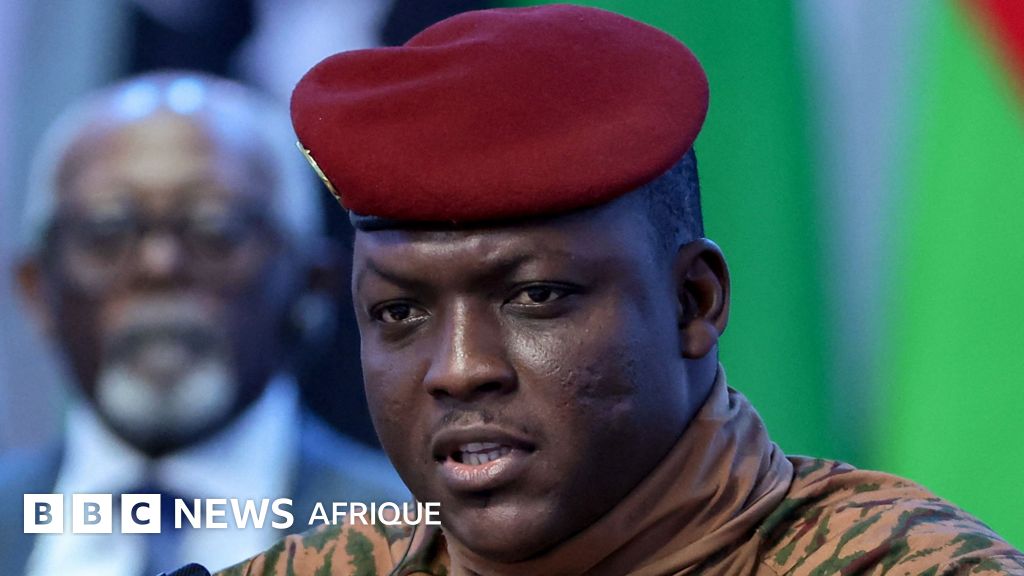
In a televised address that has sent shockwaves across West Africa, Burkina Faso’s military ruler has declared that democracy is not the solution for his country and urged citizens to abandon the concept entirely.
Traoré’s bold rejection of democratic governance
The statement came during a prime-time television interview where Captain Ibrahim Traoré, who seized power in a 2023 coup, made sweeping claims about the incompatibility of democracy with Burkina Faso’s cultural and political realities.
« People must forget about democracy. It is not for us, » Traoré declared, adding that the system « kills » nations rather than liberating them. He suggested that most Africans fundamentally reject democratic governance, though he did not provide evidence to support this assertion.
This declaration comes just two months after the military junta extended Traoré’s rule by five years—far beyond the July 2024 transition deadline they had initially promised to restore civilian government.
In January, authorities banned all political parties, claiming they were obstacles to national reconstruction. Traoré has repeatedly criticized traditional politicians, describing them as « liars, flatterers, and charlatans » who embody corruption and division.
Libya as a cautionary tale
Drawing parallels with neighboring Libya, Traoré warned that Western-imposed democracy often leads to chaos. He referenced the fall of Muammar Gaddafi’s regime—toppled in 2011 after four decades of authoritarian rule that, despite its brutality, provided free healthcare and education.
Since Gaddafi’s death, Libya has been mired in instability, with rival governments and armed factions preventing any meaningful elections. Traoré implied Burkina Faso could face a similar fate if it pursued democracy under Western influence.
A new revolutionary vision
The 38-year-old leader outlined his alternative vision, emphasizing sovereignty, patriotism, and grassroots mobilization. He stressed the need for economic and military self-reliance, arguing that Burkina Faso cannot progress with limited work hours.
« We have our own approach. We are not trying to copy anyone, » he insisted, framing his government as a break from both colonial legacies and failed democratic experiments. Traditional leaders and community structures, he claimed, would play a central role in this new system.
Traoré’s administration has systematically suppressed dissent, targeting opposition figures, independent media, and civil society groups. Critics have accused the government of silencing voices by sending opponents to frontline combat against Islamist militants—a claim denied by officials.
Despite these controversies, Traoré has cultivated a following across Africa for his anti-Western rhetoric and panafricanist stance. Burkina Faso joined Mali and Niger in severing military ties with former colonial power France and instead turned to Russia for security support.
Escalating violence under new leadership
Since Traoré’s takeover, Burkina Faso has witnessed a dramatic surge in violence. Human rights groups report over 1,800 civilian deaths since 2023, with two-thirds attributed to state forces and allied militias. Islamist militants account for the remainder.
The junta’s shift away from Western partnerships has not quelled the insurgency. Instead, the conflict continues to rage, with civilians bearing the brunt of the violence.
As Traoré consolidates power under his revolutionary agenda, the future of Burkina Faso remains uncertain—caught between internal repression, regional instability, and a leader who openly rejects the democratic path.