Burkina Faso’s military leader dismisses democracy as incompatible with the nation’s future
- Reading time: 5 min
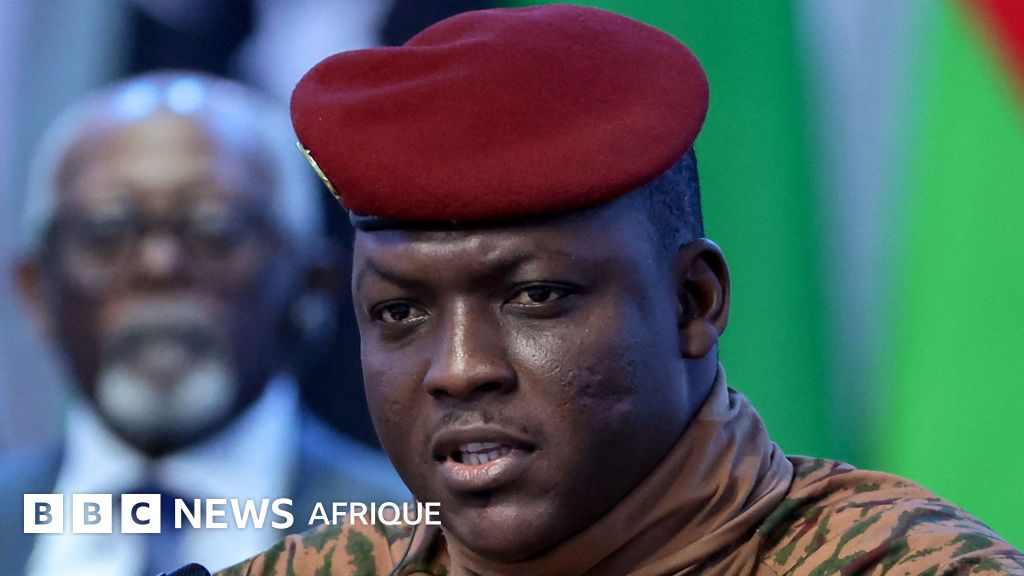
The people of Burkina Faso must abandon the concept of democracy, declared the nation’s military leader in a televised address on Thursday evening. Captain Ibrahim Traoré, who seized power three years ago, argued that the democratic system has no place in the country’s future, claiming it only brings suffering and instability.
Speaking to state television, Traoré stated, “The people must forget about democracy. It is not for us.” He suggested that most Africans reject democracy and claimed Burkina Faso would follow a unique path, though he provided no concrete details about the alternative system being considered.
The captain, who presents himself as a revolutionary leader opposing Western imperialism, had previously pledged to restore democratic rule by July 2024. However, with the deadline approaching, the military government announced a five-year extension of its mandate, effectively postponing any return to civilian governance.
In January, authorities banned all political parties as part of a broader plan to rebuild the state. Traoré justified the decision by describing political parties as divisive and incompatible with his revolutionary vision. He went further, condemning politicians as inherently corrupt and untrustworthy, stating, “In Africa – at least in Burkina Faso – a true politician embodies every vice: a liar, a flatterer, a smooth talker.”
Criticism of Western-style democracy
Traoré’s rejection of democracy is rooted in his belief that Western interventions lead to chaos. He cited Libya as an example, comparing its post-Gaddafi collapse to the potential consequences of democracy in Africa. “Wherever Western powers impose democracy, bloodshed follows,” he asserted, ignoring the fact that Libya’s current instability stems from decades of autocratic rule rather than democratic transition.
The military leader emphasized the need for Burkina Faso to forge its own path, declaring, “We have our own approach. We are not trying to copy anyone. We are here to completely change how things are done.”
A new system built on sovereignty and patriotism
Traoré outlined his vision for Burkina Faso, which prioritizes economic and military self-reliance, revolutionary mobilization, and the empowerment of traditional leaders. He argued that the country’s development requires long working hours and a rejection of what he termed “Western dependency.”
However, his government has faced criticism for suppressing dissent. Opposition figures, media outlets, and civil society groups have been targeted, with some critics alleging they are sent to dangerous frontlines in the fight against Islamist militants as punishment. Human rights organizations report over 1,800 civilian deaths since Traoré’s takeover in 2023, attributing two-thirds of these killings to government forces and allied militias.
Regional shift away from Western alliances
Traoré’s administration has aligned Burkina Faso with other military-led governments in the Sahel, including Mali and Niger, all of which have distanced themselves from Western partnerships in the fight against Islamist insurgencies. Instead, these nations have turned to Russia for military support, though violence in the region shows no signs of abating.
Despite the crackdown on dissent and the ongoing security crisis, Traoré has cultivated a significant following across Africa for his anti-Western rhetoric and panafricanist stance. His leadership style, characterized by a blend of revolutionary fervor and authoritarian measures, continues to reshape Burkina Faso’s political landscape in ways that challenge traditional democratic norms.