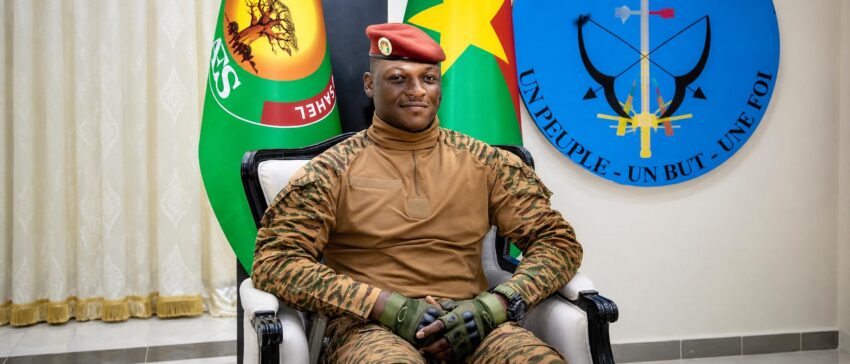
From patriotism to treason: the shifting sands of Burkina Faso’s military justice
The restoration of the death penalty in Burkina Faso’s penal code, approved unanimously by the military-led transitional assembly, marks a stark turning point in the consolidation of power under Captain Ibrahim Traoré. With the chilling slogan « Sentimentalism is over » echoing through Ouagadougou’s corridors of power, this move—abolished in 2018—is framed as a bold assertion of national sovereignty. Yet beneath the rhetoric of firmness and anti-treason rhetoric lies a calculated strategy: the elimination of political rivals, particularly deposed transitional leader Lieutenant-Colonel Paul-Henri Sandaogo Damiba.
A legal death sentence aimed at eliminating Damiba
Facing charges of high treason and conspiracy against state security, Damiba stands as the primary target of this judicial overhaul. Observers highlight the timing of the reform as deliberate: by reinstating capital punishment, the Traoré regime is laying the groundwork to demand the death penalty in Damiba’s upcoming trial. The removal of clemency options under the banner of rejecting « sentimentalism » sends a clear message of intimidation to opposition figures and dissident factions within the military, positioning Damiba as a warning to all who dare challenge Ibrahim Traoré’s rule.
The tragic irony of Burkina Faso’s coup culture
The Traoré administration’s relentless judicial pursuit of its predecessor reveals a biting paradox in the country’s recurring coups. Lieutenant-Colonel Damiba now faces the ultimate punishment at the hands of those who once stood beside him, sharing his ambitions and methods:
- **Mirrored coups**: In January 2022, Damiba forcibly removed democratically elected President Roch Marc Christian Kaboré, justifying his actions as a « patriotic awakening ». Eight months later, Ibrahim Traoré used the same playbook to oust Damiba—this time, the same tactics are rebranded as capital crimes.
- **From liberation to betrayal**: What was once hailed as a heroic liberation is now recast as high treason. The language of political convenience has shifted dramatically, leaving no room for consistency or justice.
A cycle of vengeance that fuels instability
By abolishing clemency in the name of « no more sentimentalism », Ibrahim Traoré’s regime risks plunging Burkina Faso deeper into a quagmire of political vendettas. The instrumentalization of military justice and the return of the death penalty as a tool for settling scores at the highest levels of power threaten to extend the cycle of coups, retaliation, and instability. History teaches a stark lesson: those who wield the sword today may very well fall beneath it tomorrow.
What lies ahead for Burkina Faso’s fragile stability?
The reinstatement of capital punishment is not merely a legal adjustment—it is a political maneuver that could redraw the boundaries of power in Ouagadougou. With the judicial system now a weaponized arm of state control, the nation’s future hangs in the balance. Will this bold move crush dissent or deepen the fissures tearing at the fabric of Burkina Faso? The answer may well be written in blood.