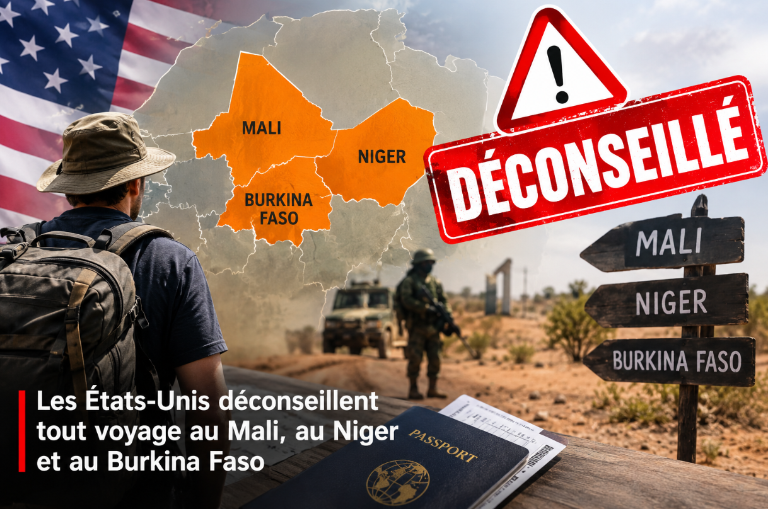
In 2026, the United States has issued its sternest warning yet for American travelers heading to the Sahel region. The State Department’s Level 4 advisory, labeled “do not travel,” now covers Mali, Niger, and Burkina Faso—three nations grappling with escalating violence, terrorism, and kidnapping threats. This unprecedented move underscores the severe consequences these countries face as insecurity reshapes travel, business, and local livelihoods.
Why the US advises against travel to the Sahel
The American government’s decision reflects a deteriorating security landscape. In Mali, Niger, and Burkina Faso, armed groups linked to Al-Qaeda and ISIS have intensified attacks, targeting civilians, security forces, and foreign workers alike. The State Department’s advisories cite terrorism, kidnappings, violent crime, and health risks as primary concerns. For travelers, the risks are immediate: even short trips outside major cities like Bamako or Ouagadougou can turn perilous without warning.
Military restrictions highlight the danger
U.S. diplomatic missions in these countries have imposed strict travel limitations on their own personnel. American embassy staff in Mali, for instance, are barred from leaving Bamako due to “persistent security threats.” Similar bans apply in Niamey (Niger) and Ouagadougou (Burkina Faso), where officials fear kidnappings and armed assaults beyond city limits. These measures send a clear signal: if government employees can’t safely traverse these regions, ordinary travelers stand little chance.
Economic fallout: businesses and aid groups bear the brunt
The travel ban isn’t just a warning for tourists—it’s a barrier for commerce, humanitarian aid, and development projects. Companies with operations in the Sahel now face mounting challenges securing staff, transporting goods, and maintaining supply chains. Mining companies in Burkina Faso, for example, report delayed shipments and heightened security costs as convoys navigate increasingly risky routes. Meanwhile, NGOs providing critical aid in remote areas must suspend programs or evacuate personnel, leaving vulnerable populations without support.
Small businesses—many of which rely on cross-border trade—are particularly hard hit. The closure of overland routes has disrupted markets, forcing traders to abandon lucrative deals. In Niger’s Tillabéri region, once a hub for livestock and grain, local sellers now struggle to reach buyers across borders.
What travelers and businesses need to know
For those considering a trip—whether for business, research, or aid work—the U.S. government’s advice is unequivocal: do not proceed. Even non-essential travel carries unacceptable risks, with consular assistance likely delayed in high-risk zones. Companies operating in the region must reassess their strategies, from employee housing to evacuation plans. Those who ignore the warnings often face steep costs: canceled contracts, ransom demands, or worse.
Travel insurance policies become void in Level 4 zones, leaving victims of violence or kidnapping without recourse. Medical evacuations, if possible at all, can take days—often too late for critical injuries. The financial toll extends beyond direct losses; businesses operating in the Sahel now face higher insurance premiums and difficulty attracting foreign investors.
The broader Sahel crisis: a region at a crossroads
While Mali, Niger, and Burkina Faso bear the brunt of current advisories, the broader Sahel crisis shows no signs of easing. Neighboring countries like Nigeria, Chad, and the Central African Republic also grapple with terrorism and instability, albeit at varying levels of risk. The U.S. advisory system reflects this patchwork of threats, with some regions classified as “Level 3: reconsider travel” while others hit “Level 4.”
This tiered approach highlights a harsh reality: even in countries deemed “safe” by some standards, isolated areas may suddenly become death traps. A peaceful city can descend into chaos after an attack, leaving travelers stranded without warning. The Sahel’s volatility demands constant vigilance—and in 2026, few destinations can guarantee safety.
Looking ahead: can stability return to the Sahel?
The path to recovery remains uncertain. International efforts to combat terrorism and bolster local security have yielded mixed results, with militant groups adapting to countermeasures. Meanwhile, poverty and weak governance continue to fuel recruitment into extremist factions. Without sustained progress, the region’s economic prospects—and the safety of its people—will remain precarious.
For now, the U.S. travel ban serves as a stark reminder: the Sahel’s challenges transcend borders. Until security improves, nations like Mali, Niger, and Burkina Faso will struggle to rebuild—isolated from the world, both economically and socially.